Diego Rivera, George Charles Miller, and others
Zapata
1931
Scroll
Physical Qualities
Crayon lithograph, Sheet: 512 × 393 mm. (20 3/16 × 15 1/2 in.)
Image: 410 × 333 mm. (16 1/8 × 13 1/8 in.)
Credit Line
Gift of Blanche Adler
Object Number
1932.28.5
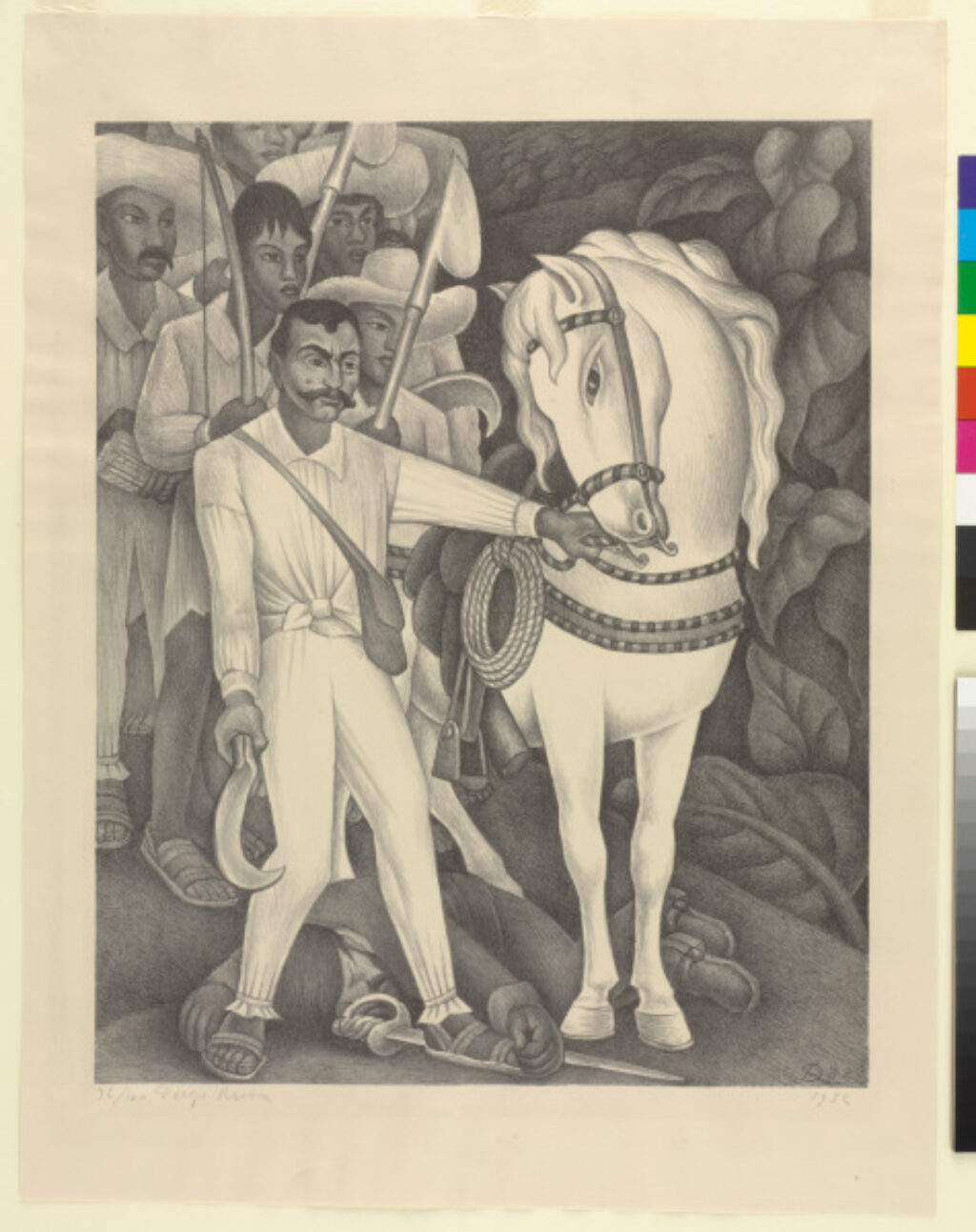
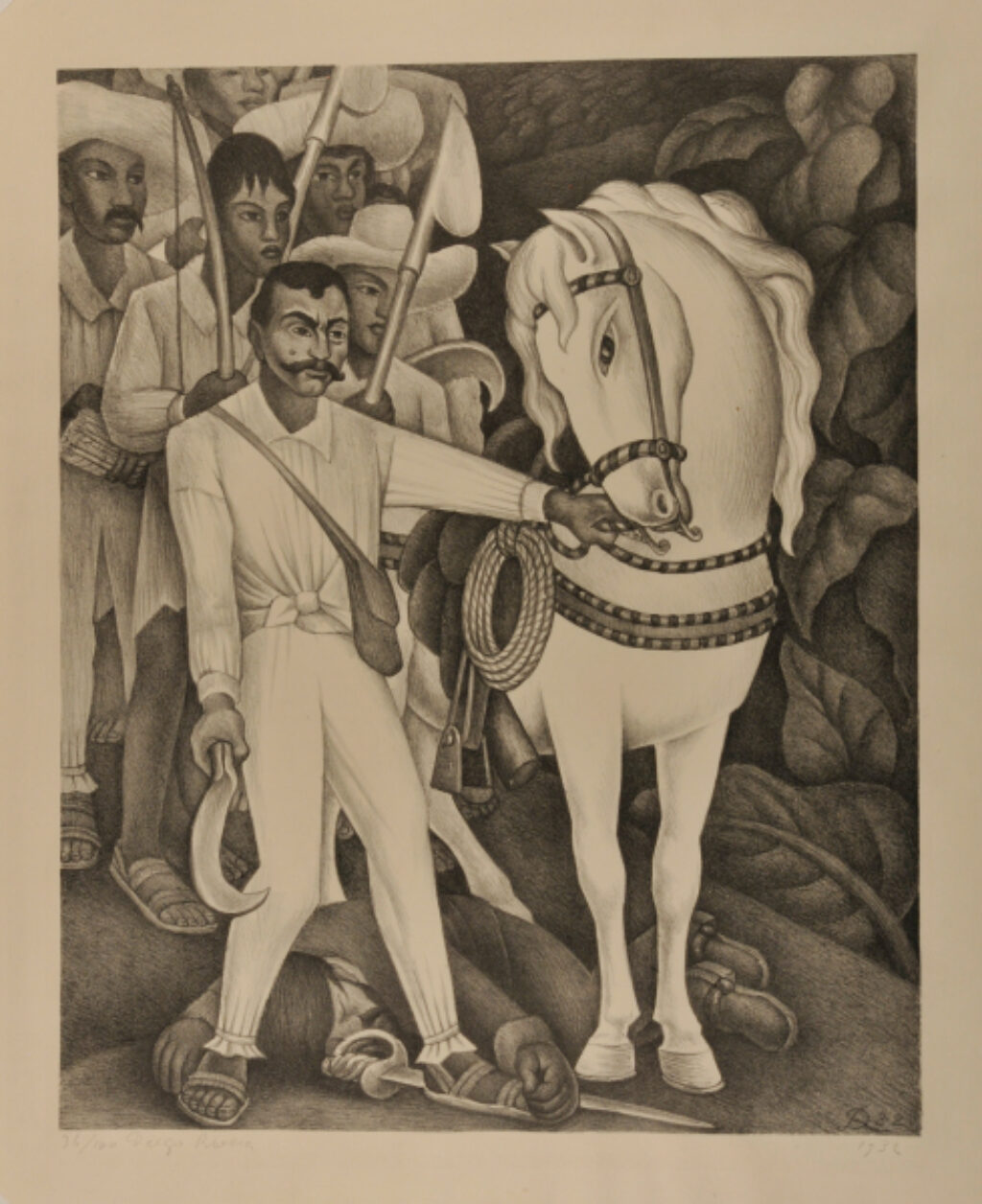
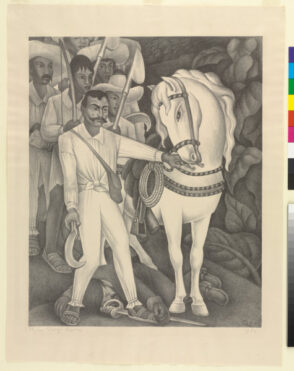
Six weeks before the opening of his retrospective at the Museum of Modern Art in December 1931, Rivera began working on a new group of frescoes (paintings in wet plaster). Unlike his murals in Mexico City, which are permanently part of the building walls they decorate, the panels of these new frescoes were reinforced with steel frames so that they could be moved and exhibited. The most famous of these “portable frescoes” was his image of the Revolutionary hero and agrarian leader Emiliano Zapata. In this lithograph Zapata, in white cotton peasant dress and sandals, is shown as one of the Mexican people. He holds the reins of his loyal horse while brandishing a scythe as more farmers crowd in behind him. At his feet is the dead body of a wealthy landowner, a reference to Zapata’s influential role in the seizure and redistribution of land during the Mexican Revolution.
The Baltimore Museum of Art; Blanche Adler, by purchase; Weyhe Gallery New York
Jay Fisher, Baltimore Museum of Art, "Two Centuries of Lithography: 1800-1986," 9/8-11/8/1987.
BMA, Art and Revolution #1, September 30 - October 30, 1988.
Rena Hoisington, BMA, "Crossing Borders: Mexican Modernist Prints," November 19, 2017 - March 11, 2017.
BMA, Art and Revolution #1, September 30 - October 30, 1988.
Rena Hoisington, BMA, "Crossing Borders: Mexican Modernist Prints," November 19, 2017 - March 11, 2017.
Inscribed: Signed l/r on stone, monogram '32; below in pencil, 36/100 Diego Rivera 1932.


Publisher
The Weyhe Gallery
2000–2000
Gallery founded by Erhard Weyhe (American, born Germany, 1882-1972)
Carl Director of Weyhe's art gallery was Carl Zigrosser (1891-1975)
Meet The Weyhe Gallery
Carl Director of Weyhe's art gallery was Carl Zigrosser (1891-1975)