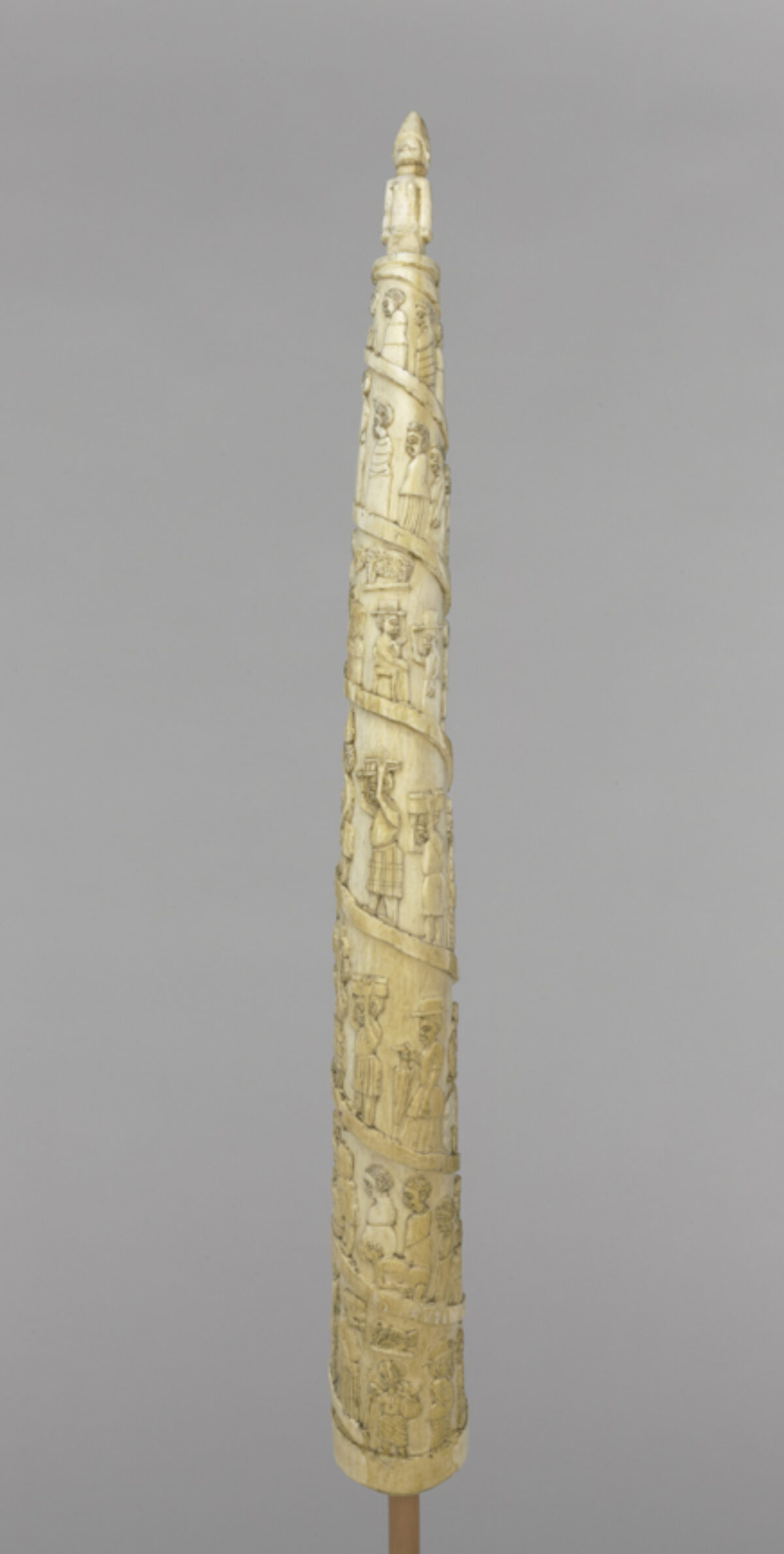
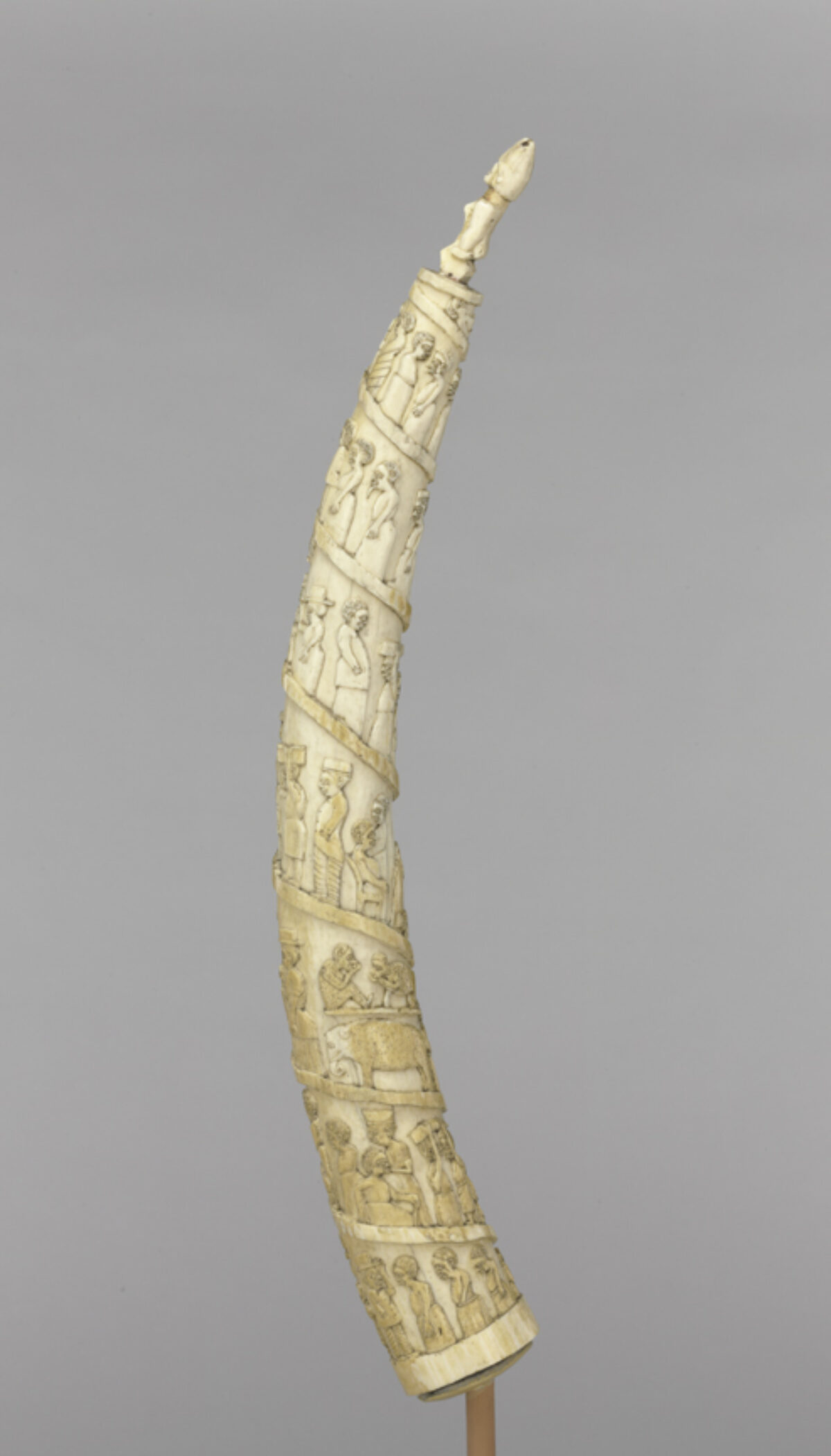
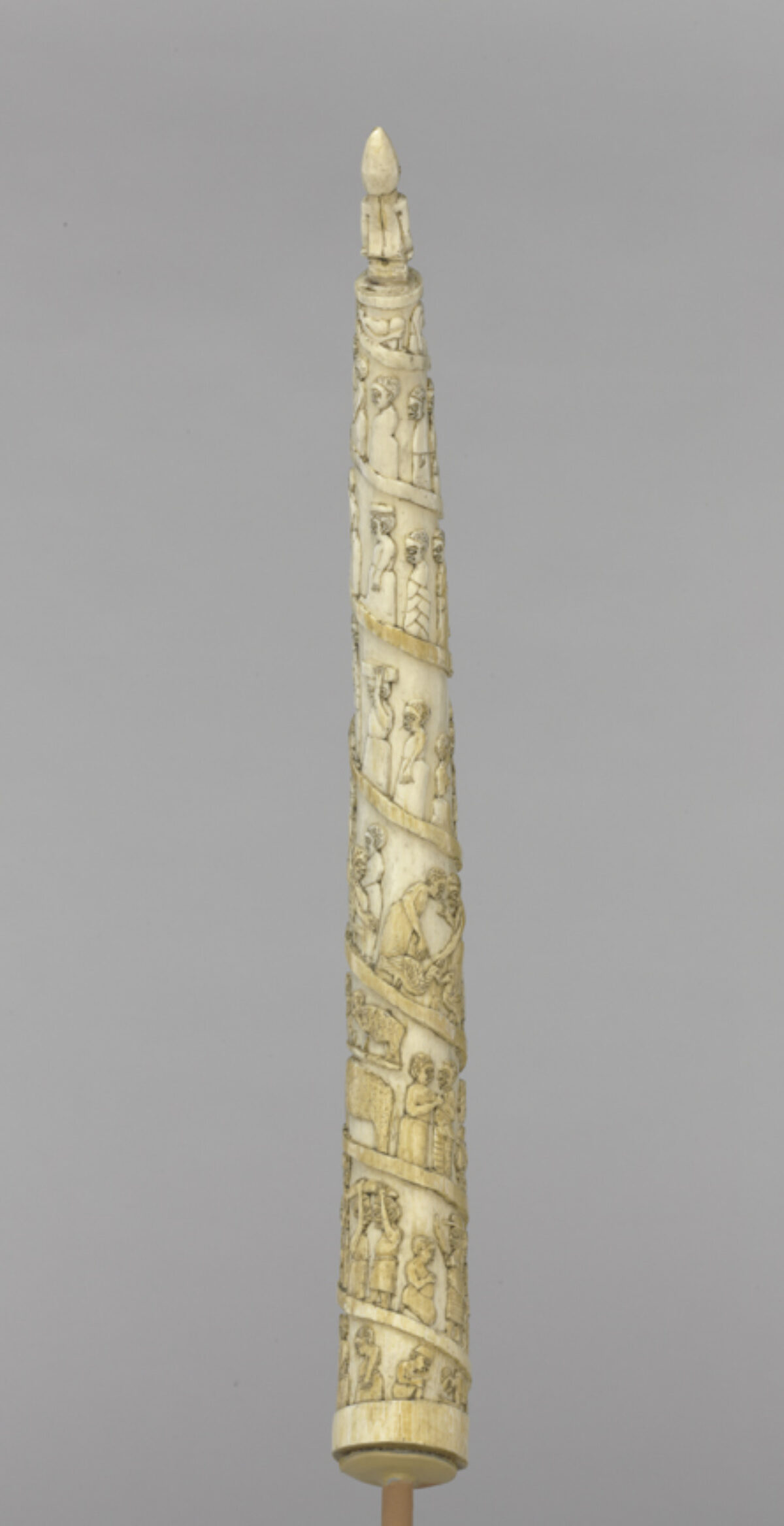
Tusk Carved in Relief
A Conversation about Caravans
0:00
/
1:21
Illegal Ivory Trade
0:00
/
0:35
Unidentified Kongo (Vili) Artist
Date:
Between 1850 and 1910
Medium:
Elephant ivory
Size:
Depth: 1 3/16″
Width: 2 3/8″
Height: 21 1/4″
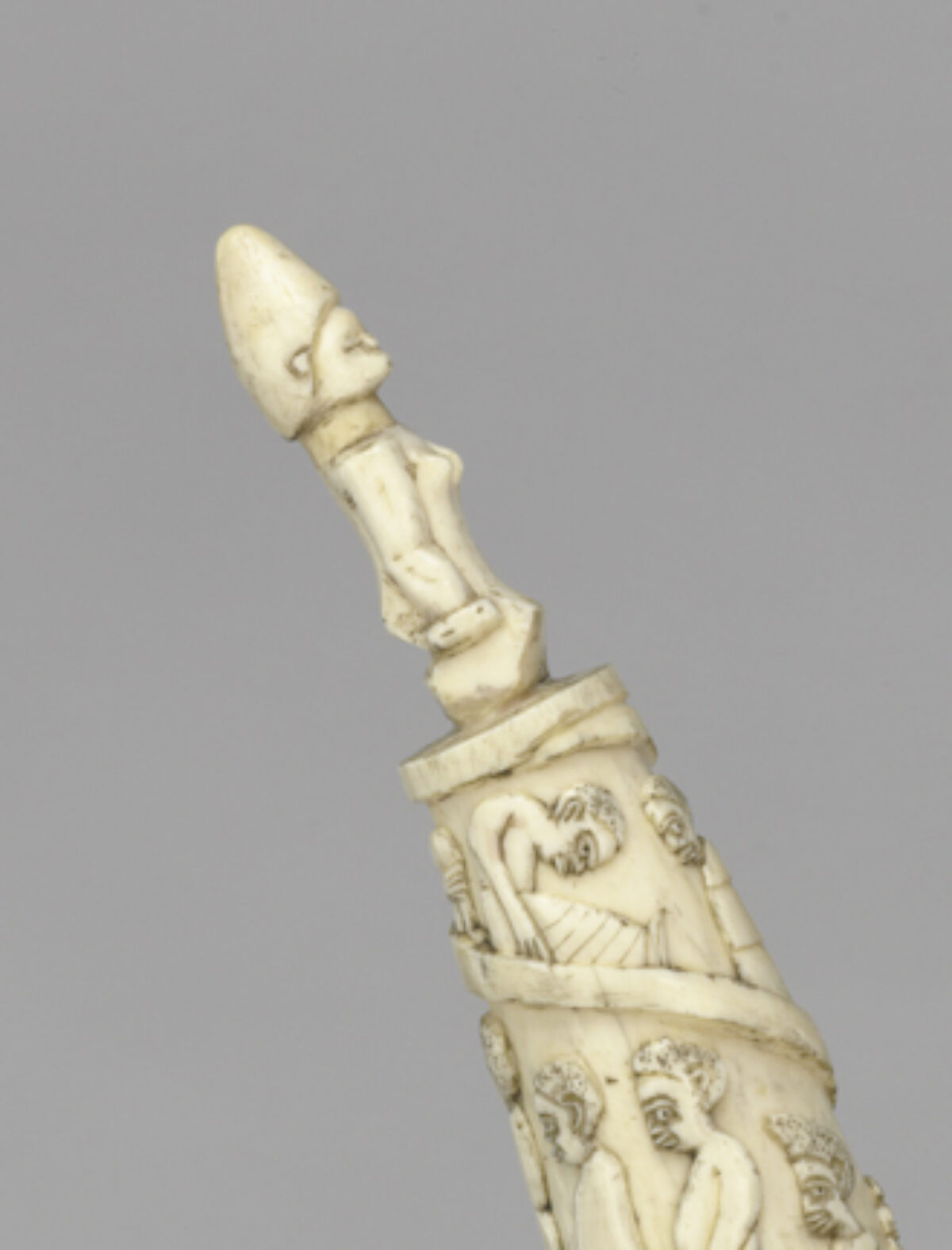
Look closely, and you will see scenes of 19th-century life in the Kingdom of Kongo carved into this tusk. People greet each other on the street. Porters carry heavy boxes and ivory tusks. Monkeys laugh. Since 1483, when Portuguese sailors first arrived in the region, the Kingdom of Kongo served as an important trading partner for European nations. Between 1850 and 1910, Kongolese artists memorialized these scenes on carved tusks created for European traders.
Gift of Alan Wurtzburger BMA 1953.133a