A Wild Scene
A Conversation with Smithsonian Curator Eleanor Harvey
0:00
/
1:27
Is There a Political Subtext?
0:00
/
0:38
Thomas Cole
Date:
1831-1832
Medium:
Oil on canvas
Size:
Width: 76 9/16″
Height: 51 1/16″
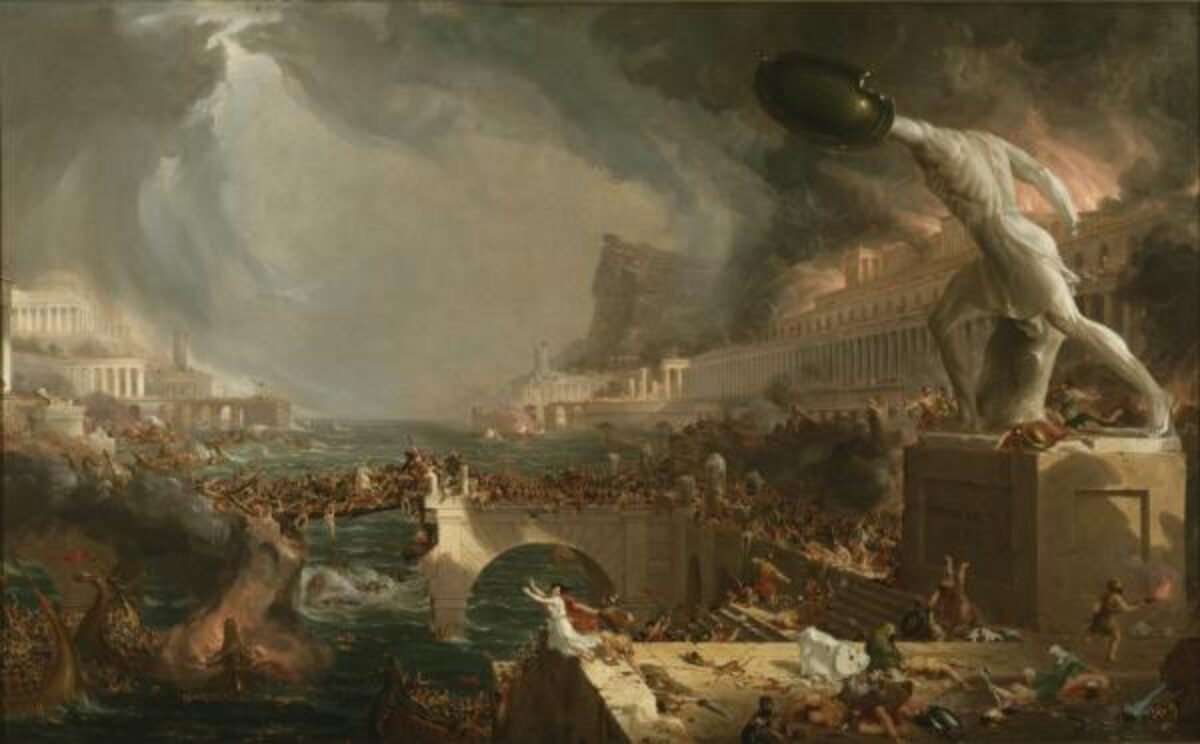
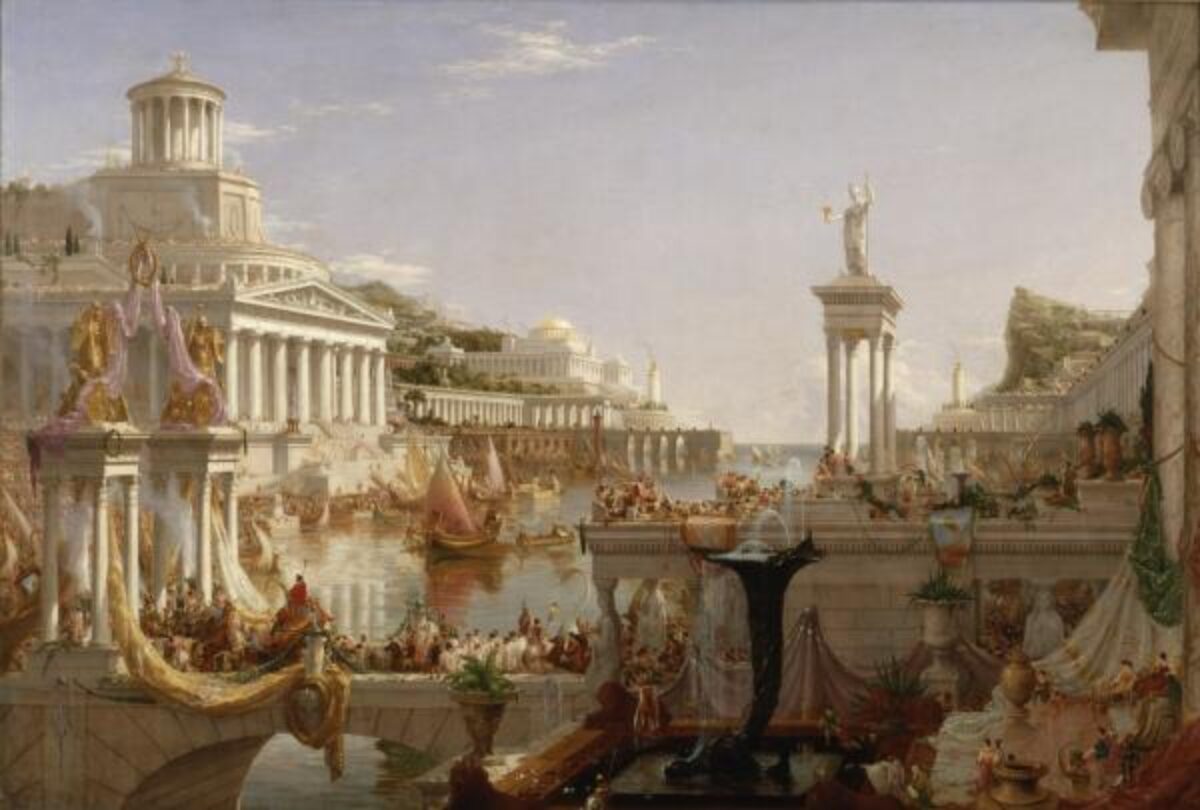
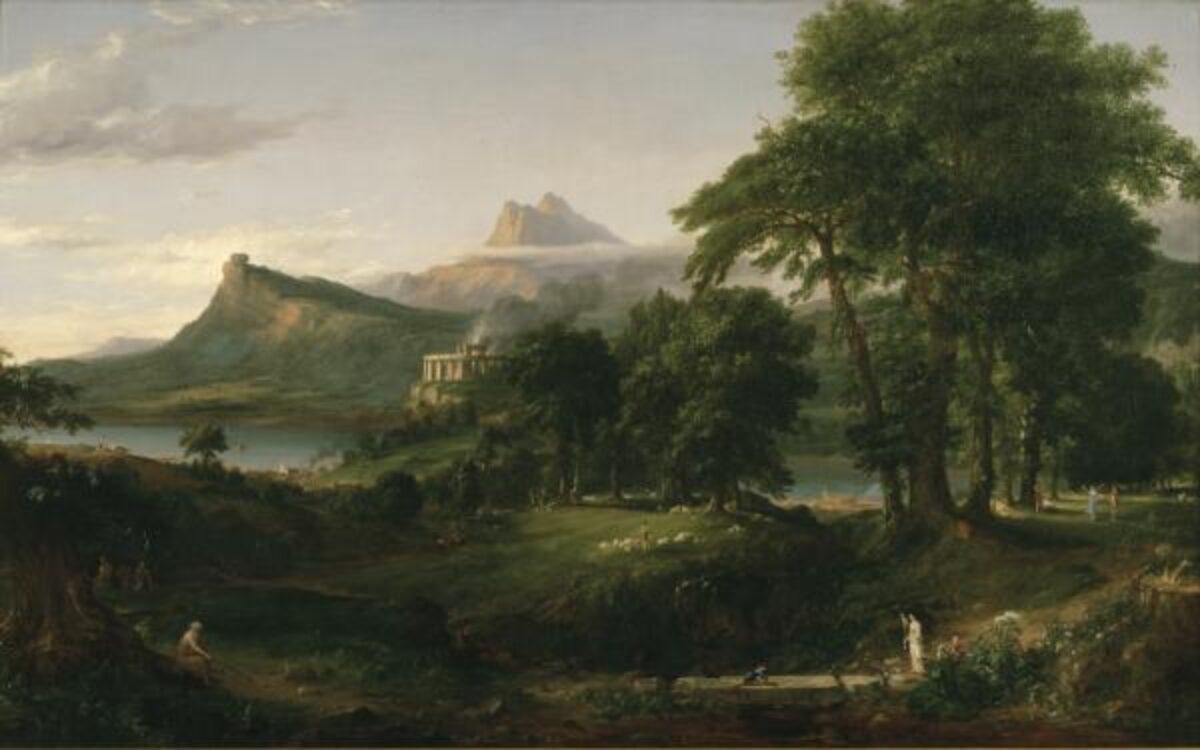
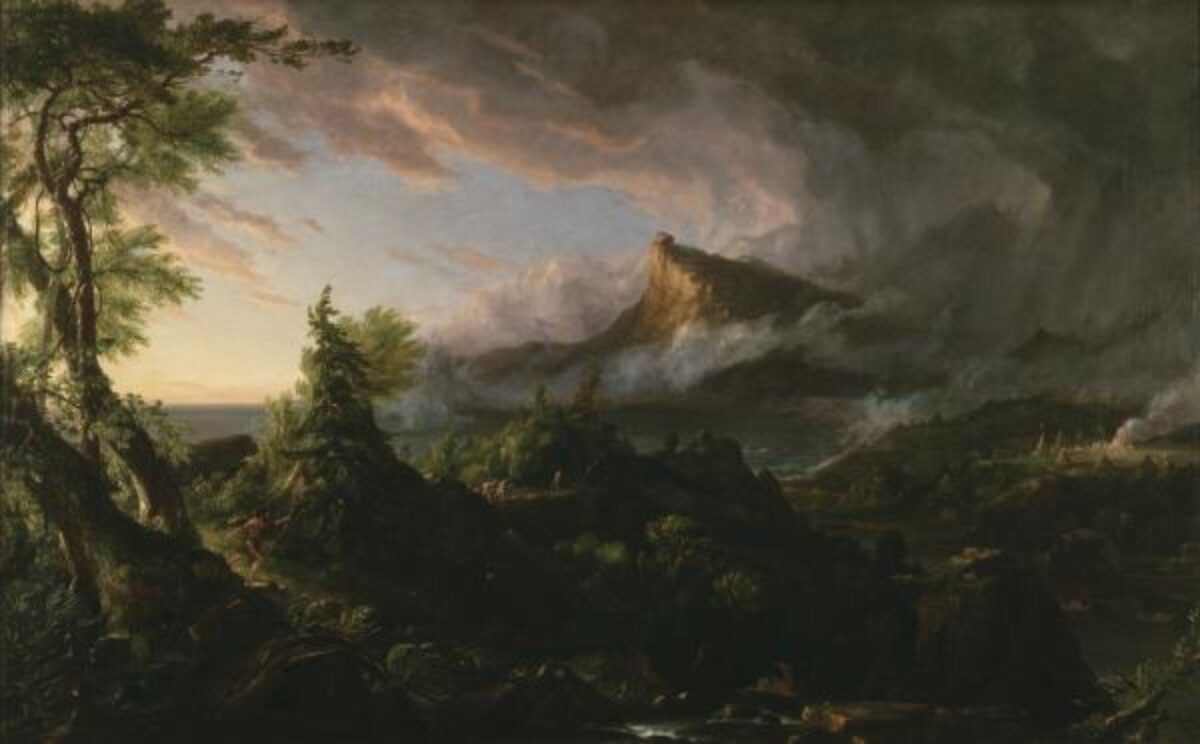
Painted in Florence, Italy, Thomas Cole’s A Wild Scene is the precursor to an ambitious project involving five similarly sized canvases. Together, they depicted the metaphoric rise and fall of a mythic city. Entitled The Course of Empire, the series was meant to illustrate what the artist called “the mutation of earthly things.” At the time, many Americans feared that the pastoral prosperity of early 19th-century America would give way to economic and political greed, followed by inevitable decay.
The first of Cole’s five canvases (all now in the New-York Historical Society) draws on the composition of A Wild Scene. Native Americans—considered by 18th-century Europeans to be living in a natural state free from the corrupting influences of Western civilization—hunt a deer in the dim dawn light of an imagined valley. Cole hoped that the entire project would attract the support of Baltimore patron Robert Gilmor, Jr., but Gilmor merely accepted this painting in exchange for funds already advanced to Cole for travel.
Asserting that “the frame is the soul of the painting,” Cole regularly chose what he called “massy” frames covered with small ornaments. A Wild Scene is now housed in a molding replicating a design Cole favored. The rich, low-relief patterning is made of the same moldable composition material that revolutionized framemaking in Cole’s day, eliminating the labor-intensive hand carving seen on earlier frames nearby.
Purchase with exchange funds from Leonce Rabillon Bequest Fund; and Purchase Fund BMA 1958.15