Patricia and Mark Joseph Education Center
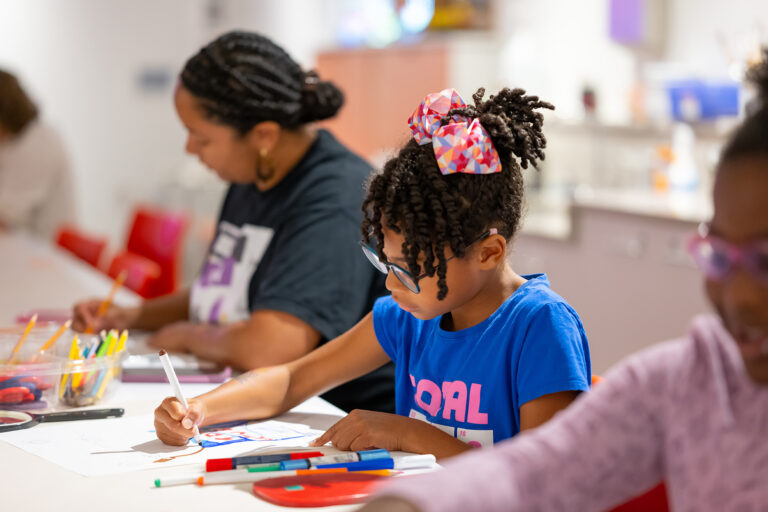
Visitors of all ages are invited to play and learn in the Joseph Education Center.

Highlights of the Education Center
The Joseph Education Center features the Experience Gallery, Insight Lab, Wall of Wonder, The Studio, Book Nook and Quiet Room.
Experience Gallery
A centerpiece of the Joseph Education Center, the Experience Gallery features commissioned interactive art installations by artists Derrick Adams, Mary Flanagan, and Pablo Helguera. The works remain on view for approximately three years.
Visitors can also explore recent additions to the BMA’s collection, bringing together works from across the globe, spanning time, and across artistic media. Hands-on engagement opportunities like touch objects invite visitors to explore how touch can deepen our understanding of art while also highlighting why artworks must be protected.
Mary Flanagan
Milwaukee, WI, 1969
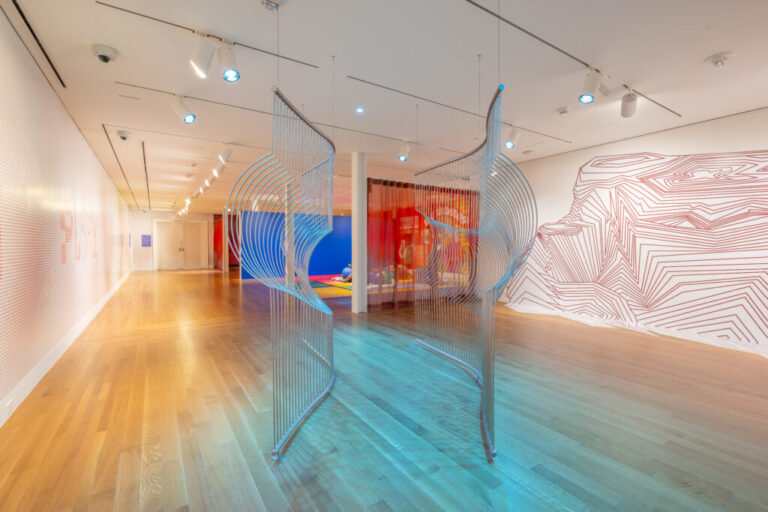
Mary Flanagan’s Topophilia (Tunnel) and Topophilia (Hill) reimagine Baltimore landmarks as an embodied experience and multisensory exploration, inviting visitors to explore the social and physical history of our land and water. A freestanding sculpture made from seven-foot-tall steel rods, Topophilia (Tunnel) references the astounding engineering feat of the Baltimore Harbor Tunnel. When touched, the sculpture behaves as a kind of large instrument with sounds that range from tinkling or a low drone to an forceful clang. Topophilia (Hill) is an expansive work that captures the landscape of Baltimore’s Federal Hill through the lines of its topography, creating an encompassing optical experience.
Poems on large wooden cards made by the artist invite viewers to contemplate the earth and water as essential elements of life, as well as the history of the city and its relationship to land and people from before Baltimore’s creation to the present moment. The artist produced these computational poems with Kay, her Artificial Intelligence program named after the Surrealist artist Kay Sage.
Derrick Adams
Baltimore, MD, 1970
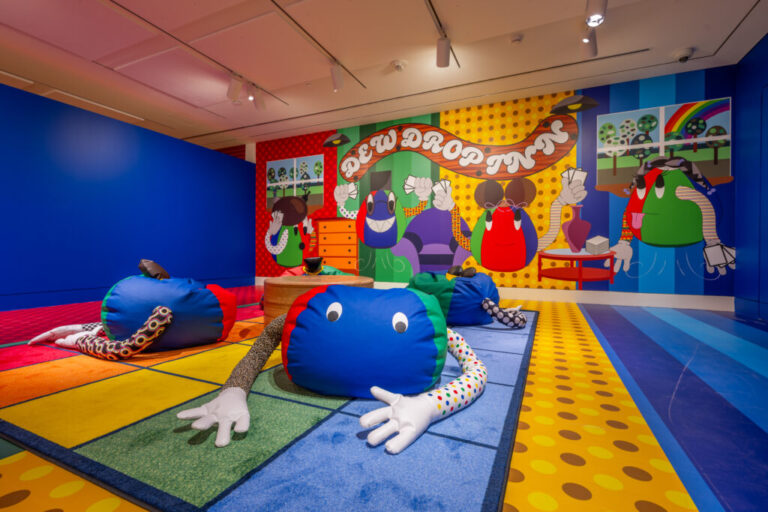
Dew Drop Inn is a color-filled, immersive space populated by Derrick Adams’ Dew Drop characters, which are presented through vibrant wall and floor graphics and bean-bag chairs that have been adorned with arms, hair, and other accessories. Visitors to Dew Drop Inn can play a noncompetitive card game created by Adams that invites players to match pairs of 20 artworks made by Black artists such as Zoë Charlton, Jonathan Lyndon Chase, and Valerie Maynard in the BMA’s collection. This work builds on Adams’ practice of social sculpture, taking familiar elements from a playroom—a rainbow rug, soft seating, and domestic furniture—and transforming them into a vibrant atmosphere in which to learn, imagine, and socialize.
Pablo Helguera
Mexico City, Mexico, 1971
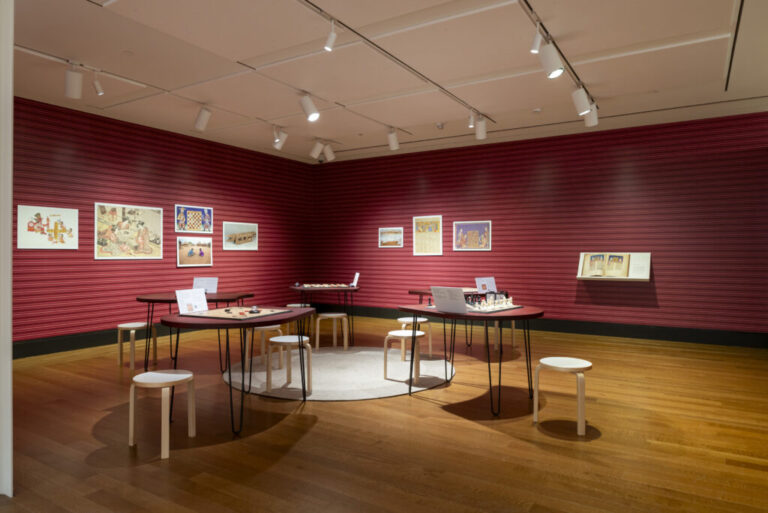
Flor de Juegos Antiguos (Flower of Ancient Games), featuring five petal-shaped wood tables with different game boards integrated into the tabletops, celebrates the history and significance of game play around the world. The games include mancala (Africa), patolli (Mesoamerica), backgammon (Iran), chess (India), and nine-men’s morris (Europe). Instructions and information about each game accompany each table, encouraging visitors to both test the games and learn more about their origins and social contexts. Helguera often activates memory and nostalgia in his work, and this interactive space creates opportunities to both make and remember memories about board games. Historical and contemporary images of people at play surround the room, inviting visitors to see themselves in a historical lineage of play. Visitors are invited to play by the rules and or break them by creating their own variations of the games.
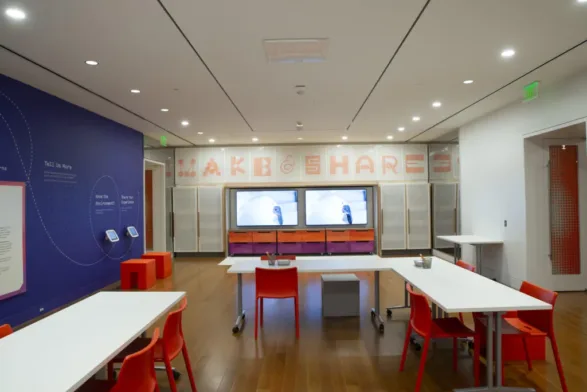
This space serves as the Joseph Education Center’s second classroom. It significantly boosts the BMA’s capacity to host school and tour groups, while reinforcing our commitment to engaging visitors in art making. The room also features areas for evaluation and visitor response, dialogue, and hands-on exploration, allowing the Museum to learn from and alongside visitors. Additionally, the Insight Lab offers a dedicated space for gathering and reading called the Book Nook.
The Book Nook, curated by youth services librarian and literary consultant Kit Ballenger of Help Your Shelf, offers hundreds of art-inspired books organized around themes including Artists, Materials and the Creative Process; Community and Collaboration; Holidays and Celebrations; Nature and Environments; Science, Technology, Engineering, and Mathematics; and Storytime. From picture books to braille and audiobooks, the collection welcomes readers of all ages and abilities.
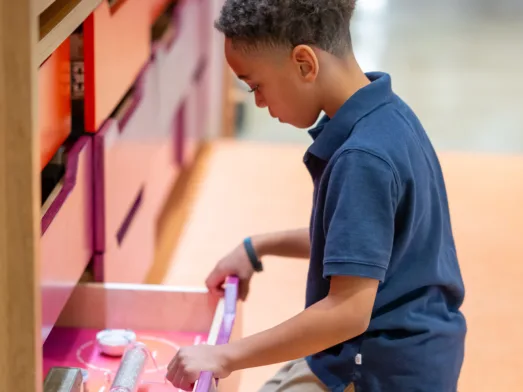
The Wall of Wonder is a key architectural feature that physically and conceptually unifies the Joseph Education Center. Digital displays and discovery drawers that feature touchable objects and activities encourage visitors to consider connections between art, materials, and play. The Wall of Wonder’s discovery drawers were designed by Baltimore artist Danielle Nekimken and created by local fabricators Mark Ward and Pete Leatherwood.
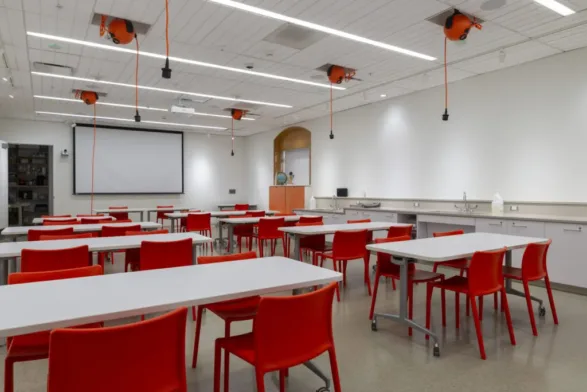
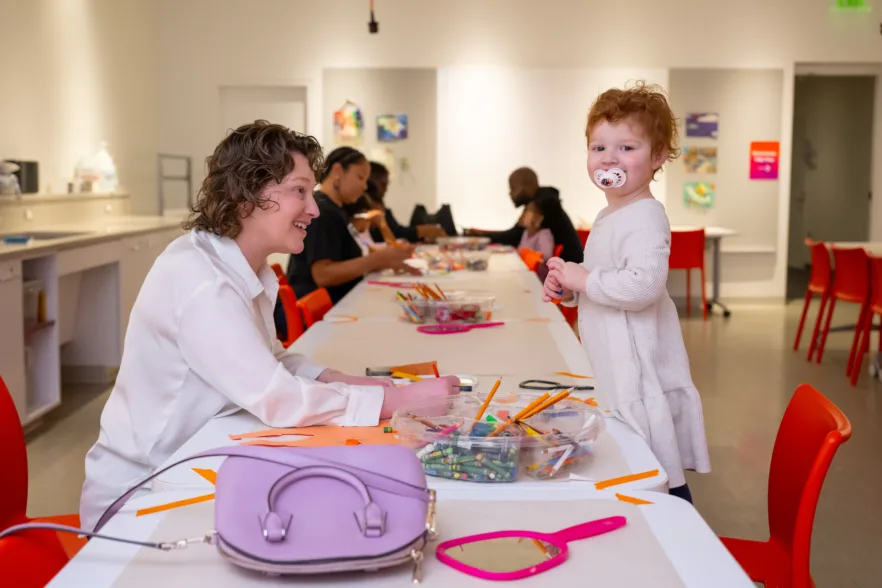
One of the most popular areas of the Joseph Education Center, the Studio hosts events and tours with dry- and wet-media art-making activities. Video and sound technology supports live-streaming and distance-learning programs, including virtual tours or studio sessions.
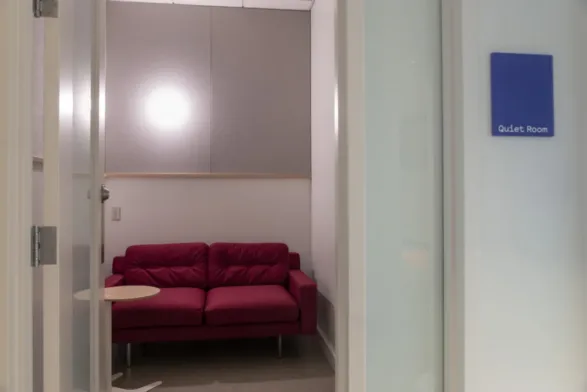
The BMA’s Quiet Room is a welcoming, sensory-friendly space available to all visitors whether they need a moment to relax, calm down, nurse, or pray. It features adjustable lighting, comfortable seating, and sensory tools to help ensure a supportive atmosphere.
Please keep the following guidelines in mind to ensure a respectful and relaxing environment for all:
- This is a shared space, so please consider limiting your time in the Quiet Room to 30 minutes. You may be asked to leave should someone else urgently need the room.
- Please return Quiet Room materials after use so all guests who need them can have the same experience.
- You may rest your eyes, but this room is not intended for naps.
- Nursing parents are welcome, but this is not a play space for children.
- Please do not change diapers in the Quiet Room. Changing stations are located nearby in the John Waters Restrooms and East Lobby restrooms.
- Be respectful of others’ faiths and remove any religious items after use.
- Don’t forget to take personal belongings with you when you leave.
- Please notify BMA staff if the Quiet Room needs attention.
The BMA’s Quiet Room offers a variety of resources to support its visitors:
- Journaling materials
- Earplugs and earmuffs
- Fidget devices and tactile elements
- Weighted blankets
- Meditation and breathing exercises
- Books for all ages
Accessibility Survey
Please participate in this survey to help the BMA improve accessibility. The survey contains 10 questions and will take about 5 to 10 minutes to complete.
Take the accessibility survey or learn more about accessibility at the BMA.
History
The Joseph Education Center was made possible by Baltimore philanthropists Patricia and Mark Joseph, who have been major donors to the BMA for more than three decades. In 2015, the Josephs established the Center with a $3 million gift; in 2021, they contributed an additional $2.5 million toward the space’s reconceptualization.
The Joseph Education Center is funded by Patricia and Mark Joseph, The Shelter Foundation.