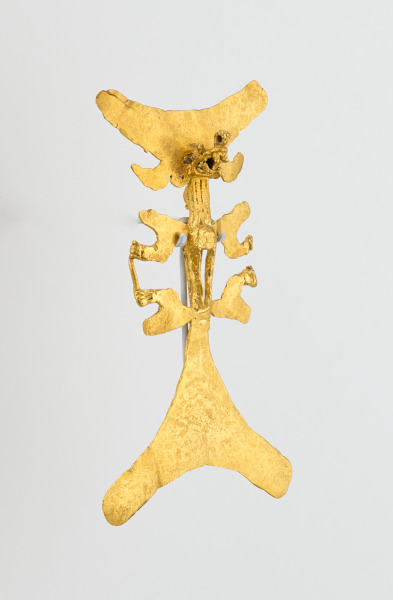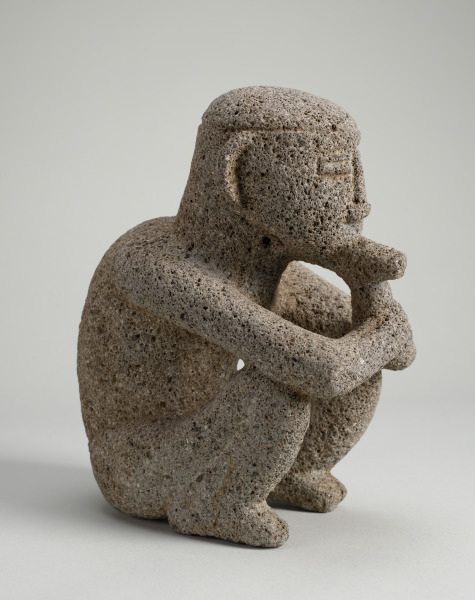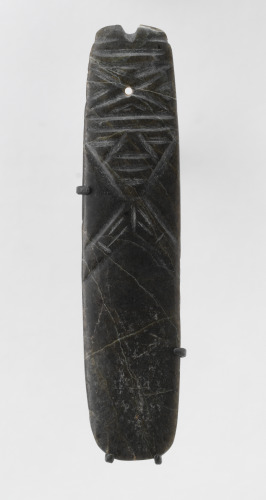
Atlantic Watershed and Greater Nicoyan
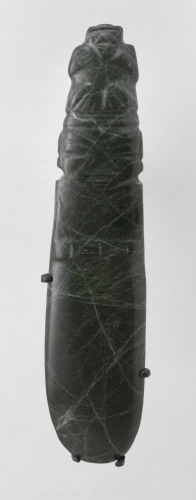
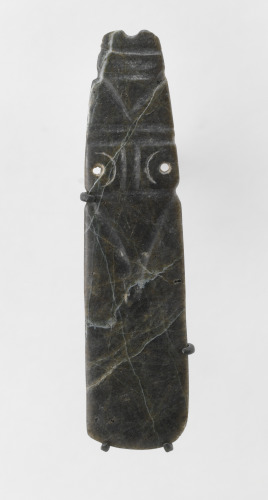
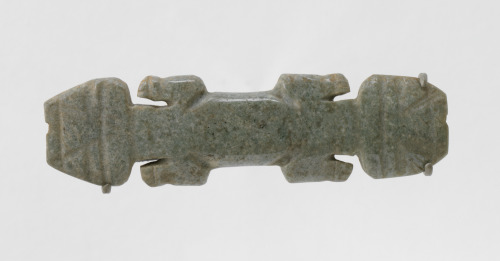
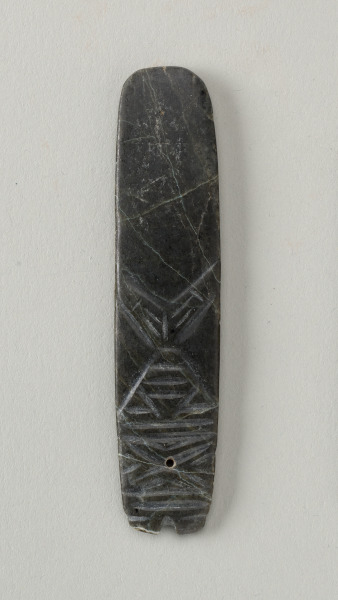
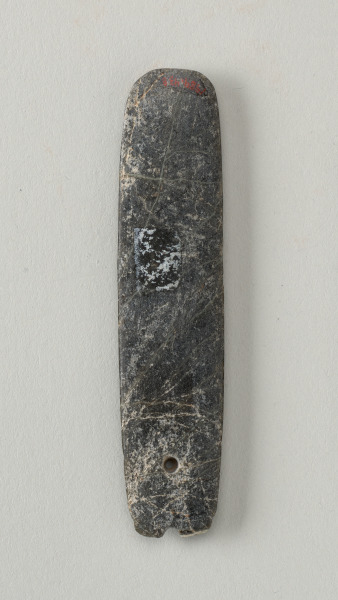
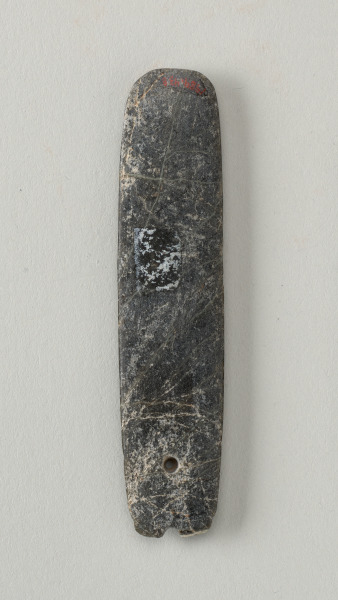
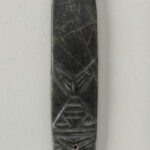
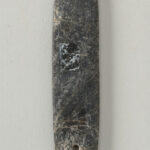
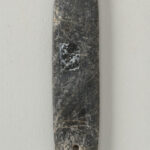
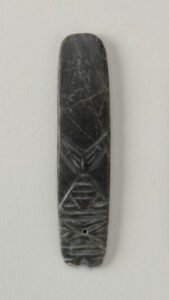
Anthropomorphic Pendant with Zoomorphic Headdress
Atlantic Watershed or Greater Nicoyan, 300-500
Scroll
- Culture: Atlantic Watershed
- Culture: Greater Nicoyan
Anthropomorphic Pendant with Zoomorphic Headdress
Atlantic Watershed or Greater Nicoyan, 300-500
Physical Qualities
Jadeite, 4 1/4 × 1 1/8 in. (10.8 × 2.9 cm.)
Credit Line
Gift of Ira H. Levy, Reston, Virginia
Object Number
1984.438
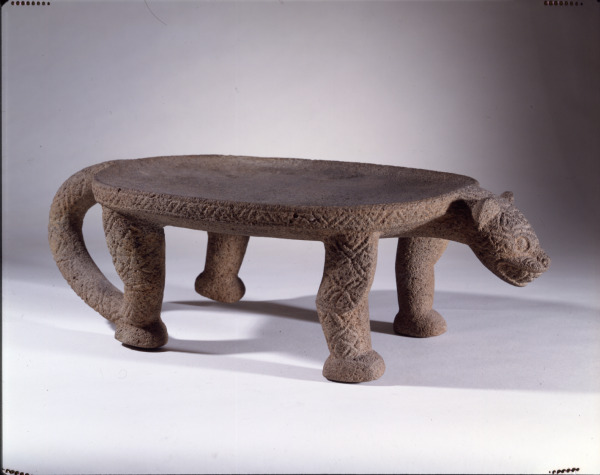
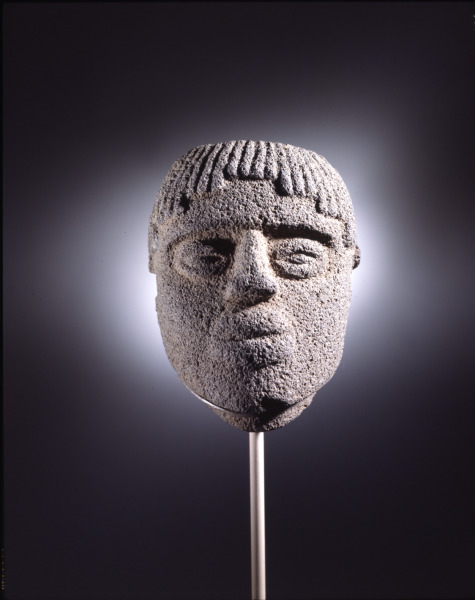
Jade and other so-called greenstones were considered precious materials throughout much of the ancient American world. These jade pendants come from what is now Costa Rica. Elite individuals likely wore these works to beautify themselves and mark their social status.
Each artist carved their stone without the aid of iron or metal tools. They would begin by slicing a large block of stone into manageable pieces using saws made from plant fibers and carve details using rocks and stone tools. The final step involved polishing the fully sculpted artwork beeswax, plant fibers, or a piece of sandstone.
Group label for: 1984.438, 1960.30.52, 1984.441, 1984.439, 1960.30.55, 1984.437, 1999.599
Henry Moore and the Pre-Columbian Past
Stone, Rebecca and William B. Size. Seeing With New Eyes: Highlights of the Michael C. Carlos Museum Collection of Art of the Ancient Americas. Atlanta: Michael C. Carlos Museum, Emory University, 2002: 351, 354.
Abel-Vidor, Suzanne, et. al. Between Continents/Between Seas: Pre-Columbian Art of Costa Rica. New York: Harry N. Abrams, Inc. in association with The Detroit Institute of Arts, 1981: cat. no. 178.
Abel-Vidor, Suzanne, et. al. Between Continents/Between Seas: Pre-Columbian Art of Costa Rica. New York: Harry N. Abrams, Inc. in association with The Detroit Institute of Arts, 1981: cat. no. 178.
 On View at the BMA