Nupe
Door Panels
Nupe, 1866-1932
Scroll
Nupe
Door Panels
Nupe, 1866-1932
Physical Qualities
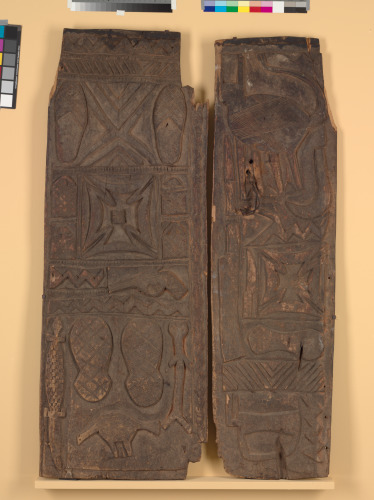
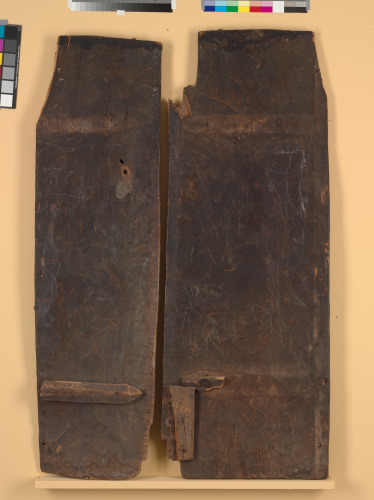
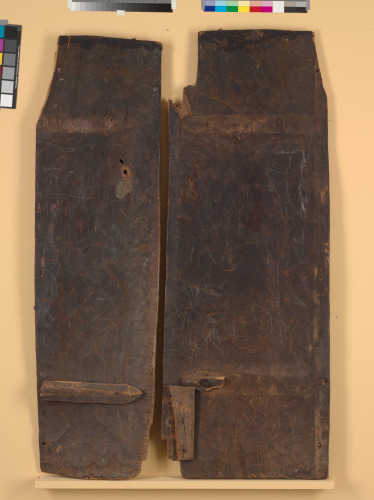
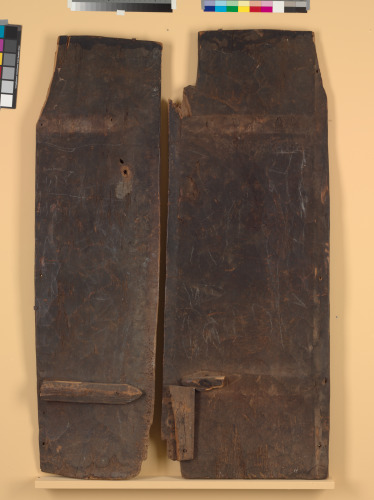
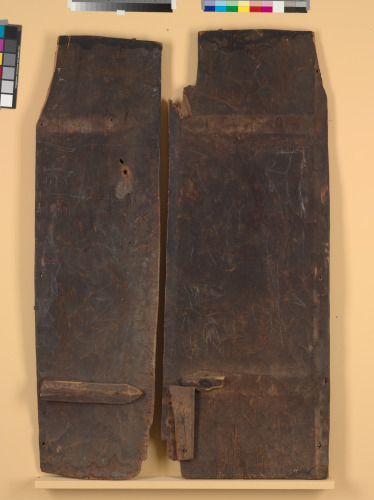
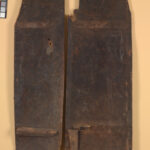
Wood, iron, Right door: 60 1/4 x 22 5/8 x 2 3/4 in. (153 x 57.5 x 7 cm.)
Left door: 59 1/4 x 16 15/16 x 2 3/4 in. (150.5 x 43 x 7 cm.)
Credit Line
Gift of Vivian L.C. Anderson, Bethesda, Maryland
Object Number
2001.417a-b
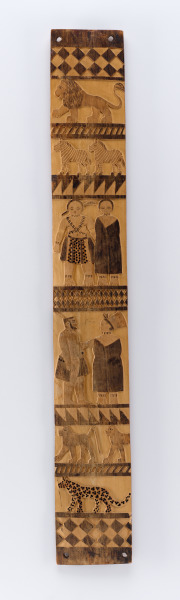
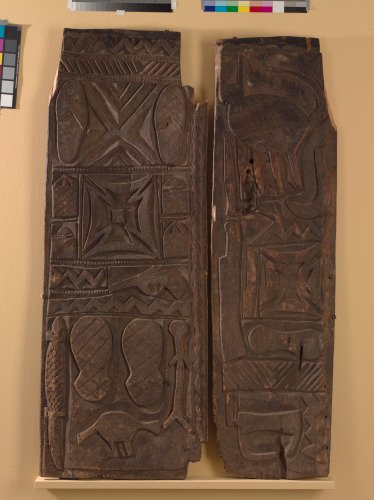
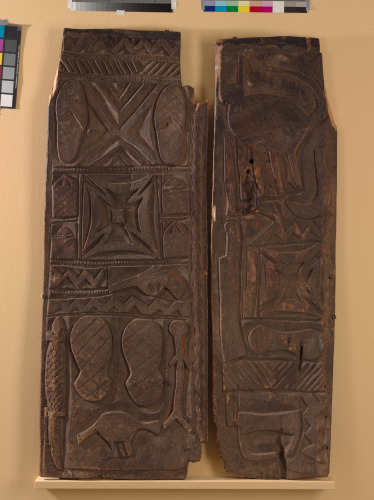
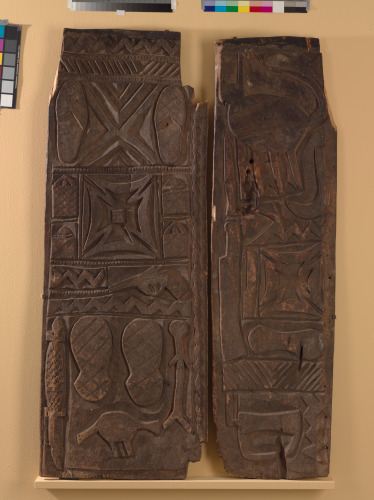
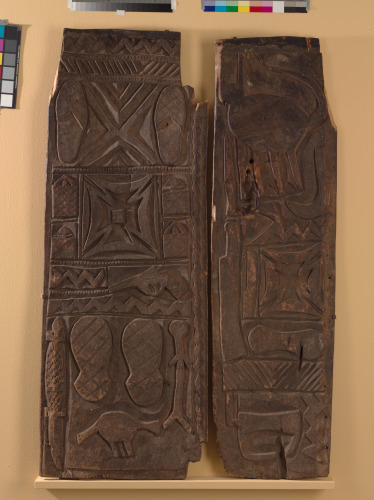
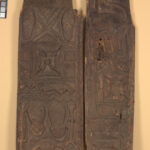
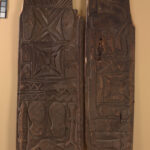
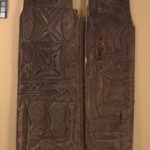
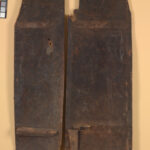
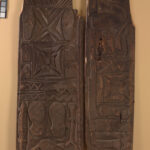
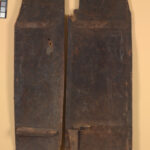
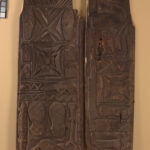
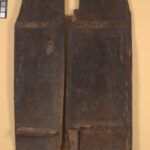
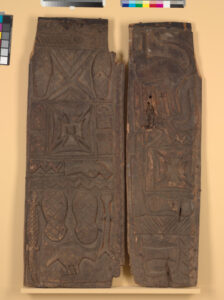
Aristocratic Nupe men commissioned elaborately carved doors to decorate the entrances to their families’ compounds until after the mid 20th century. The Islamic symbols portrayed on this particular door proclaimed the family’s religious devotion and respectability. On the left panel, two pairs of slippers allude to the practice of removing one’s slippers before entering a mosque. Both panels exhibit a central “magic square” motif (called khatem in Arabic or hatumere in Fulani), which broadly signifies Islamic sanctity and the power of amulets that enclose Koranic scripts. Forms in the shape of Koranic prayer boards flank the “magic square” on the right panel. Additional martial, animal, and abstracted figures augment the door’s symbolic potency.
The Baltimore Museum of Art by gift, 2001; Vivian L.C. Anderson, Bethesda, MD; acquired in Lagos, Nigeria, c. 1970.
Hand Held: Personal Arts from Africa
Frederick John Lamp, "See the Music Hear the Dance: Rethinking African Art at the Baltimore Museum of Art." New York: Prestel, 2003, p.119, ill.
Phillips Stevens. "Nupe Wood Carving." Nigeria Magazine, (88), 1966: 21-35. (Cited in Lamp).
Dmochowski, Z.R. South-West and Central Nigeria. An Introduction to Nigerian Traditional Architecture, Volume 2. Ethnographica in association with The National Commission for Museums and Monuments, 1990.
Dmochowski, Z.R. South-West and Central Nigeria. An Introduction to Nigerian Traditional Architecture, Volume 2. Ethnographica in association with The National Commission for Museums and Monuments, 1990.