Unidentified, probably American, Unidentified, probably American, and others
Eltonhead Manor Room
1714-1774
Scroll
- Architect: Unidentified, probably American
- Makers: Unidentified, probably American
- Previously attributed to: Unknown builder/architect
Eltonhead Manor Room
1714-1774
Physical Qualities
Yellow pine, 100 1/2 x 174 3/4 x 193 1/2 in. (255.3 x 443.9 x 491.5 cm.)
Credit Line
Gift of Mr. and Mrs. Hamilton Owens
Object Number
1925.25.1
You are standing in a reassembled room that was removed from a colonial cottage built along the Chesapeake Bay on stolen Patuxent land. This space displays some of the earliest artworks from the Bay region in the Museum’s collection. However, Native Americans did not create the artworks in this gallery. The Museum does not presently take care of any works by Native artists from this region made prior to 1800 due to historic collecting practices which prioritized white, colonial American history.
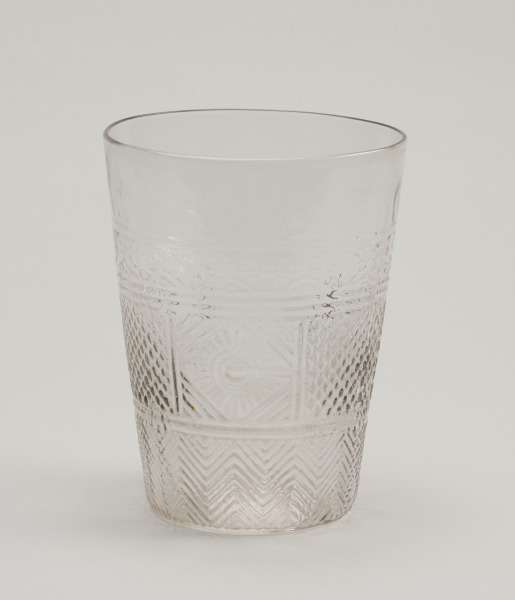
On view, instead, are glass, metal, wood, ceramic, and textile artworks that illustrate the widespread cultural and political change brought to the Chesapeake Bay area by European colonization in the 1600s and 1700s. Native communities such as the Powhatan, Susquehanna, and Patuxent had lived along the Bay for over 10,000 years. As European settler colonists violently forced Indigenous people off their homelands to found present-day Virginia, Maryland, and Delaware, the Chesapeake became a site where free and indentured immigrants, enslaved Africans, and local and foreign goods flowed into the colonies.
This room is uniquely able to tell such a story of colonial commerce. The original cottage was in Calvert County, about 80 miles from where you now stand. According to oral history, it was once owned by a sea captain, who would have transported pewter, glass, porcelain, textiles, and likely people—enslaved and free—throughout the Chesapeake. Baltimore, also located near the Chesapeake Bay, became one of the largest slave trading ports on the East Coast of the United States
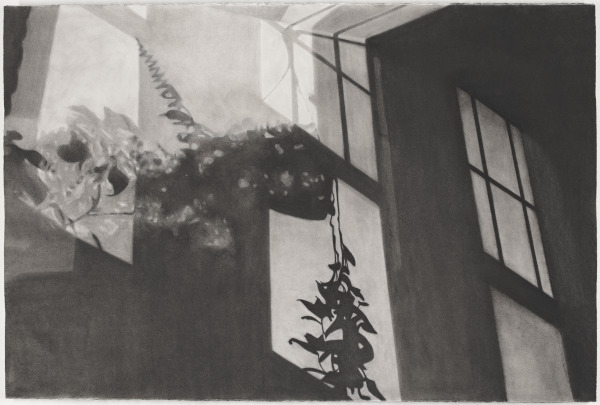
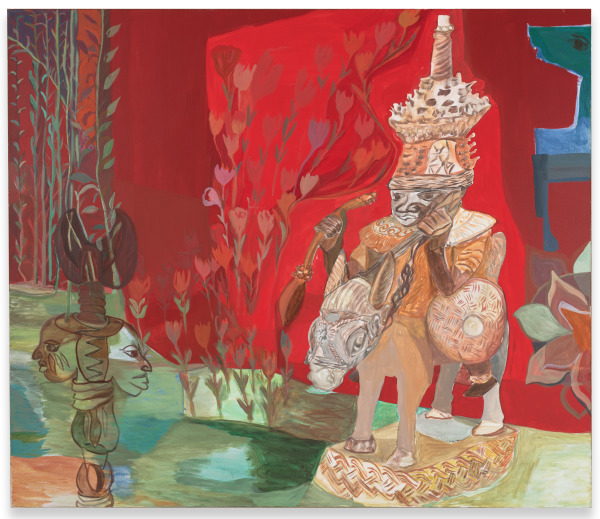
by the early 19th century. The contemporary textile at right reflects on enslavement and the social impacts of Maryland maritime trade.
Where do you see the consequences of colonization in spaces across Maryland?
The Baltimore Museum of Art by gift, 1925; Mr. and Mrs. Hamilton Owens, Lutherville, Maryland, by purchase in 1909 or 1910; Mr. and Mrs. James Locke Weems; Breedon transfer recorded at Prince Frederick, Maryland, c. 1900
American Wing Rotations 2020
American Wing Rotations 2021
American Wing Rotations 2022
American Wing Rotations 2023
American Wing Rotations 2024
American Wing Rotations 2025
"BMA News," October 1925, vol. 2, no. 3.
Henry Chandlee Forman, "Early Manors and Plantation Houses of Maryland, Easton: H. C. Forman (privately published), 1934 [identified the house from which the paneling was removed as "Capt. Clark's House" and mentions the sophisticated detail of the woodwork, implying a date of c. 1750.
William Voss Elder, "Maryland Period Rooms: The Baltimore Museum of Art," Baltimore, Maryland: Castro/Hollowpress, 1987, pp. 8-11
Architect
Unidentified, probably American
2000-01-01 00:00:00–2000-01-01 00:00:00
Makers
Unidentified, probably American
2000-01-01 00:00:00–2000-01-01 00:00:00
Previously attributed to
Unknown builder/architect
2000-01-01 00:00:00–2000-01-01 00:00:00
 On View at the BMA