
Maasai
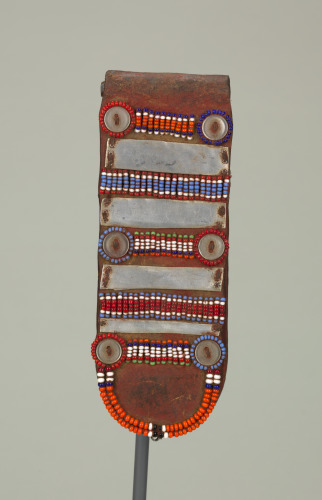
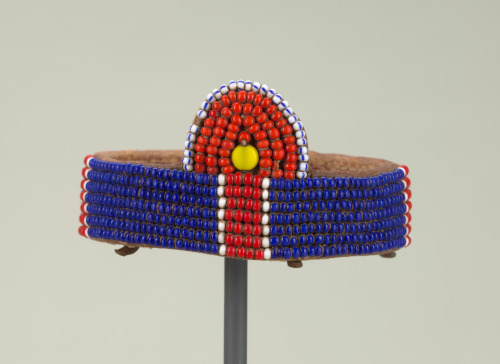
Female’s Belt (Enkitati)
Maasai (Northern), 1933-1966
Scroll

Maasai
Female’s Belt (Enkitati)
Maasai (Northern), 1933-1966
Physical Qualities
Glass beads, hide, sinew, aluminum alloy, (ties partially extended): 32 1/16 × 3 7/16 × 9/16 in. (81.5 × 8.7 × 1.5 cm.)
Credit Line
Gift of Nancy and Robert H. Nooter, Washington, D.C.
Object Number
1994.295
Although the introduction of European glass beads in the late 19th century dramatically increased the variety of artistic production in inland, east Africa, it had a more limited effect on the region’s underlying design preferences. Artists remained focused on creating abstract, geometric patterns using
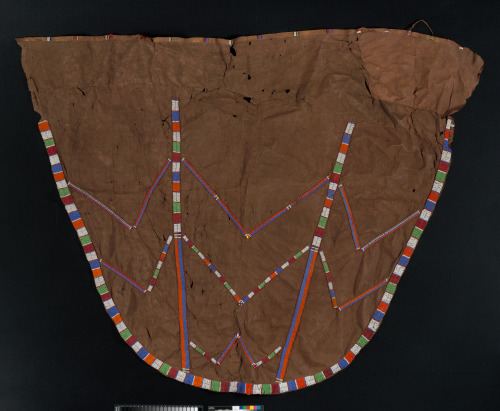
complementary colors. Take, for instance, the Maasai shield. Defined by the traditional narok color palette of red, white, and black, the shield is divided into several lozenge-shaped sections by a formal device known as ildung’ot (cuts). Such lines, which interrupt and enclose fields of contrasting color, are the foundational element of east African two-dimensional design. Prior to European colonial and missionary incursion, shields painted with vegetal and earthen dyes were among the few objects decorated with colored patterns. However, with the introduction of colored, glass beads, the design principles first seen on shields of male warriors began to be incorporated into everything from earrings to belts to capes. The strong diagonal lines that divide the Maasai woman’s cape (enkishopo) into triangular sections highlight this historical transformation. Worn for everyday occasions as well as for important ceremonies, these ornamental objects—known as ikonong’o—easily identified wearers as members of the Maasai ethnic group.
Design for Mobile Living: Art from Eastern Africa