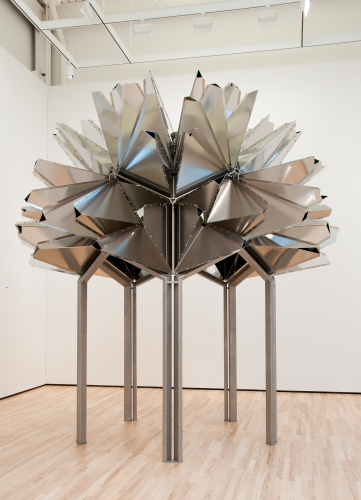
Olafur Eliasson and Ewald & Rasmussen KleinSmedie ApS
Flower observatory
2003
Scroll
Physical Qualities
Stainless steel, 169 5/16 × 147 5/8 × 147 5/8 in., 2860 lb. (430 × 375 × 375 cm.)
Credit Line
Fanny B. Thalheimer Memorial Fund, and Collectors Circle Fund
Object Number
2003.233
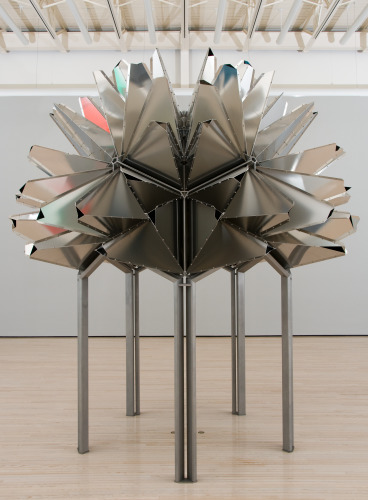
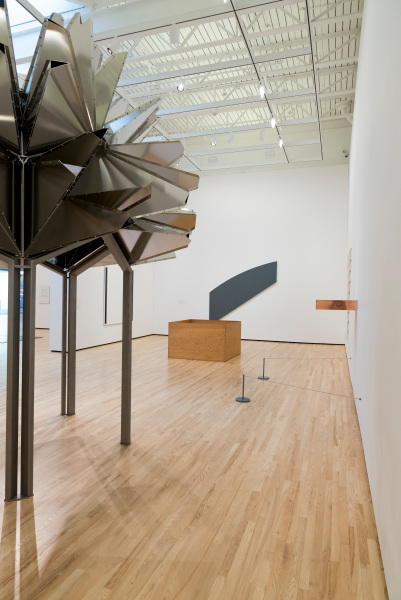
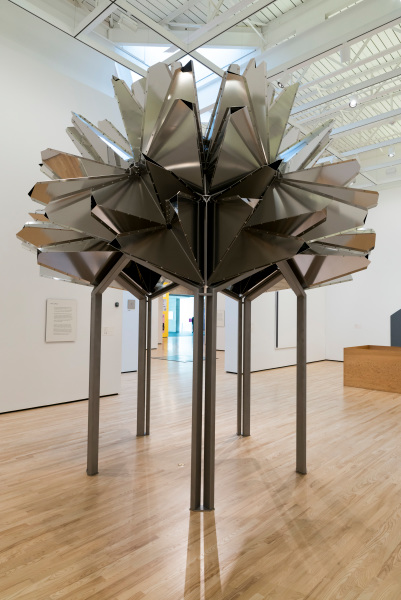
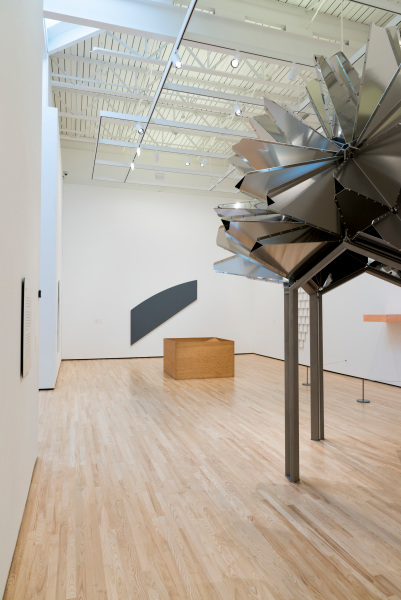
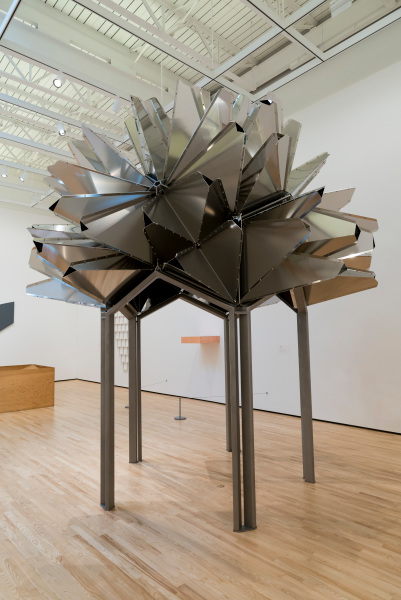
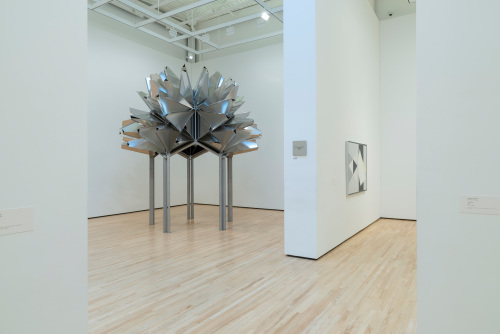
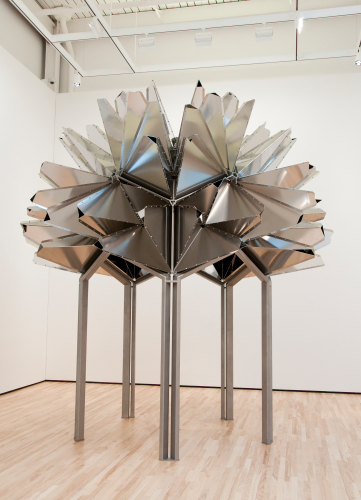
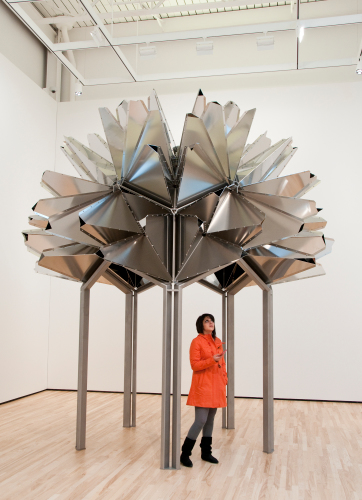
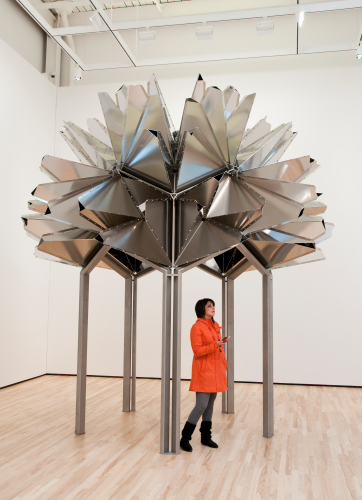
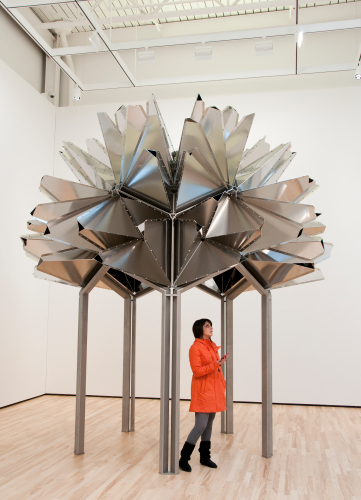
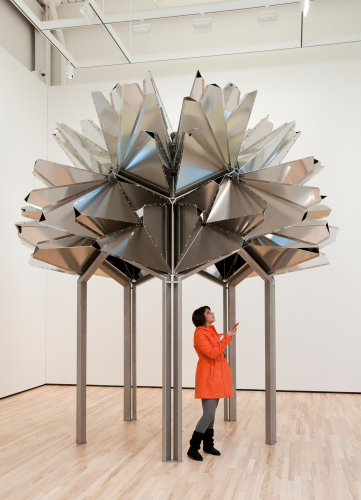
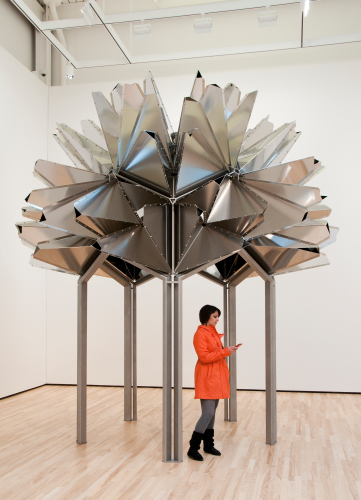
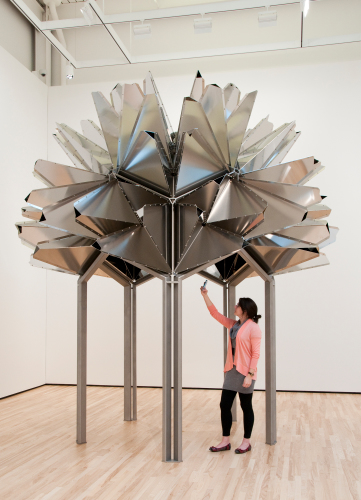
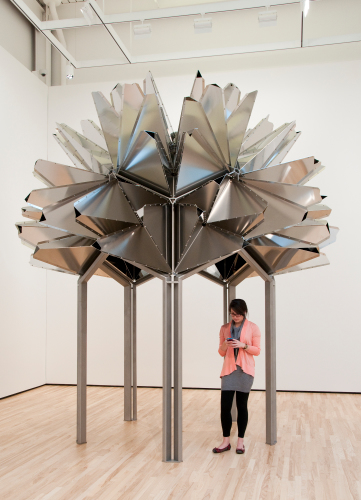
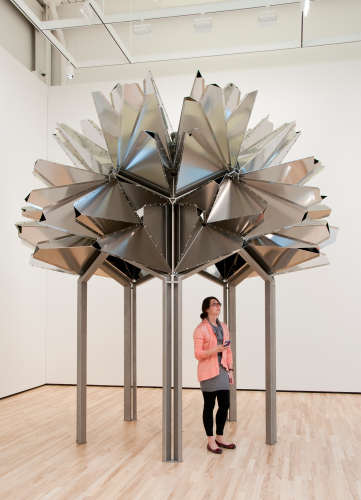
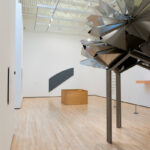
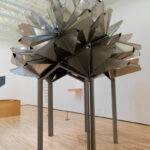
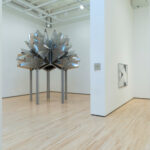
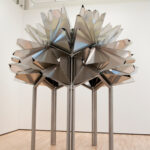
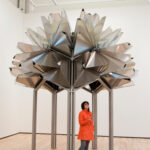
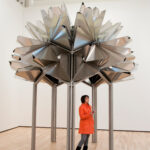
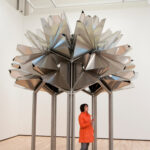
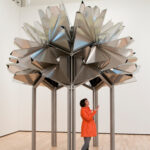
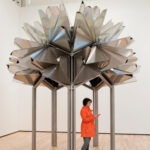
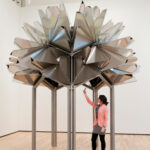
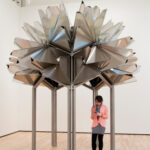
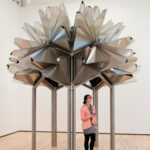
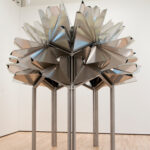
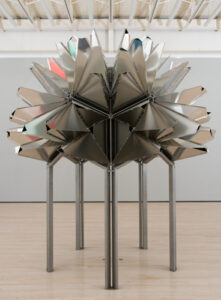
"Flower observatory" refracts natural light from the environment to create a disorienting kaleidoscopic effect that defies perspectival, Cartesian space. Eliasson's work often places the viewer at the center of a participatory, sensory-bodily experience in a process that the artist refers to as "seeing yourself seeing" or "sensing yourself sensing." Immersed in a perceptural experience, the viewer is at the same time made aware of the material and bodily conditions for that experience, activating a double consciousness.
"Flower observatory," created entirely from stainless steel components, is based on the geometric structure of a triacontrahedron, a 30-sided regular polyhedron. Inside, one can view 80 star-like shapes made when light enters the open ends of the conical spikes. Slight variations for the shape of the opening and notches on the rim yields 16 different kinds of "stars."
The work is a literal embodiment of the double perspective the artist aims to create: a simple step into the pavilion and glance upward immerses one into the experience of wonder and awe, while a step backwards reveals the function, though aesthetic, "machine" that creates that experience. "Flower observatory" is part of a body of large-scale structures, made by Eliasson in collaboration with the architects Einar Thorsteinn and Sebastian Behmann, that includes pavilions, tunnels, and grottos.
The Baltimore Museum of Art by purchase, 2003; Ewald & Rasmussen (fabricators), Hvidovre, Denmark, and Tanya Bonakdar Gallery, New York
Contemporary Wing Reinstallation
How Do We Know the World?
"The BMA Celebrates 90 Years," The Baltimore Museum of Art, Annual Report, 2004, no. 12, ill.
BMA Today, Fall-Winter 2009, p 18, ill.
"In a New Light," BMA Today, Fall 2010, p.12, ill.
Baltimore Museum of Art. The Baltimore Museum of Art: Celebrating a Museum. Baltimore: The Baltimore Museum of Art, 2014.