Nupe
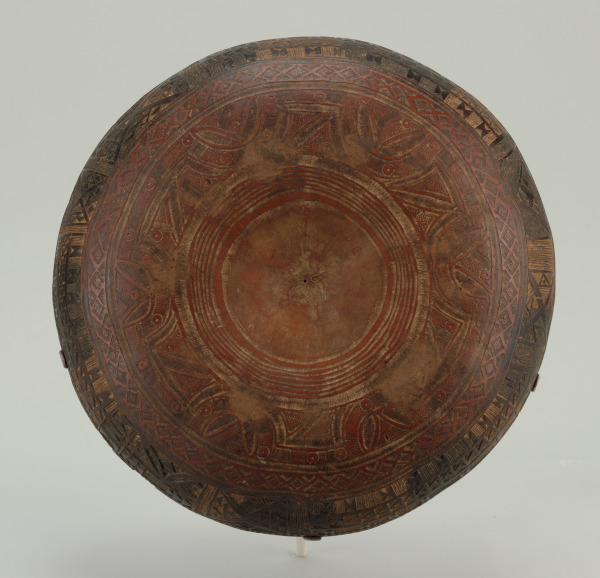
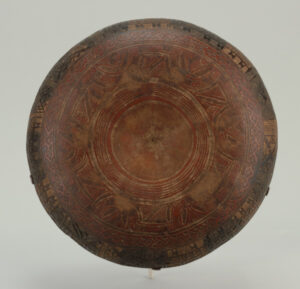
Gourd Bowl
Nupe, 1900-1932
Scroll
Nupe
Gourd Bowl
Nupe, 1900-1932
Physical Qualities
Gourd, kaolin, pigments, 3 x 14 x 14 in. (7.6 x 35.6 x 35.6 cm.)
Credit Line
Anonymous Gift
Object Number
2007.292
The intricate geometric and botanical designs that cover this gourd - and the jewelry and Qu'ran holder to your left - owe their existence to Islamic artistic practices that began to spread via Africa's trans-Saharan trade routes in the 7th century. And while these are not artworks made for specific religious ceremonies, traces of Islamic influence appear in the abundant use of pattern and ornament to cover the surfaces of these objects. For much of African history, Muslims worked as long-distance traders, a profession that allowed them to spread their faith to diverse communities across the continent. Today, nearly 40% of Africans identify as Muslim, and the cultural influence of the religion is widespread.
The Baltimore Museum of Art by gift, 2007; Private Collection, Baltimore, Maryland
African Reinstallation
African Gallery Rotations 2021
African Gallery Rotations 2022
African Gallery Rotations 2023
African Wing Rotations 2024
African Wing Rotations 2025
 On View at the BMA