Gros Point de Venise Lace Collar
1600-1699
Scroll
Gros Point de Venise Lace Collar
1600-1699
Physical Qualities
Linen, Overall: 16 1/4 × 21 1/4 in. (41.3 × 54 cm.)
Credit Line
The Cone Collection, formed by Dr. Claribel Cone and Miss Etta Cone of Baltimore, Maryland
Object Number
1950.1986.27a
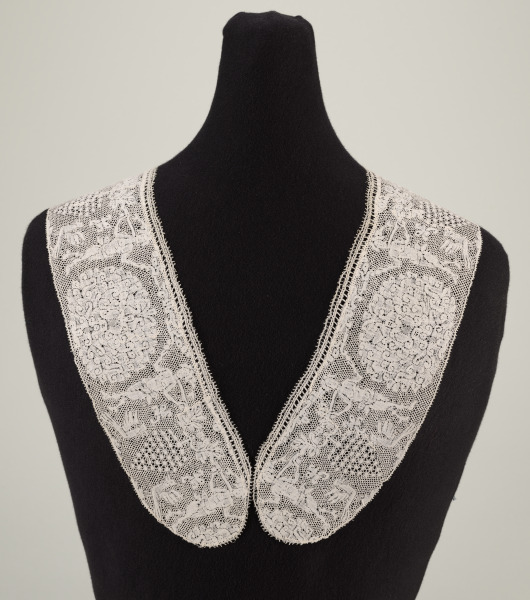
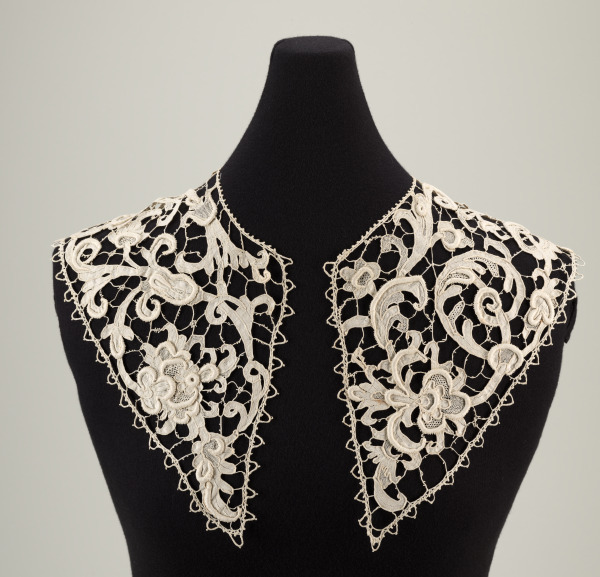
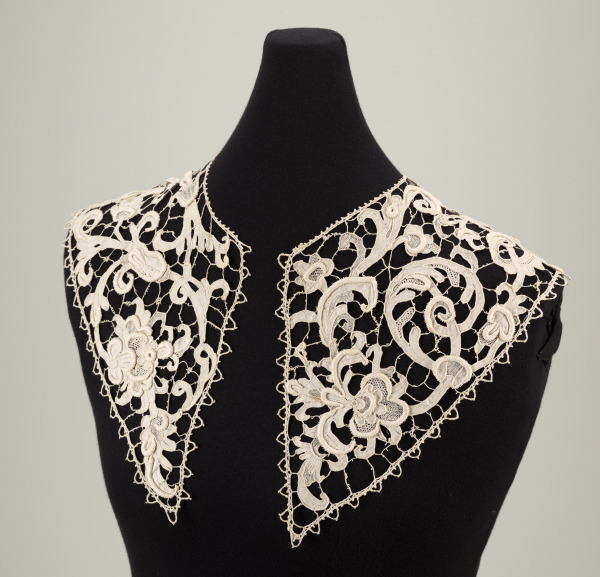
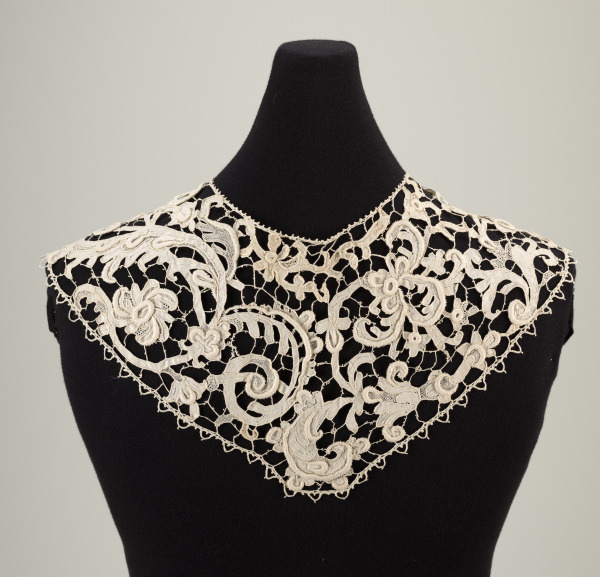
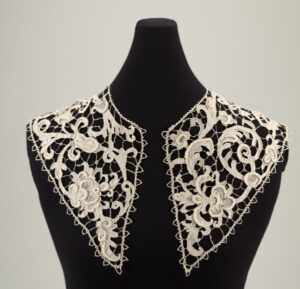
On January 31, 1925 according to her Daybooks and Account books, Claribel Cone purchased 2-1/2 yards of Spanish-made Venetian Point lace for $3000. Unfortunately, no such sizeable piece of this early lace is in the collection. Venetian point lace is represented, however, by this collar with cuff.
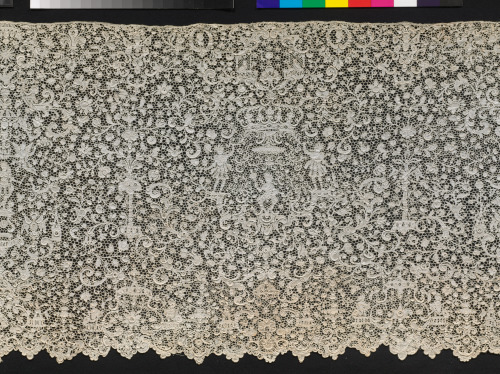
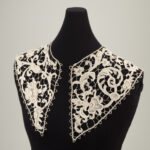
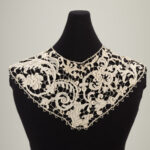
The practice of refashioning sections or remnants of precious antique laces into useable forms was not uncommon in the late 19th and early 20th centuries. Although the shape and lack of symmetry indicate that this collar was cut from a larger piece, the lace itself still exhibits the bold, vigorous baroque floral motifs with oversewn and heavily padded cordonnet typical of raised Venetian needlepoint laces of the 17th century. These outlining contours gradually thicken and then thin out again as they curve around the floral designs forming crescent-like shapes. As many as 75 layers of thread may have been used for padding beneath the buttonhole-stitched cordonnet at their deepest points, thus giving the lace a three-dimensional quality. Further decoration was sometimes added with frills of picots (small loops). No longer dependent on the woven structure, needle lace now featured rich, voluptuously scrolled leaves and exotic flowers. The motifs were created first and later joined with stitched brides or bars. The resulting lace was called Gros Point de Venise (Venetian Point) or sometimes Point de Venise Rose (raised). A variation featuring smaller tiered flowers and elaborate brides was also called Point de Venise Rose or Rose Point. This example has some of the earmarks of the latter.
Venetians reigned supreme in the lace-making arts during the 16th and early 17th centuries, as the taste for extravagant fashion requiring huge expenditures for lace spread across Europe. Soon, however, other countries, especially France, began imitating the Italian originals.
Baltimore Museum of Art by gift, 1950; Etta Cone, Baltimore, MD