Mezcala
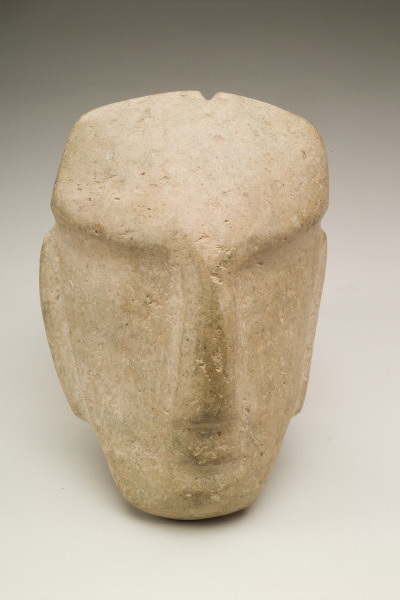
Head
Mezcala, 300-100
Scroll
Mezcala
Head
Mezcala, 300-100
Physical Qualities
Blue-green stone, 3 3/4 × 2 3/4 in. (9.5 × 7 cm.)
Credit Line
Gift of John and Marisol Stokes, Upper Nyack, New York
Object Number
2005.122
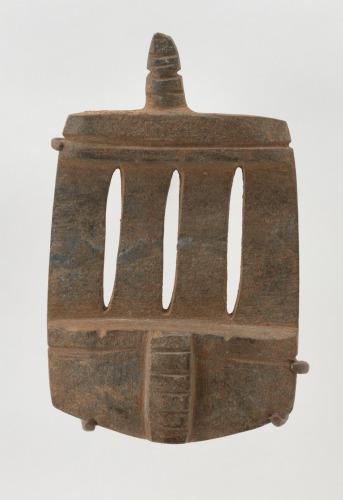
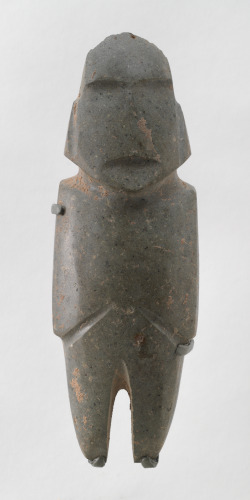
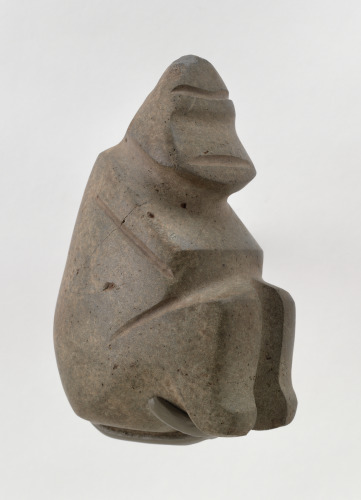
Mezcala refers to the style and tradition of stone sculpture produced in Formative Period (1200 B.C. - A.D. 200) Guerrero, Mexico. The Mezcala tradition includes a disparate range of forms that include standing and seated figures, masks and face panels, temple facade models, musical instruments, miniaturized animals, reptiles, and birds. Mezcala stone sculpture is recognizable for its emphasis on volume which was manipulated with minimal carving details.
Human heads, although fewer in number than standing figures, are prominent in the Mezcala sculptural tradition. They were produced mostly in the northern Mezcala region and may be a regional variant of whole figures.
Information supplied by donor places this object in the Sosa Collection prior to its 8/1/65 sale at Business Interiors, Houston, TX.