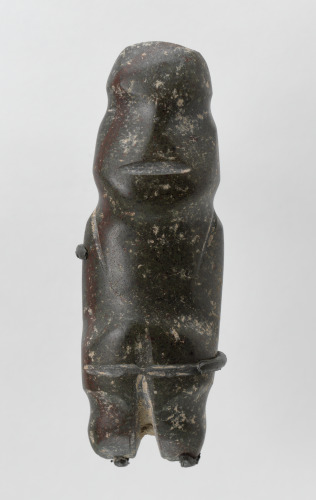
Mezcala
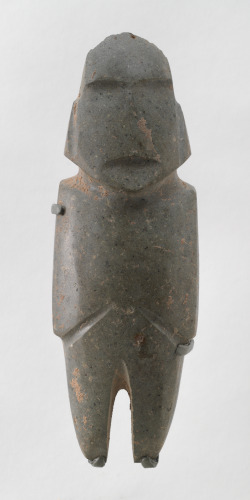
Human Figure
Mezcala, 500-200
Scroll
Mezcala
Human Figure
Mezcala, 500-200
Physical Qualities
Serpentine, 5 1/4 × 1 3/4 × 1 1/4 in. (13.4 × 4.4 × 3.1 cm.)
Credit Line
Gift of Edith Black, Potomac, Maryland, in Memory of her Husband, Jack Black
Object Number
1997.270
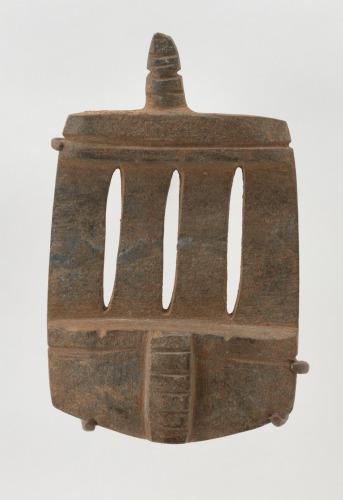
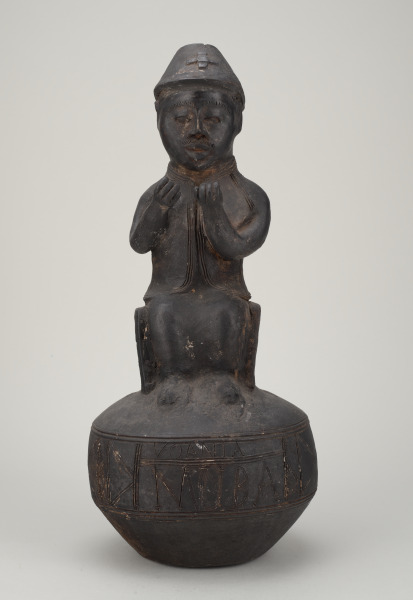
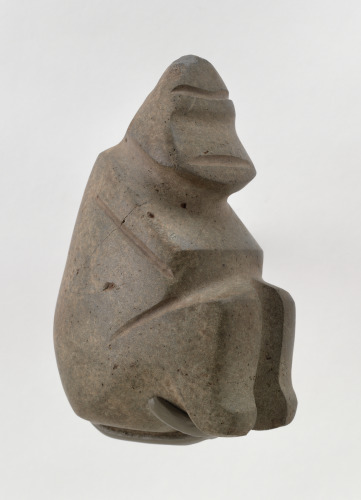
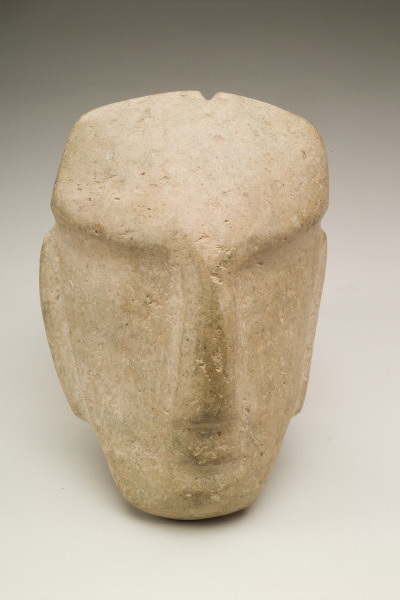
Mezcala refers to the style and tradition of stone sculpture produced in Formative Period (1200 B.C. - A.D. 200) Guerrero, Mexico. The Mezcala tradition includes a disparate range of forms that include standing and seated figures, masks and face panels, temple facade models, musical instruments, miniaturized animals, reptiles, and birds. Mezcala stone sculpture is recognizable for its emphasis on volume which was manipulated with minimal carving details. Sculptors carved just enough of the cobble, celt, or pebble to animate and enhance its stoniness. Such minimalism inspired the likes of Diego Rivera, Miguel Covarrubias, and notably Milton Loef who amassed a large collection.
Henry Moore and the Pre-Columbian Past
Ancient Americas Rotations 2024
Gay, Carlo, and Frances Pratt
1992. Mezcala: Ancient Stone Sculpture from Guerrero, Mexico. Balsas Publications, New York.
Paradis, Louise I. "Guerrero Region," in "Archaeology of Ancient Mexico and Central America," edited by Susan Toby Evans and David L. Webster (New York: Garland Publishing, 2001), 311-321.
1992. Mezcala: Ancient Stone Sculpture from Guerrero, Mexico. Balsas Publications, New York.
Paradis, Louise I. "Guerrero Region," in "Archaeology of Ancient Mexico and Central America," edited by Susan Toby Evans and David L. Webster (New York: Garland Publishing, 2001), 311-321.