Yup'ik
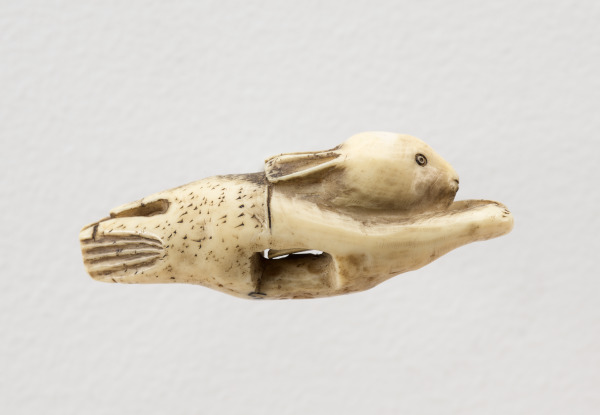
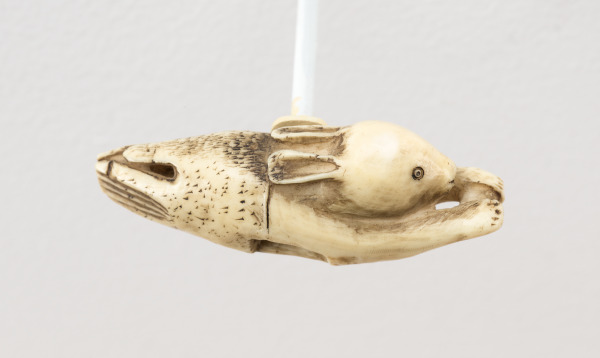
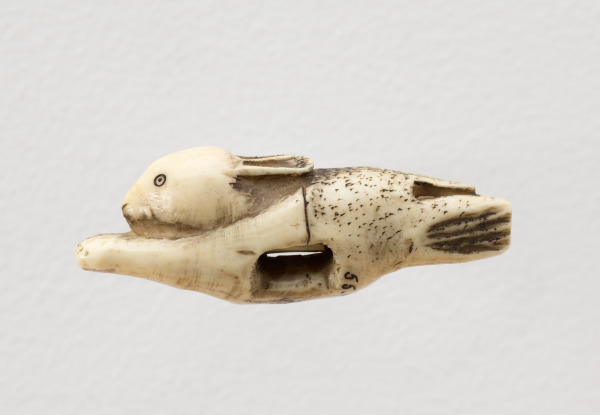
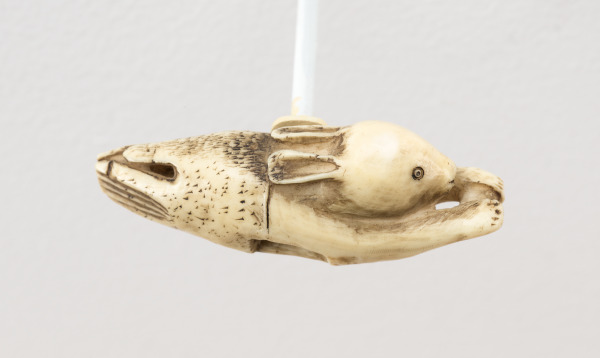
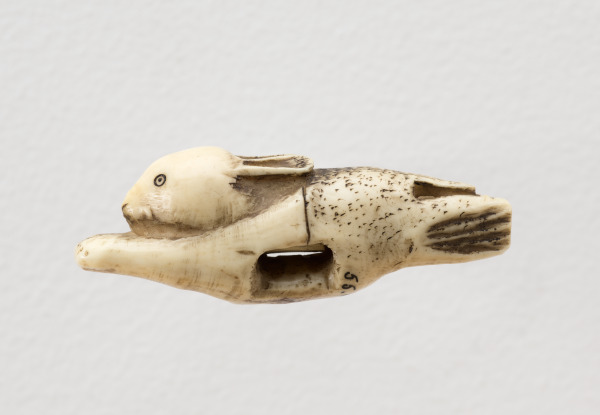
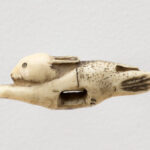
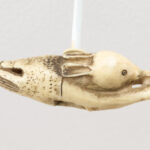
Line Attacher (Rabbit-Seal Design)
Inuit, 1867-1899
Scroll
Yup'ik
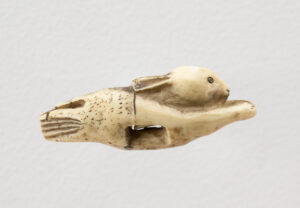
Line Attacher (Rabbit-Seal Design)
Inuit, 1867-1899
Physical Qualities
Walrus ivory, 1/2 × 1 × 2 3/8 in. (1.3 × 2.5 × 6 cm.)
Credit Line
John Erikson Collection
Object Number
1955.167.47
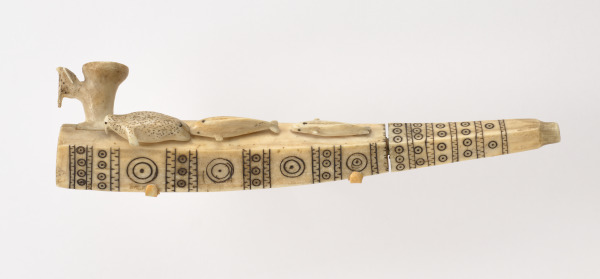
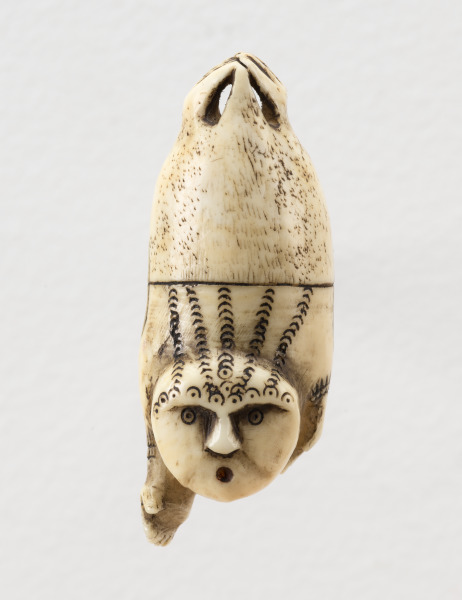
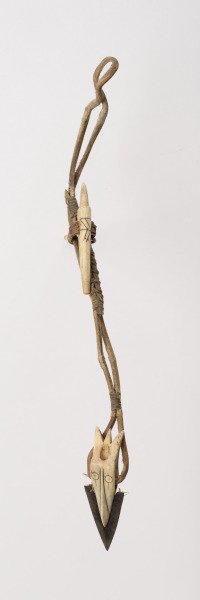
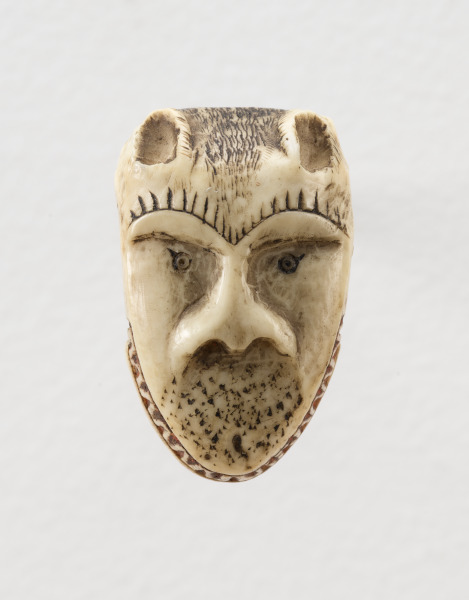
Kayak hunting expeditions required a great deal of tools and weapons. Sealskin cords attached weapons to the deck of the vessel, and these small tools, known as line attachers, joined together two sealskin cords without using a knot. These line attachers feature a design that may have been seen as charms to attract prey. Each piece shows beings transforming into other beings—a human and rabbit turn into a seal, while a bear transforms into a human and then into a seal. Such transformations infuse both oral traditions and visual art in Yup’ik culture, which holds that beings do not have a single, immutable form.
The Baltimore Museum of Art by gift, 1955; Margareta Erikson Davis Comore
Purchased by John Erikson in Alaska ca. 1900
Purchased by John Erikson in Alaska ca. 1900
Arctic Artistry
American Wing Rotations 2025
Fitzhugh, William W., "Inua: Spirit World of the Bering Sea Eskimo," Washington, D.C.: Published for the National Museum of Natural History by the Smithsonian Institution Press, 1982, p 185, no 229.
Blodgett, Jean, "The Coming and Going of the Shaman: Eskimo Shamanism and Art: The Winnipeg Art Gallery March 11- June 11, 1978," Winnipeg: The Gallery, c1979, pp 1-4.
Blodgett, Jean, "The Coming and Going of the Shaman: Eskimo Shamanism and Art: The Winnipeg Art Gallery March 11- June 11, 1978," Winnipeg: The Gallery, c1979, pp 1-4.
Inscribed: None visible; object secured in exhibition case.