





Public Domain

Biagio Di Antonio

Madonna and Child with an Angel

1469

Scroll

Biagio Di Antonio

Madonna and Child with an Angel

1469

Physical Qualities Tempera on wood panel, 27 1/2 x 18 1/2 in. (69.9 x 47 cm.)
Credit Line The Jacob Epstein Collection
Object Number 1951.120
During the Renaissance, painters who had already mastered the accurate portrayal of the human figure and three-dimensional space served as examples for artists with lesser training. Biagio di Antonio, who worked in Florence, learned much from Florentine masters Domenico Ghirlandaio and Andrea del Verrochio. Eager to demonstrate a command of Renaissance style, Biagio painted the Christ Child standing with his weight clearly on one leg, a reference to the contrapposto pose of ancient Greek and Roman sculpture favored by Renaissance artists. In addition, Biagio placed the Madonna’s throne in front of a classical arcade that recalls the glory of the ancient world. The arcade, in turn, frames a view of a placid landscape carefully constructed according to the new rules of Renaissance perspective.
The Baltimore Museum of Art on deposit; The Baltimore Museum of Art on extended loan, 1931-1951; the Mayor and City Council of Baltimore, by bequest, 1945; The Baltimore Museum of Art on extended loan from Jacob Epstein, Baltimore, from 1931; by purchase from Newhouse Galleries, New York, 1931; Ehrich Galleries, New York; Dr. Benedict & Co., Berlin, 1928 (advertised in "Pantheon" in 1928; Sotheby's, London, July 20, 1921 [as Raffaellino del Garbo], no. 230, ill; G. Sancroft Holmes of Gawdy Hall, Harleston, Norfolk, England.
Bernard Berenson, "Tre disegni di Giovan Battista Utili da Faenza." Rivista d'Arte 15, 1933. p. 21-33, fig. 5.
The Jacob Epstein Collection in the Baltimore Museum of Art, Baltimore: Mr. Jacob Epstein, 1939, p. 26, ill. (n.p.).
Burton B. Fredericksen and Federico Zeri. Census of Pre-Nineteenth-Century Italian Paintings in North American Public Collections. Harvard University Press: Cambridge, Mass, 1972, p. 28.
Everett Fahy, Some Followers of Domenico Ghirlandajo. Garland: New York, 1976, p. 204.
Konrad Oberhuber, "Le Probleme des premieres oeuvres de Verrocchio.: Revue de l'Art 42, 1978. p. 65.
Gertrude Rosenthal, ed. and David Alan Brown, "Italian Paintings XIV-XVIIIth Centuries from the Collection of the Baltimore Museum of Art", Baltimore, 1980, pp. 43-53, ill. p. 42.
Bernard Berenson, The Drawings of the Florentine Painters, 2nd rev. ed., University of Chicago Press: Chicago, 1938, p. 69.
Darop A. Covi, "Andrea Del Verrocchio Life and Work." Leo S. Olschki Editore, 2005, plate 197.

Artist

Biagio Di Antonio

1445–1515

Italian, 1446-1516
Meet Biagio Di Antonio

Explore the Collection Further

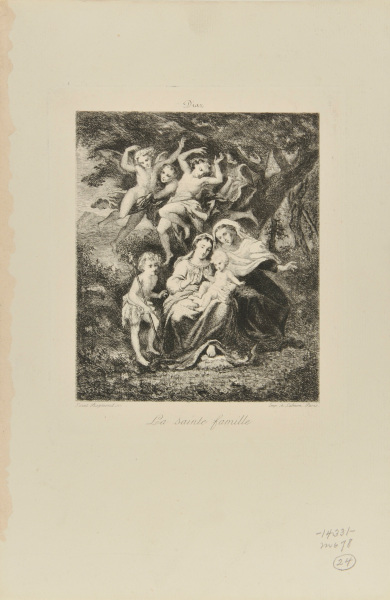
Saint Raymond, Narcisse-Virgile Diaz de la Peña, and others
Madonna and Child with Saints and Angels
1888–1926
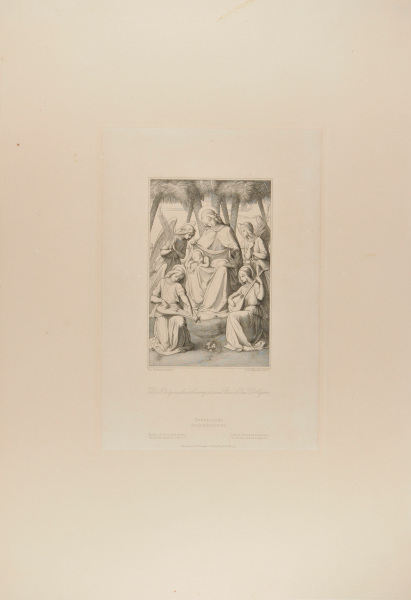
Joseph Keller, Edward Jakob von Steinle, and others
The Madonna and Child with Angels in a Palm Garden
1835–1845
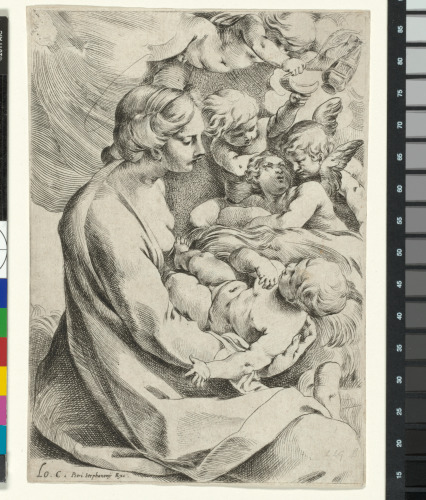
Lodovico Carracci
Madonna and Child with Angels
1589–1614
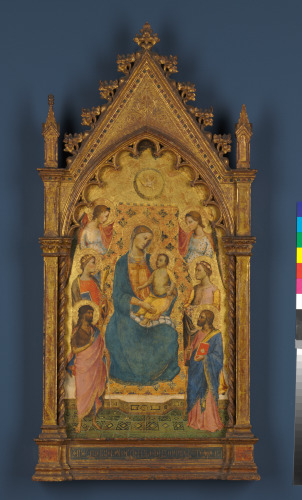
Niccolo di Pietro Gerini
Madonna and Child Enthroned with Two Angels and Four Saints
1300–1499
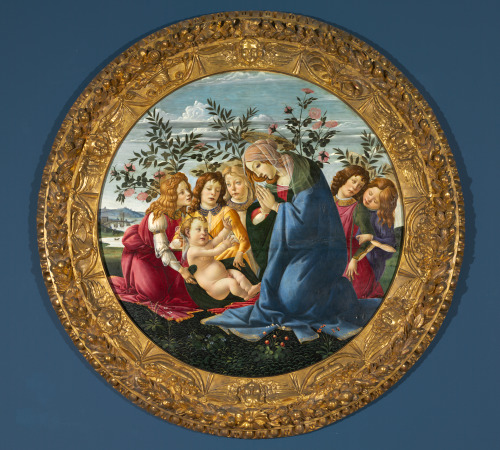
Sandro Botticelli
Madonna Adoring the Child with Five Angels
1484–1489
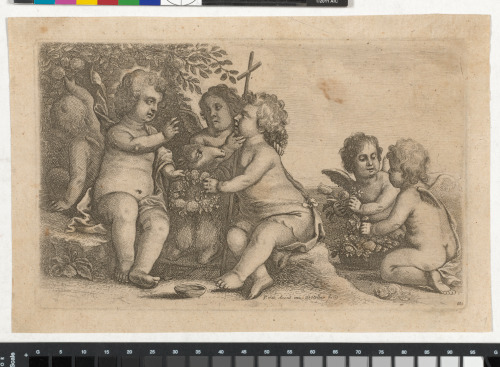
Wenceslaus Hollar and Peeter van Avont
Christ Child, St. John and Four Angels
1640–1650
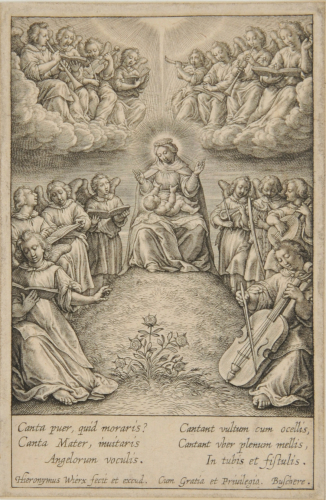
Jerome [Hieronymous] Wierix
Angelic Concert for the Virgin and Child
1618
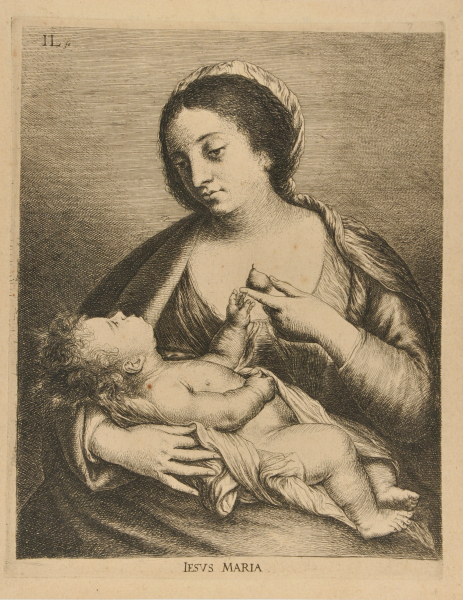
Jan Lievens
Madonna and Child
1626–1673
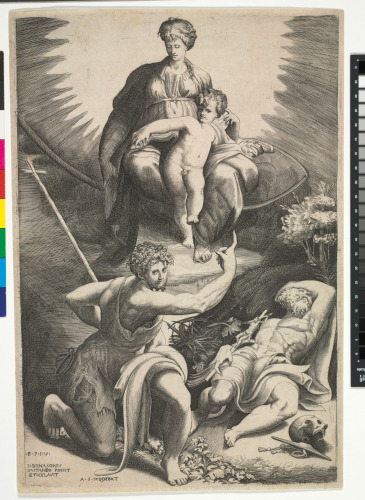
Giulio Bonasone and Parmigianino [Girolamo Francesco Maria Mazzola]
The Madonna and Child with Saints John the Baptist and Jerome
1525–1526
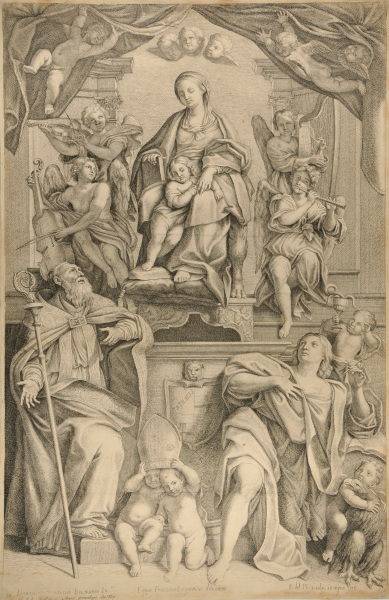
Pietro del Pò and Domenichino
The Virgin and Child Enthroned, with St. Petronius and St. John the Evangelist in Adoration
1629–1691
David Weiss and Luca Cambiaso
Madonna and Child
1794–1845
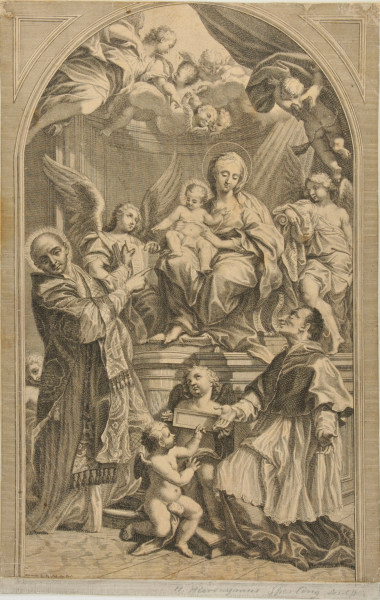
Hieronymus Sperling
The Virgin and Child with Saints and Angels
1714–1776