
Samburu
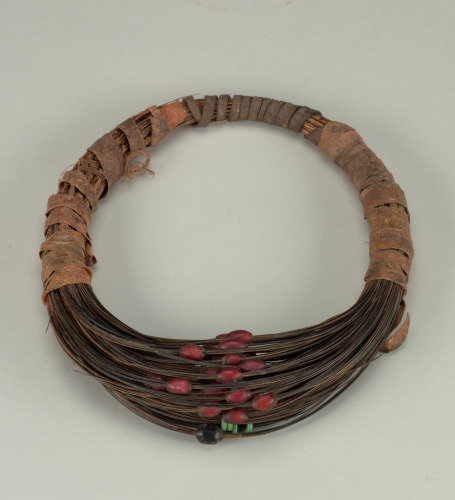
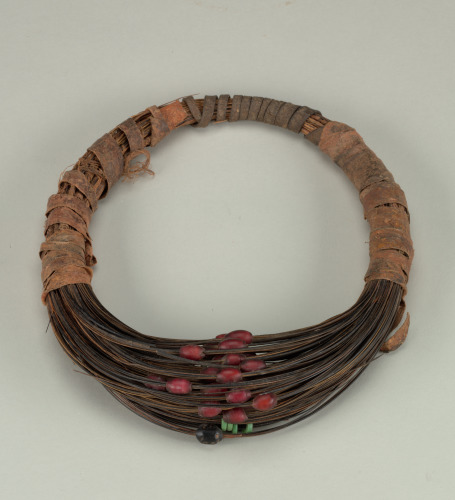
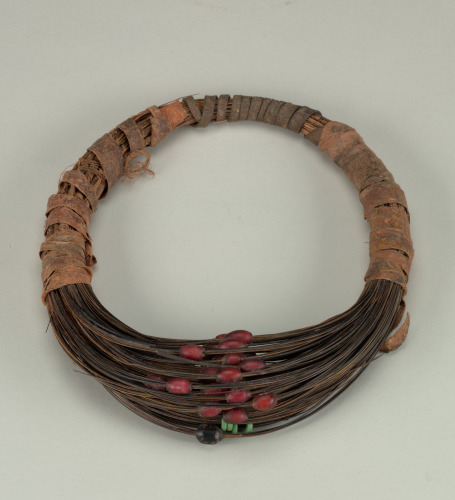
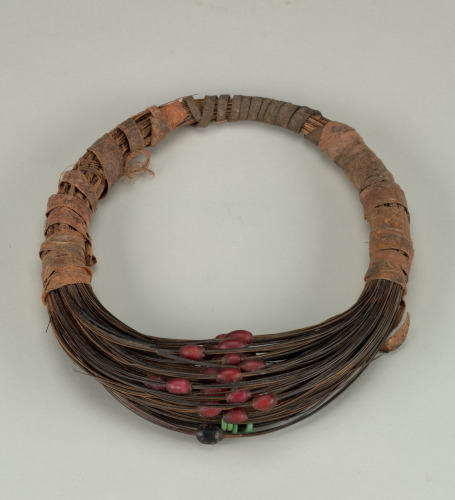
Married Woman’s Necklace (Mporo)
Samburu, 1900-1966
Scroll
Samburu
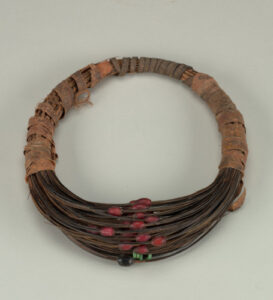
Married Woman’s Necklace (Mporo)
Samburu, 1900-1966
Physical Qualities
Fiber, hide, glass beads, 1 1/2 × 8 7/16 in. (3.8 × 21.5 cm.)
Credit Line
Gift of Nancy and Robert H. Nooter, Washington, D.C.
Object Number
1994.302
The arrival of colored glass beads in the late 19th century sparked an artistic revolution across inland, eastern Africa. No longer hindered by the narrow color palette of local materials such as animal hide, egg shells, and smelted iron, artists from the region used imported Venetian and Czechoslovakian beads to create a wide array of jewelry. Samburu women from northern Kenya began to wear necklaces (mporo) featuring a band of red glass beads strung with hair from a giraffe’s tail. Designed to enhance the wearer’s beauty, mporo also signaled a woman’s eligibility to marry and bear children.
Design for Mobile Living: Art from Eastern Africa