Yup'ik
Mask
Yup'ik, 1849-1899
Scroll
Yup'ik
Mask
Yup'ik, 1849-1899
Physical Qualities
Wood, feathers, pigment, string, 5 7/8 x 9 1/16 x 15 3/4 in. (15 x 23 x 40 cm.)
Credit Line
Gift of Alan Wurtzburger
Object Number
1959.9
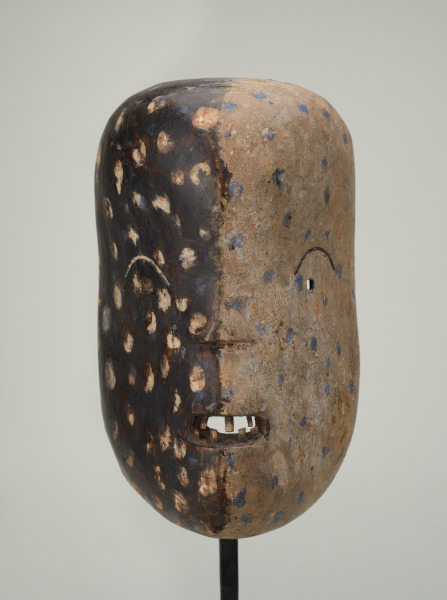
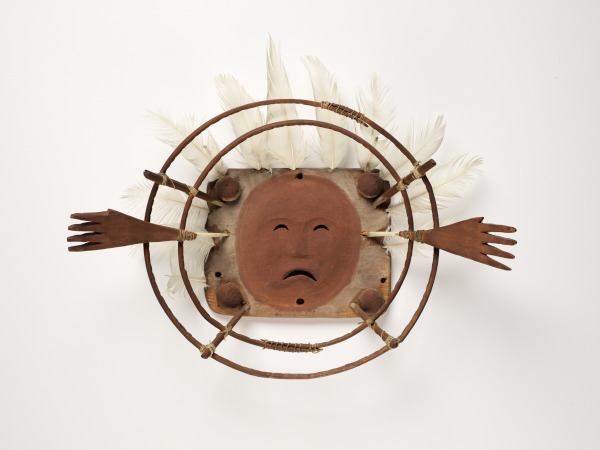
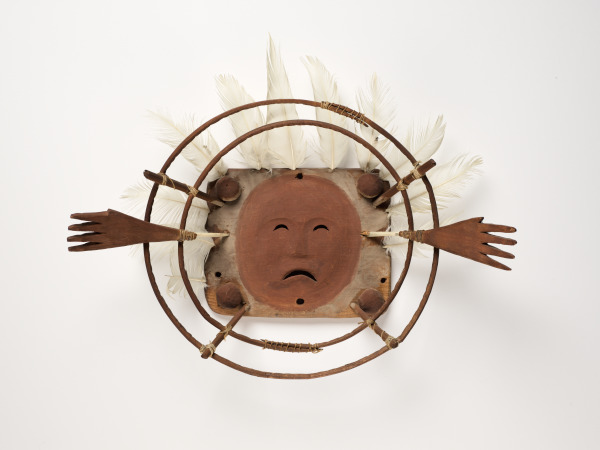
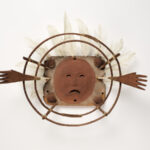
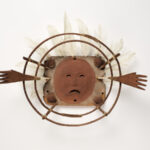
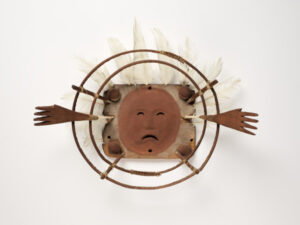
This mask’s face, perhaps representing the sun, is surrounded by wooden hoops that depict different layers of the sky and feathers that suggest snow and stars. The Yup’ik understand the sun to be one of many persons from other worlds. Constant negotiation and interconnected relationships with these persons are essential for survival, ensuring the continued availability of resources such as animals to hunt. When food was scarce, a spiritual leader would utilize this mask to enter the celestial realm and petition the sun for help. The shortened thumbs on both sides of the mask reflect the community’s desire that animals might slip through the sun’s hands and into their world to be hunted.
The Baltimore Museum of Art by gift, 1959; Alan Wurtzburger, Baltimore; Likely collected by Wurtzburgers in 1956 in Russia (from Pacific NW coast dealers/descendants of 19th century Russian seal hunters)
Arctic Artistry
American Wing Rotations 2025
Ann Fienup-Riordan, "The Living Tradition of Yup'ik Masks," Seattle: University of Washington Press, 1996, 77, 109, 222, 271.
Dorothy Jean Ray, "Eskimo Masks: Art and Ceremony," Seattle: University of Washington Press, 1967, pp. 6-7, 65-67, 86-91, 182-184.
F. H. Douglas and R. D'Harnoncourt, "Indian Art of the United States," New York: The Museum of Modern Art, 1941, p. 193.
Norman Feder, "American Indian Art," New York: Abrams, n.d., ill. 191.
F.C. Graybill and Victor Boesen, "Edward Sheriff Curtis: Visions of a Vanishing Race," New York: Crowell, 1976, p. 104.
"Native Arts fo the Pacific Northwest," Portland Art Museum, California, 1949, ill. 137.
Kit Lort, "Yupik Eskimo Masks from Alaska," "Inuit Art Quarterly," Winter 1992, pp. 31-32.
"Wer Zeigt sein Wahres Gesicht?" Stadtische Kunsthalle Recklinghausen (W. Germany), 1983.
"The Far North: 2000 Years of American Eskimo and Indian Art," National Gallery of Art, Washington, D.C., 1973, ill. 166.
Miguel Covarrubias, "The Eagle, the Jaguar and the Serpent: Indian Art of the Americas," New York: Knopf, 1954.
Dorothy Jean Ray, "Eskimo Masks: Art and Ceremony," Seattle: University of Washington Press, 1967, pp. 6-7, 65-67, 86-91, 182-184.
F. H. Douglas and R. D'Harnoncourt, "Indian Art of the United States," New York: The Museum of Modern Art, 1941, p. 193.
Norman Feder, "American Indian Art," New York: Abrams, n.d., ill. 191.
F.C. Graybill and Victor Boesen, "Edward Sheriff Curtis: Visions of a Vanishing Race," New York: Crowell, 1976, p. 104.
"Native Arts fo the Pacific Northwest," Portland Art Museum, California, 1949, ill. 137.
Kit Lort, "Yupik Eskimo Masks from Alaska," "Inuit Art Quarterly," Winter 1992, pp. 31-32.
"Wer Zeigt sein Wahres Gesicht?" Stadtische Kunsthalle Recklinghausen (W. Germany), 1983.
"The Far North: 2000 Years of American Eskimo and Indian Art," National Gallery of Art, Washington, D.C., 1973, ill. 166.
Miguel Covarrubias, "The Eagle, the Jaguar and the Serpent: Indian Art of the Americas," New York: Knopf, 1954.