Baining and New Britain
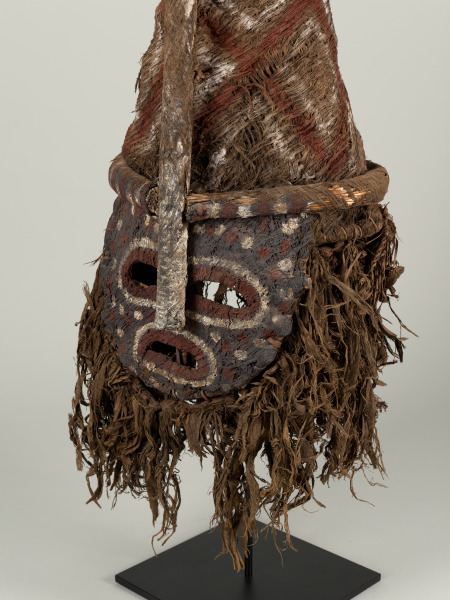
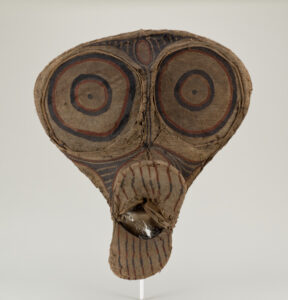
Mask (Kavat)
Baining, 1900-1932
Scroll
Physical Qualities
Bark cloth, bamboo, plant fiber, pigment, 21 1/4 x 20 7/8 x 15 3/4 in. (54 x 53 x 40 cm.)
Credit Line
Gift of Alan Wurtzburger
Object Number
1955.251.28
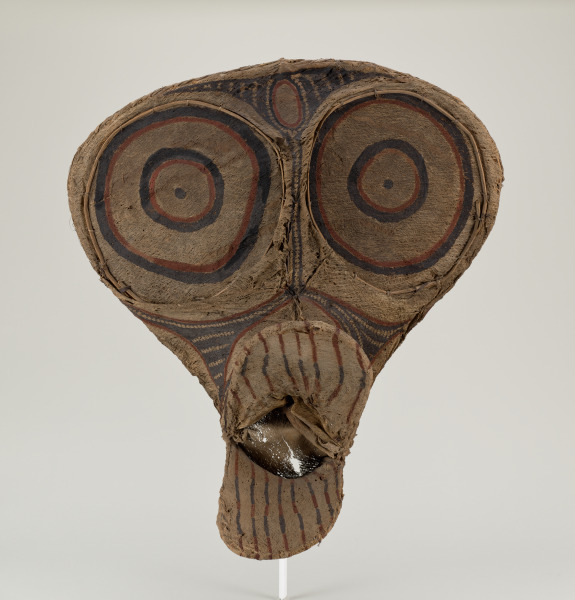
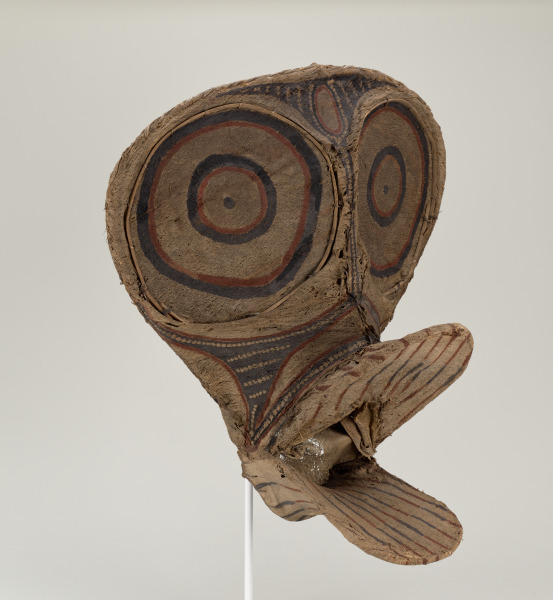
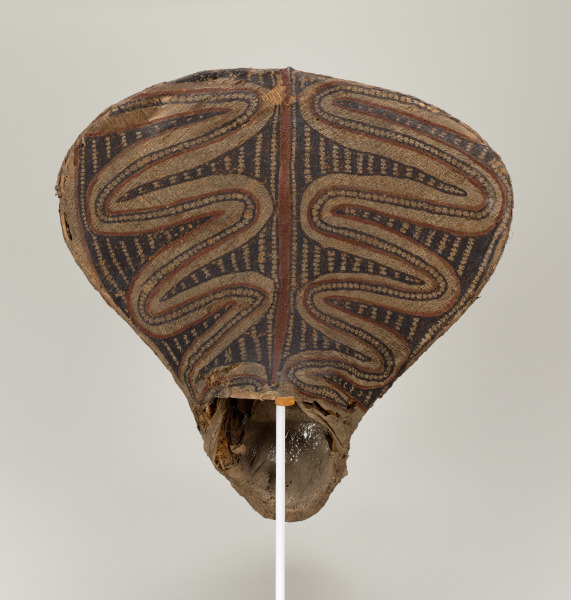
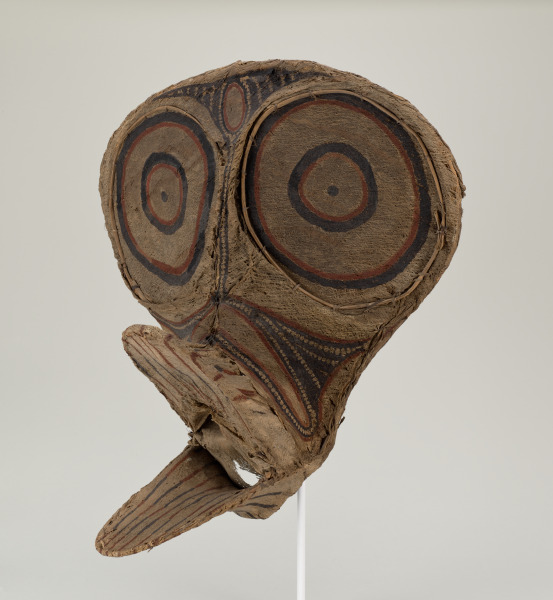
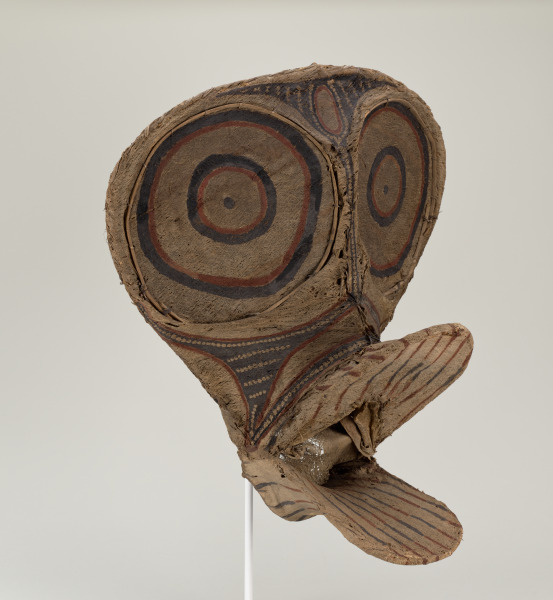
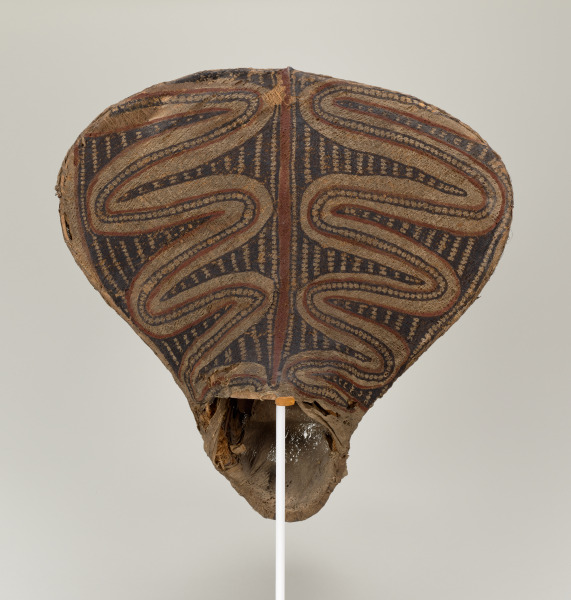
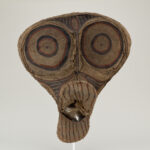
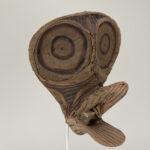
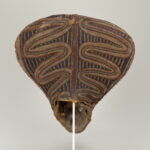
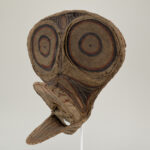
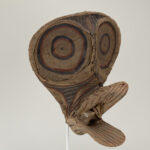
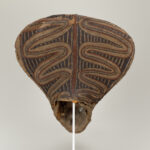
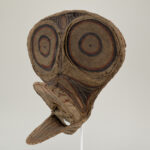
Bark cloth stretches across a bamboo frame to form the surface of this kavat (mask) from New Britain, a large island region of Papua New Guinea. Works like this were created and worn by male Baining artists during nighttime performances that celebrated the spirits, animals, and commodities associated with the forest. After a single performance, the spirits who temporarily inhabited these masks were thought to die and leave the masks. These masks were then destroyed, discarded, or sold, and the bark cloth, which was removed from the mask prior to its destruction, was distributed among the community. The rounded form of this kavat suggests it once served as the temporary home for a leaf spirit.
The Baltimore Museum of Art by gift, 1955; Alan Wurtzburger
The Matter of Bark Cloth
Douglas F. Fraser & Paul S. Wingret, "The Wurtzburger Collection of Oceanic Art". Baltimore Museum of Art,1956, pg. 13, 23, ill. 28.
Sunday Sun (Brown Section) January 8th 1956 illus p. 15
Hermkens, Anna-Karina. Engendering Objects: Dynamics of Barkcloth and Gender Among the Maisin of Papua New Guinea. Sidestone Press, 2013
Page, Maud 2009. “Paperskin: An Introduction,” in Paperskin: Barkcloth Across the Pacific, 11-19. Auckland: Museum of New Zealand Te Papa Tongarewa.
Neich, Roger and Mick Predergrast. 1997. Pacific Tapa. Honolulu: University of Hawai‘i Press.
Page, Maud 2009. “Paperskin: An Introduction,” in Paperskin: Barkcloth Across the Pacific, 11-19. Auckland: Museum of New Zealand Te Papa Tongarewa.
Neich, Roger and Mick Predergrast. 1997. Pacific Tapa. Honolulu: University of Hawai‘i Press.