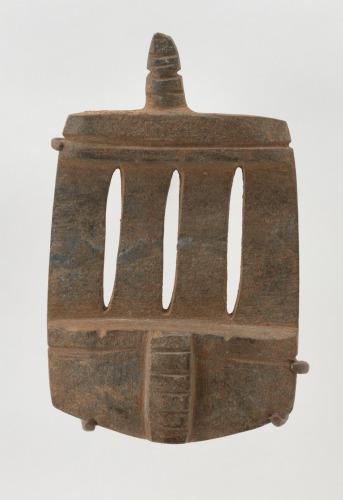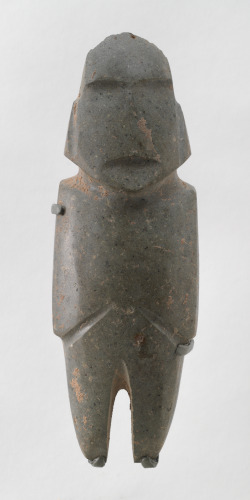

Mezcala
Pendant in the form of a hand
Mezcala, 1150-550
Scroll
Mezcala
Pendant in the form of a hand
Mezcala, 1150-550
Physical Qualities
Greenstone, 5 9/16 in. (14.1 cm.)
Credit Line
Gift of Daniel Solomon, M.D., Los Angeles
Object Number
1986.59
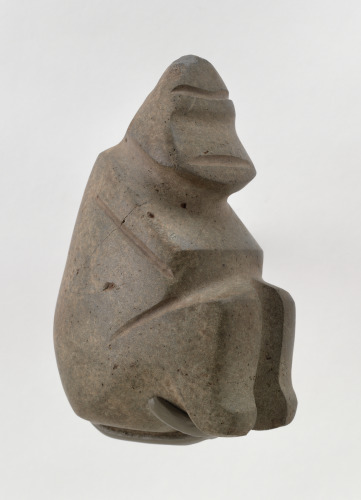
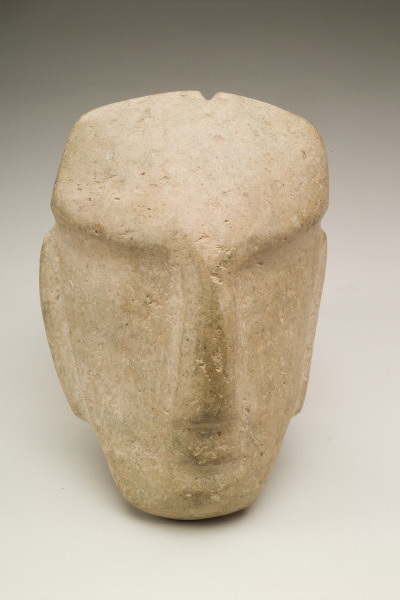
Mezcala refers to the style and tradition of stone sculpture produced in Formative Period (1200 B.C. - A.D. 200) Guerrero, Mexico. The Mezcala tradition includes a disparate range of forms that include standing and seated figures, masks and face panels, temple facade models, musical instruments, miniaturized animals, reptiles, and birds. Mezcala stone sculpture is recognizable for its emphasis on volume which was manipulated with minimal carving details. Sculptors carved just enough of the cobble, celt, or pebble to animate and enhance its stoniness. Such minimalism inspired the likes of Diego Rivera, Miguel Covarrubias, and notably Milton Loef who amassed a large collection.