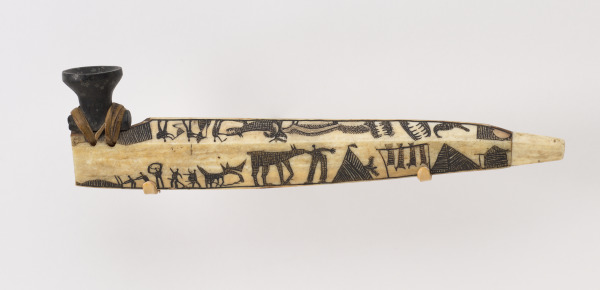
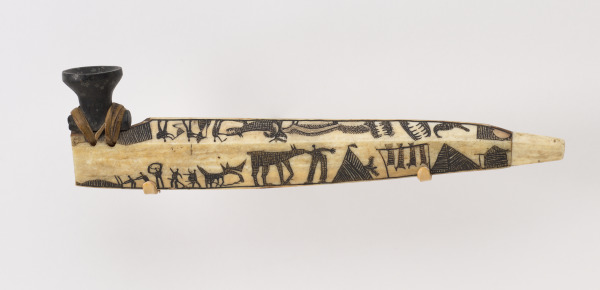
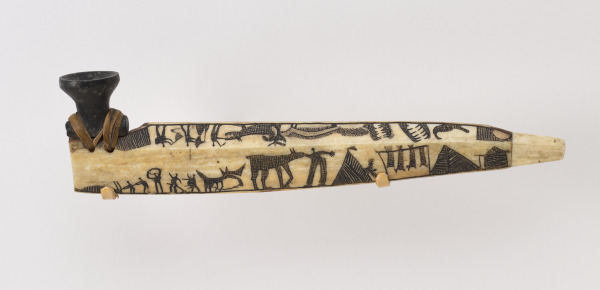
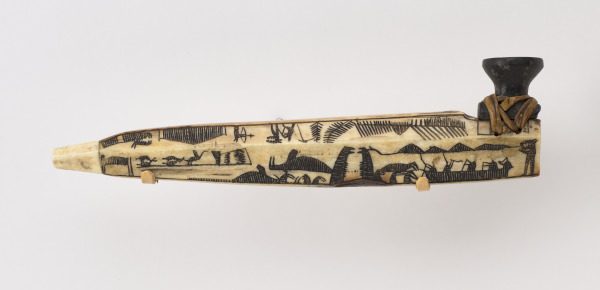
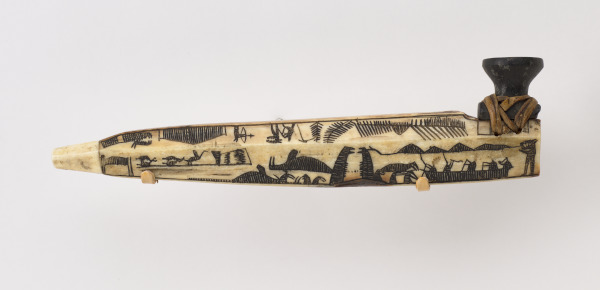
Possibly Iñupiaq and Possibly Yup'ik
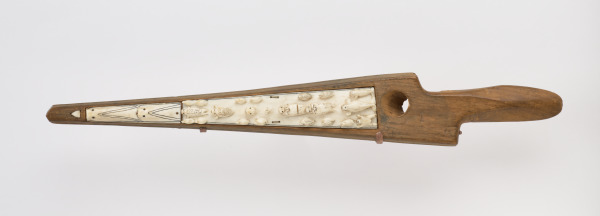
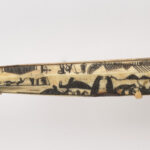
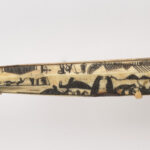
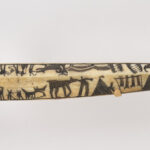
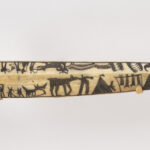
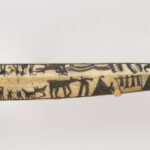
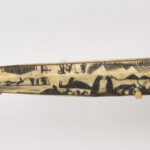
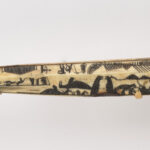
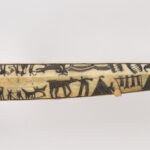
Pipe
Inuit, 1867-1899
Scroll
Physical Qualities
Ivory, lead, fiber thong, 10 1/4 in. (26 cm.)
Credit Line
John Erikson Collection
Object Number
1955.167.61
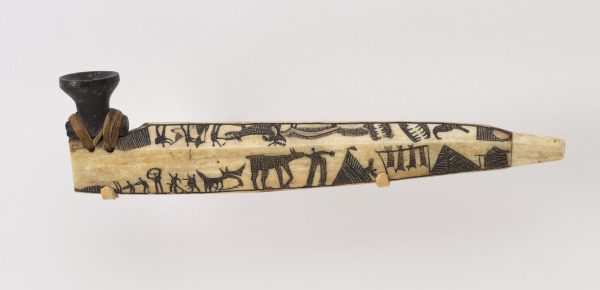
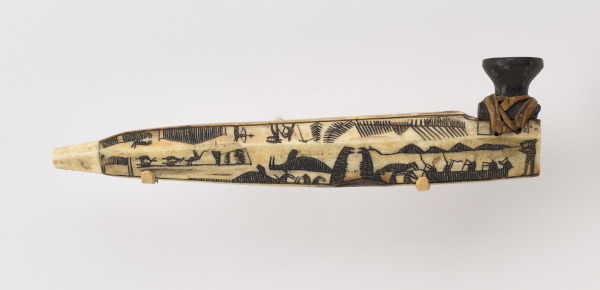
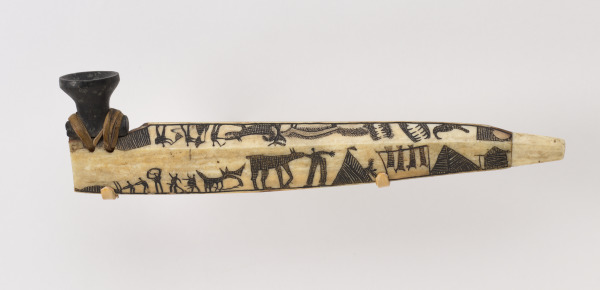
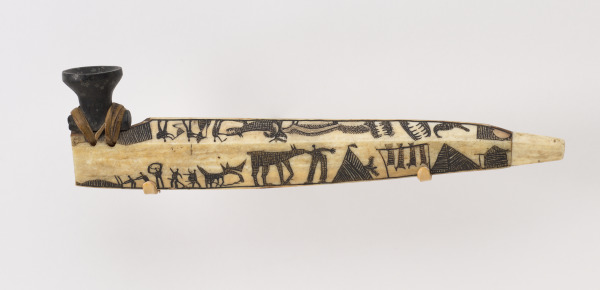
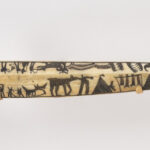
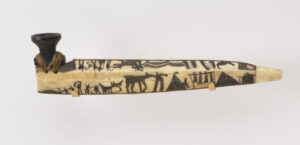
Iñupiaq and Yup’ik artists from Alaska engraved these tobacco pipes with geometric designs and richly varied scenes. The pipe with the lead bowl features imagery relating to walrus hunting and a confrontation between a supernatural being and a man wielding a bow-and-arrow. The other pipe is adorned with a circle-and-dot pattern, a common Yup’ik design, and depicts a carved bird on the bowl and various sea creatures on the top. Artists began making pipes for both Native use and for trade or sale with non-Natives after tobacco became available through trade. Within Native communities, tobacco was a highly prized substance that likely first arrived in the 18th century through trade networks with Russians.
Purchased by John Erikson in Alaska ca. 1900
Arctic Artistry
E. Keithhahn, "Native Alaskan Art in the State Historical Museum," Juneau, Alaska, Juneau, 1959, ill. 63 and 64.
James A. Maxwell, ed., "America's Fascinating Indian Heritage," Pleasantville: Reader's Digest Association, 1978.
J.G.E. Smith, "Arctic Art: Eskimo Ivory," New York: Museum of the American Indian, 1980.
American Indian Art Magazine, IX, 1, 1983, p. 55.
Miquel Covarrubias, "The Eagle, the Jaguar and the Serpent: Indian Art of the Americas," 1954.
F. Dockstader, "Indian Art of the Americas," Museum of the American Indian, New York, 19?, p. 172.
Maurer M. Evan, "The Native American Heritage," The Art of Chicago, July 16-October 30, 1977.
"INUA: Spirit World of the Bering Sea Eskimo," 1982, p. 164, no. 197.
James A. Maxwell, ed., "America's Fascinating Indian Heritage," Pleasantville: Reader's Digest Association, 1978.
J.G.E. Smith, "Arctic Art: Eskimo Ivory," New York: Museum of the American Indian, 1980.
American Indian Art Magazine, IX, 1, 1983, p. 55.
Miquel Covarrubias, "The Eagle, the Jaguar and the Serpent: Indian Art of the Americas," 1954.
F. Dockstader, "Indian Art of the Americas," Museum of the American Indian, New York, 19?, p. 172.
Maurer M. Evan, "The Native American Heritage," The Art of Chicago, July 16-October 30, 1977.
"INUA: Spirit World of the Bering Sea Eskimo," 1982, p. 164, no. 197.
Inscribed: none