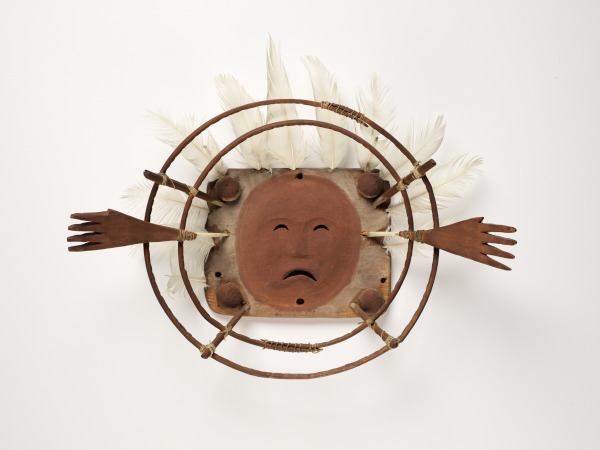
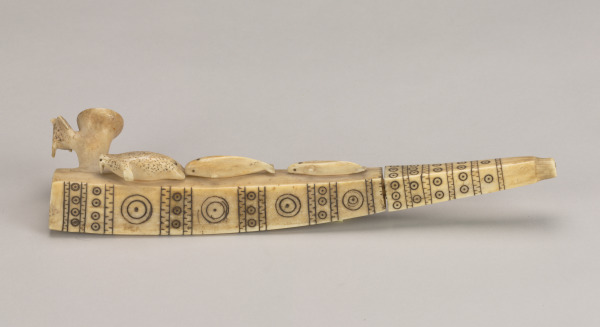
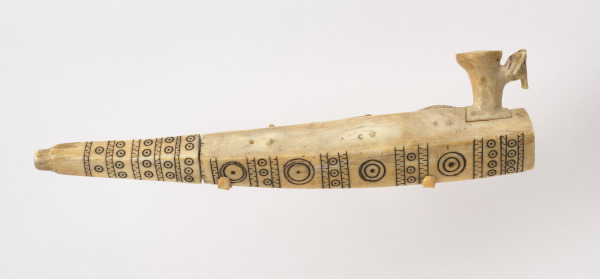
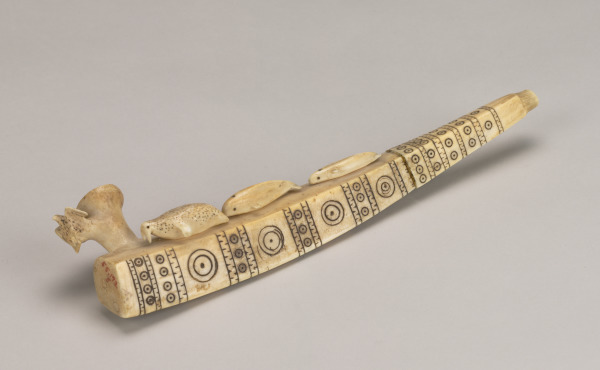
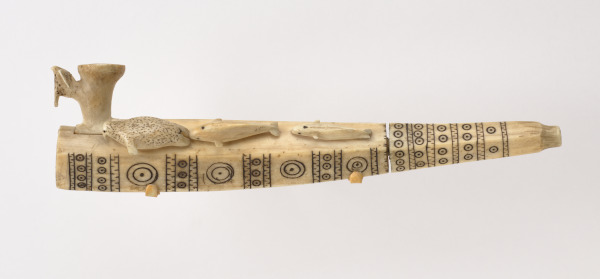
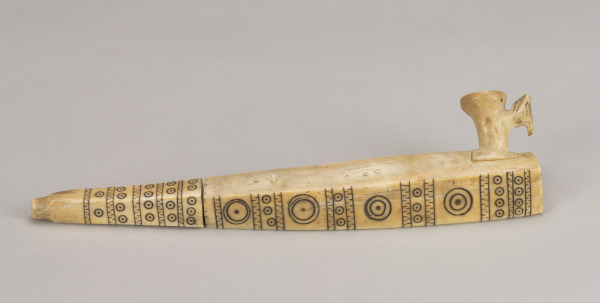
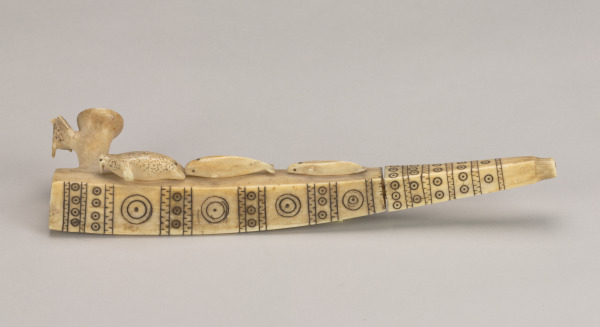
Yup'ik
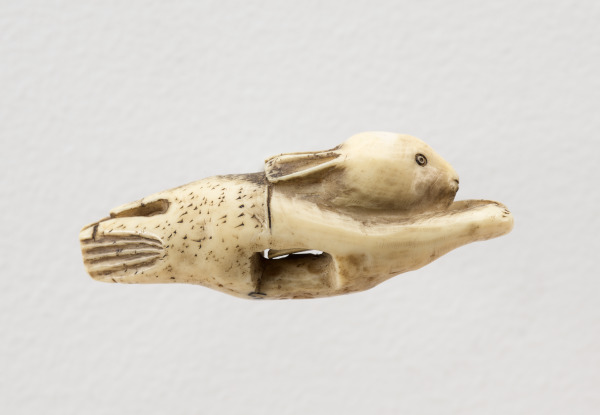
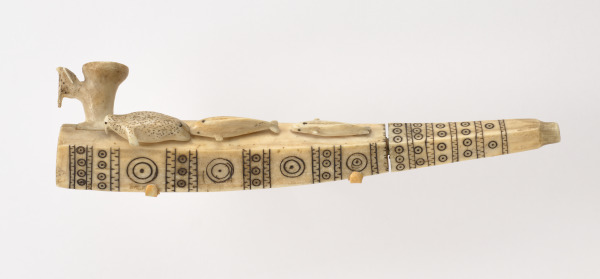
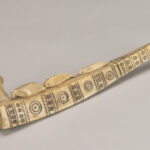
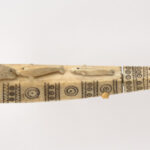
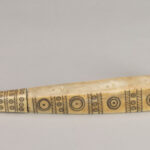
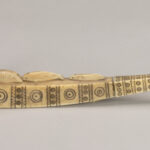
Pipe
Inuit, 1867-1899
Scroll
Yup'ik
Pipe
Inuit, 1867-1899
Physical Qualities
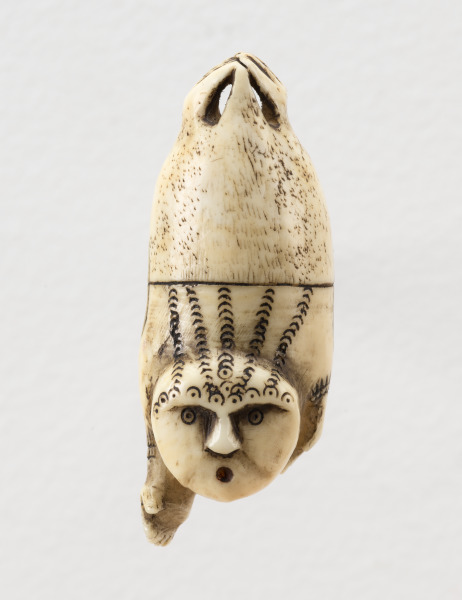
Possibly antler or walrus ivory, 10 1/2 × 2 15/16 in. (26.6 × 7.5 cm.)
Credit Line
John Erikson Collection
Object Number
1955.173.5
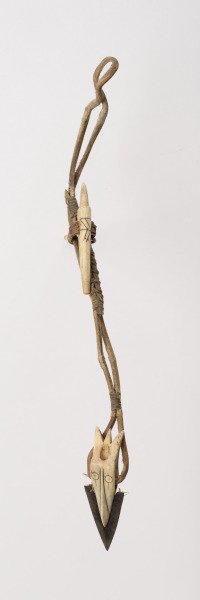
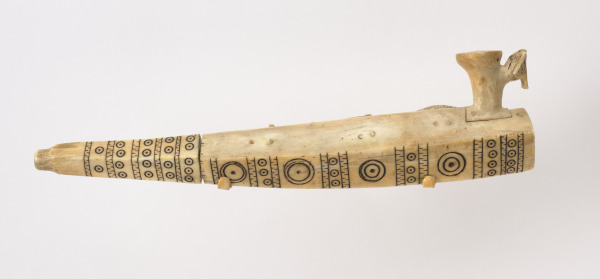
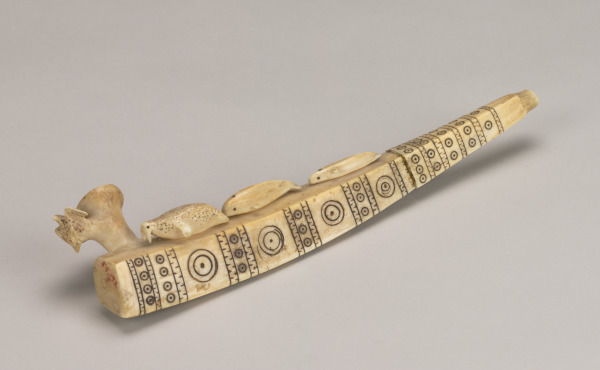
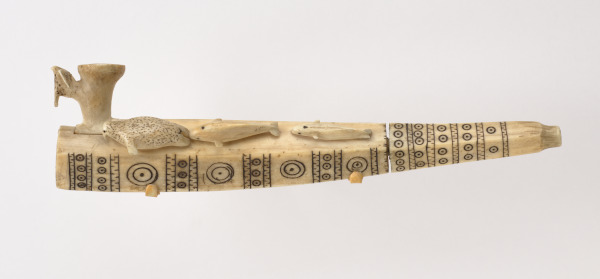
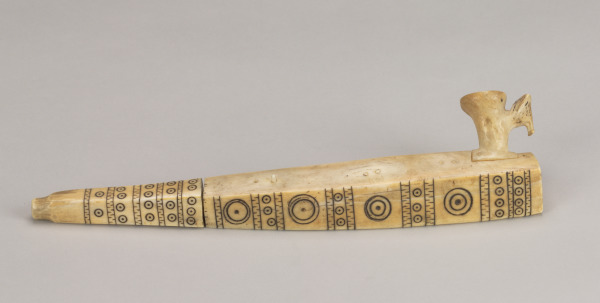
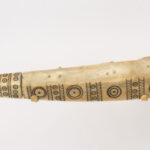
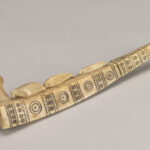
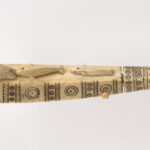
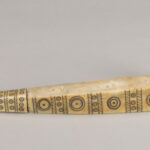
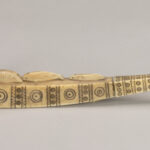
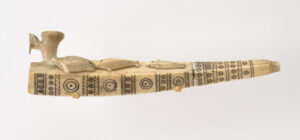
The Arctic and its environment inspired both Indigenous and foreign artists in the late 19th century. A Yup’ik artist carved birds, seals and walruses, and humpback and beluga whales on this pipe. While the ring displayed here does not directly reference the Arctic region, it played an important role in American control of Alaska’s rich natural resources: Tsar Alexander II of Russia (1818–1881) gifted this ring to American Rear Admiral Alexander Murray (1816–1884) during discussions leading up to the U.S. purchase of Russian-colonized Alaska. Gorham’s glacial bowl mounted with polar bears—manufactured in Rhode Island, thousands of miles away from the newly acquired land—demonstrates the popular appeal of Arctic imagery following the 1867 Alaska Purchase.
Today, Alaska’s temperature is rising at twice the rate as the southern 48 states, sparking wildfires, cracking ice shelves, and causing droughts. For the hundreds of Indigenous communities who rely on Alaska’s natural resources, combating climate change has staggering urgency.
Brittany Luberda, Turn Again to the Earth Collection Rotation, March 2025
Purchased by John Erikson in Alaska ca. 1900
Arctic Artistry
American Wing Rotations 2025
Erwin O. Christensen, "Primitive Art," New York: Crowell, 1955, ill. 55.
Leonhard Adam, "Primitive Art," Penguin Books, 1940, p. 33.
E. Keithhahn, "Native Alaskan Art in the State Historical Museum, Juneau, Alaska, Juneau, 1959, ill. A-48.
Frederick J. Dockstader, "Indian Art in America," Connecticut: New York Graphic Society, 1961, ill. 70, 251.
"Native Arts of the Pacific Northwest," Portland Art Museum, California, 1949, ill. 164.
"Of Pride and Spirit," Honolulu Academy of Arts, 1981, ill. 63.
"An Introduction to the Native Art of Alaska," Anchorage Historical and ? Arts Museum, 1972.
Henry B. Collins, et al., "The Far North: 2000 Years of American Indian and Eskimo Art," Bloomington: Indiana University Press, 1977, p. 75.
Miguel Covarrubias, "The Eagle, the Jaguar and the Serpent: Indian Art of the Americas," New York: Knopf, 1954, p. 153.
Leonhard Adam, "Primitive Art," Penguin Books, 1940, p. 33.
E. Keithhahn, "Native Alaskan Art in the State Historical Museum, Juneau, Alaska, Juneau, 1959, ill. A-48.
Frederick J. Dockstader, "Indian Art in America," Connecticut: New York Graphic Society, 1961, ill. 70, 251.
"Native Arts of the Pacific Northwest," Portland Art Museum, California, 1949, ill. 164.
"Of Pride and Spirit," Honolulu Academy of Arts, 1981, ill. 63.
"An Introduction to the Native Art of Alaska," Anchorage Historical and ? Arts Museum, 1972.
Henry B. Collins, et al., "The Far North: 2000 Years of American Indian and Eskimo Art," Bloomington: Indiana University Press, 1977, p. 75.
Miguel Covarrubias, "The Eagle, the Jaguar and the Serpent: Indian Art of the Americas," New York: Knopf, 1954, p. 153.
Inscribed: none
 On View at the BMA