Tusyan
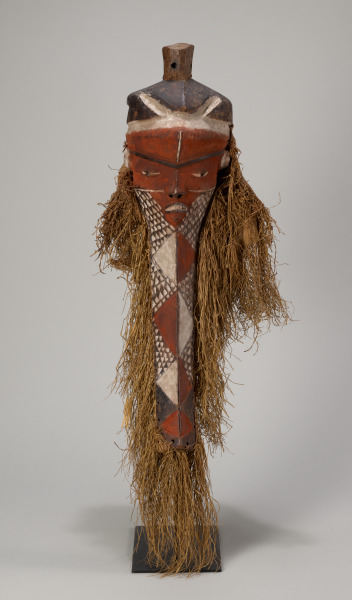
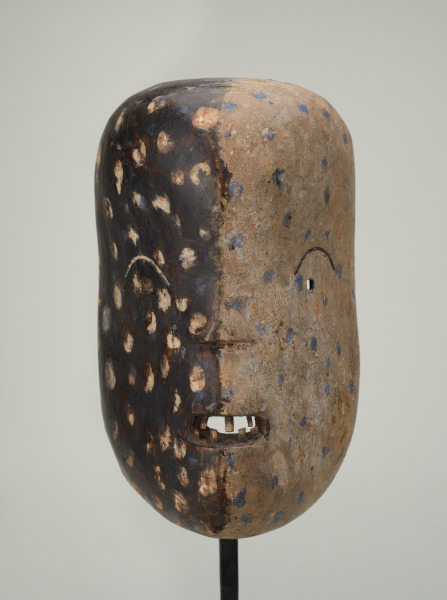
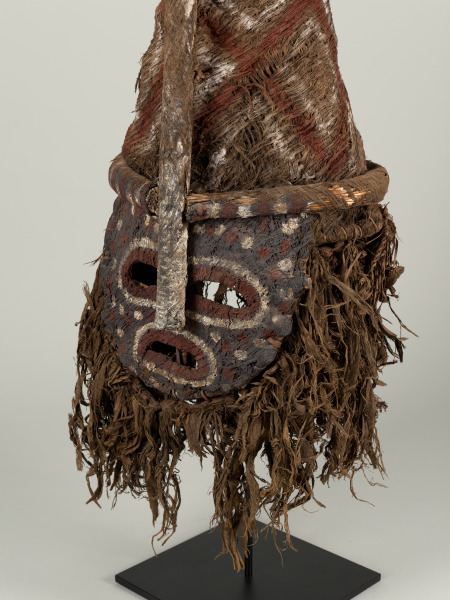
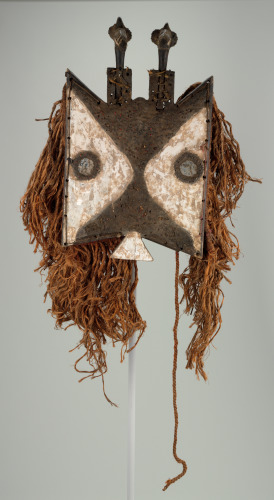
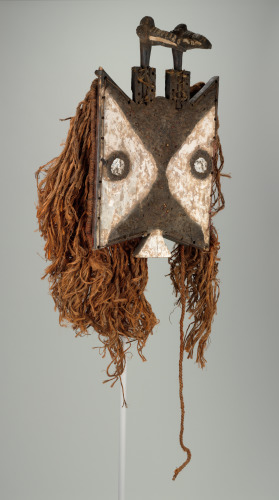
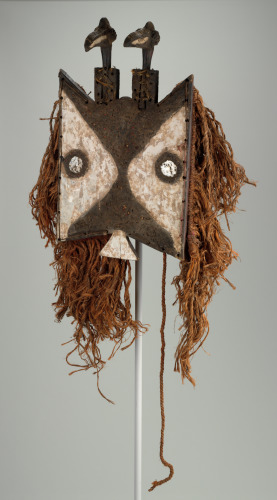
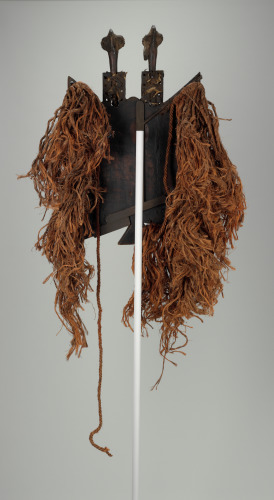
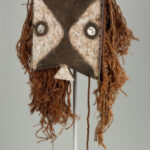
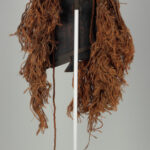
Plank Mask (loniaken)
Tusyan, 1900-1932
Scroll
Tusyan
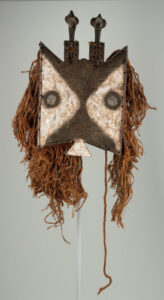
Plank Mask (loniaken)
Tusyan, 1900-1932
Physical Qualities
Wood, fiber, pigment, hide, abrus seeds, mirrors, Overall: 70.5 x 43 x 21 cm. (27 3/4 x 16 15/16 x 8 1/4 in.) excluding fiber costume
h: 44 in. (111.8 cm.) including raffia
h: 56 in. (142.2 cm.) including rope
Credit Line
Gift of Philip Lee Davis, Key West, Florida
Object Number
2002.712
Loniaken masks perform under the sun-drenched skies of southern Burkina Faso in conjunction with the Do association. They are commissioned and worn by young men during their initiation ceremonies or the funeral of an association elder, and later displayed on the walls of the initiate’s home. Not all loniaken include mirrors in their composition, however. When they are employed, it may well have been to connect the divine power of Do with his worshippers, for the reflective surface of mirrors is considered to be a conduit to the spirit world in this region.
Group of loniaken masks representing birds. From African Masks from the Barbier-Mueller Collection, Hahner-Herzog, Iris et al., 1998, p._
Meditations on African Art: Light
Beyond Flight: Birds in African Art