Asante
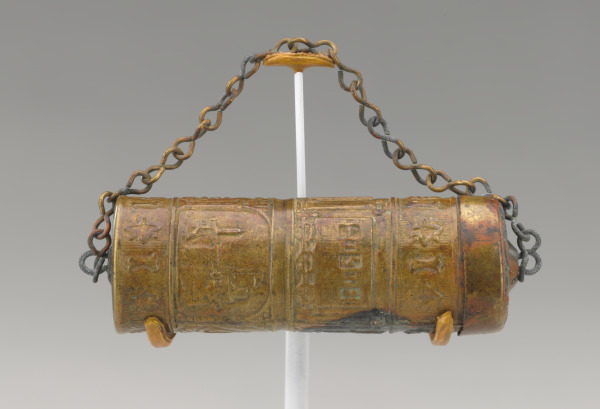
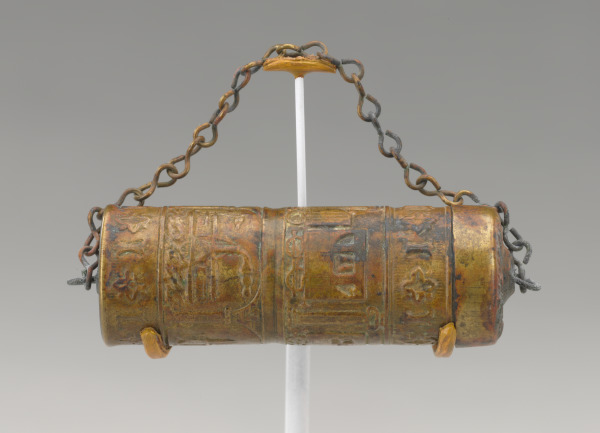
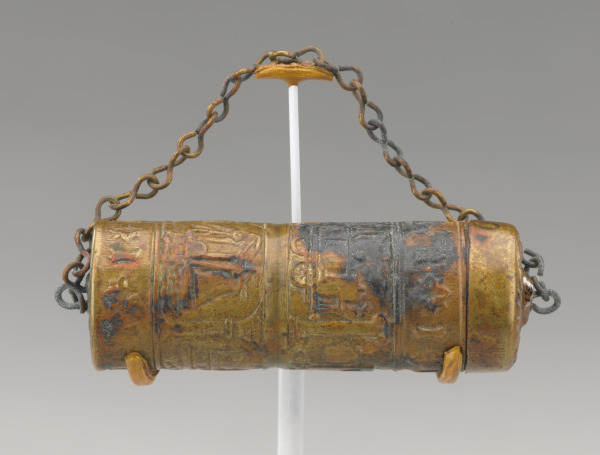
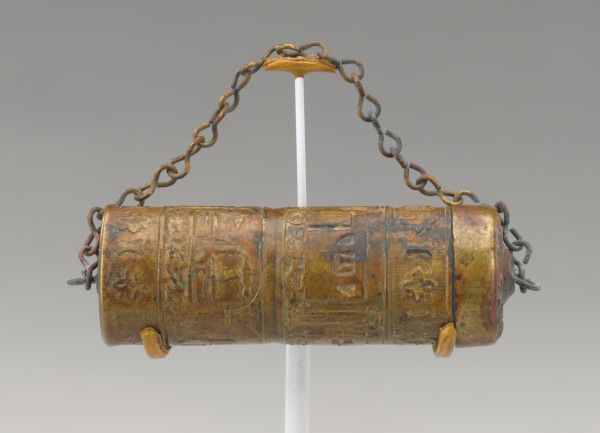
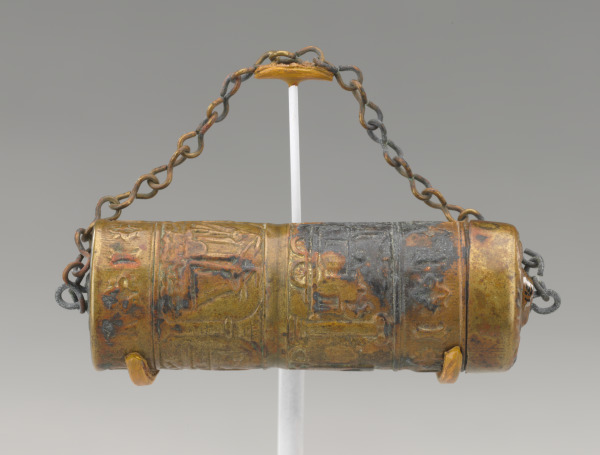
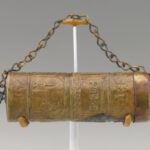
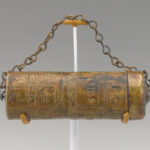
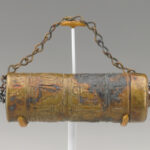
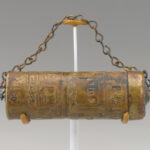
Snuff Container
Asante, 1800-1899
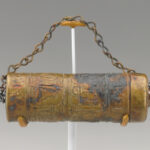
Scroll
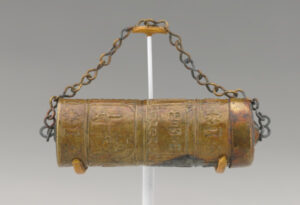
Asante
Snuff Container
Asante, 1800-1899
Physical Qualities
Brass, 9 x 2.9 Diam cm.
Credit Line
Gift of Helen 'Muffie' Lippincott McElhiney, Bethesda, Maryland
Object Number
1988.1311
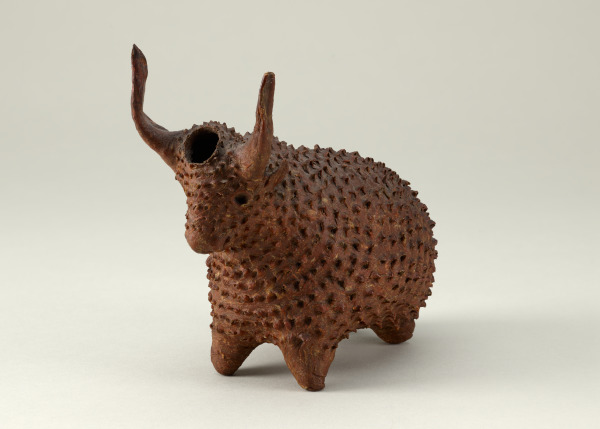
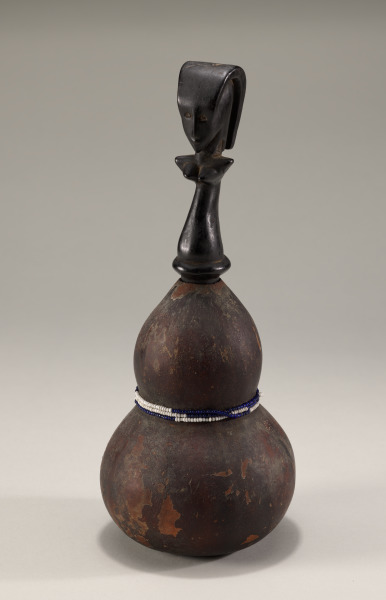
Tobacco, a plant native to the Americas, was introduced to Africa by the Portuguese in the 16th century. By the 18th century, it was widely used across the continent. Mortars for grinding tobacco leaves into snuff, pipes for smoking, and containers for storage were prestige goods sought by privileged male and female leaders and elders, and others who were wealthy and connected enough to obtain tobacco through trade.
Imaginative smoking paraphernalia, such as the Lulua mortar in the form of
a crouching figure, gave the smoker visual and tactile pleasure while preparing and smoking tobacco. The Lulua pipe allowed the smoker to contemplate the reach of his power and influence while watching smoke rise from the pipe bowl carved
as the palm of a hand.
Hand Held: Personal Arts from Africa