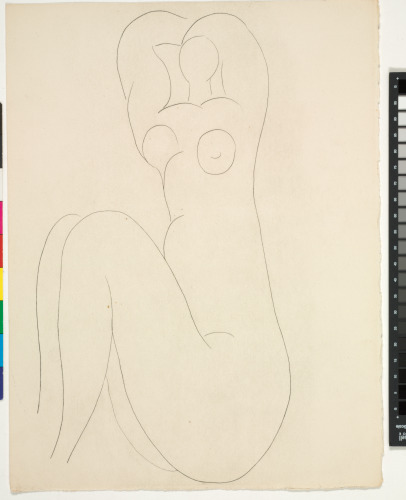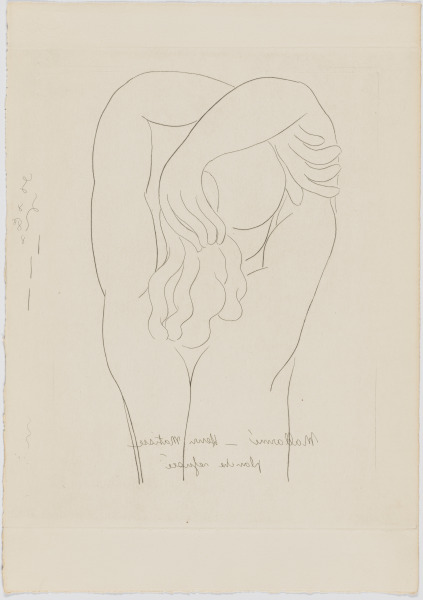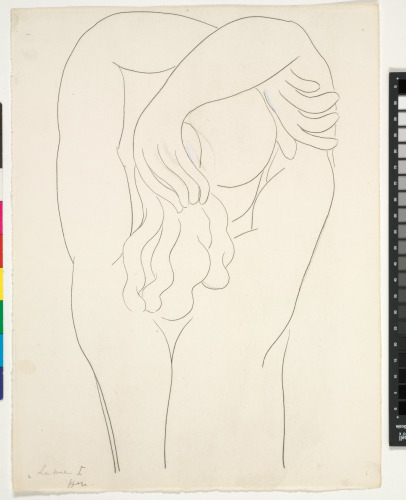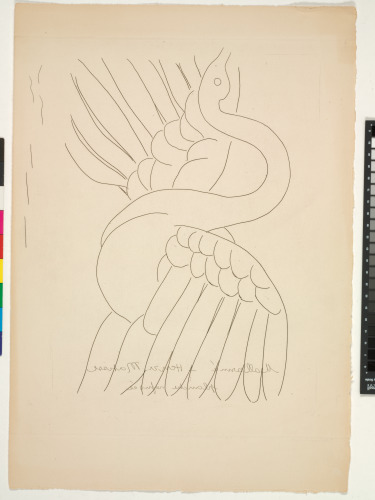

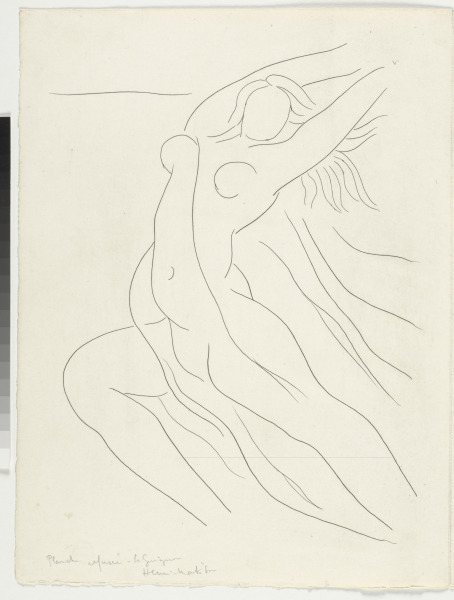
Henri Matisse and Henri Matisse, Presentation Maquette, Poésies de Stéphane Mallarmé
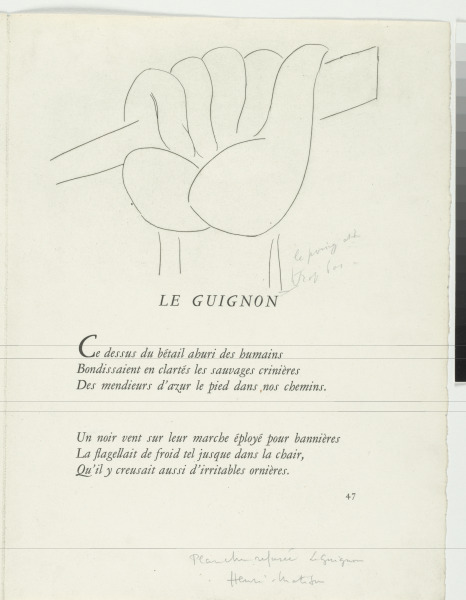
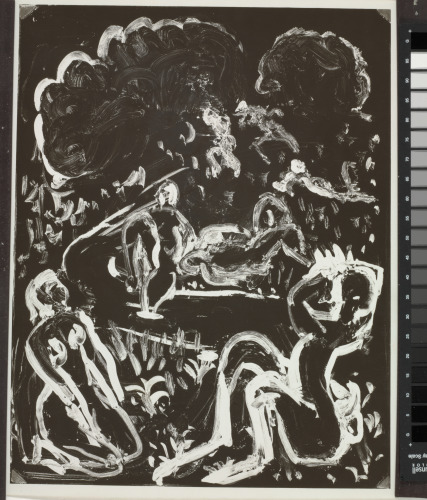
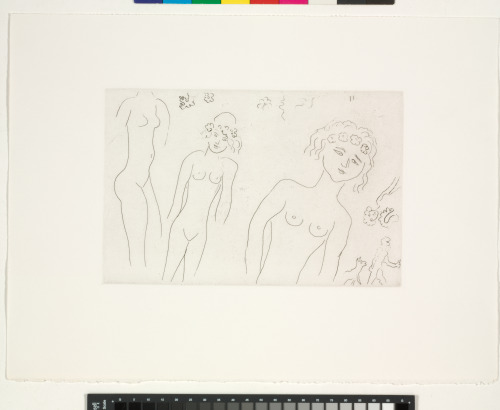
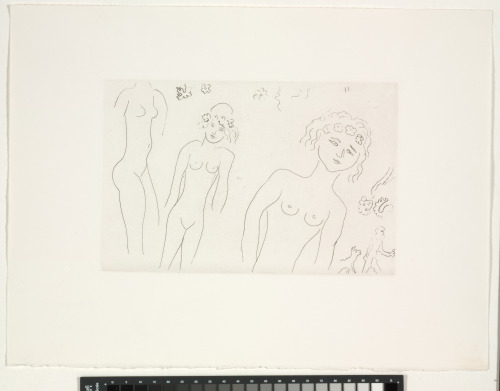
Study for “Le Guignon” (refused etching)
1930-1931
Scroll
Study for “Le Guignon” (refused etching)
1930-1931
Physical Qualities
Etching, Sheet (trimmed within platemark): 330 x 250 mm. (13 x 9 13/16 in.)
Credit Line
The Cone Collection, formed by Dr. Claribel Cone and Miss Etta Cone of Baltimore, Maryland
Object Number
1950.12.694.1
In several studies for the Mallarmé project, Matisse used the etching needle on copper plate as he would have a pencil on paper: filling, if not crowding, the composition with random doodles and miniatures, including a small self-portrait head, as well as a larger central figure study. Although the use of a copper plate involves preparing the surface with a hard ground resist layer that can then be etched through immersion in acid before printing, requiring slightly more advance preparation than working directly on paper, Matisse approached the medium with the same ease and spontaneity as his drawing. This freedom of invention and fluidity of line demonstrates Matisse’s skill as a printmaker.
The Baltimore Museum of Art by bequest, 1949; Etta Cone, Baltimore; the artist
Guillaud, Maurice, and Jacqueline Guillaud. Matisse: le rythme et la ligne. Paris: Guillaud Editions, 1987, plate no. 595 (published as “Le Guignon”).
Néret, Gilles. Henri Matisse. Köln; New York: Taschen, [1999], page 160 (published as “Le Guignon. Layout for the Mallarmé book, rejected plates”).
Fisher, Jay. "Mallarmé's Poésies." In "Graphic Passion: Matisse and the Books Arts," edited by John Bidwell (Pennsylvania: Penn State University Press, 2015), pp. 18, 36.
Cozzi, Leslie and Katherine Rothkopf (eds). "A Modern Influence: Henri Matisse, Etta Cone, and Baltimore." Baltimore: The Baltimore Museum of Art, 2021. ill.
Inscribed: lower left in pencil: "planche refusée le Guignon / Henri Matisse"
Markings: Chopmark: MALLARME ET MATISSE Watermark: ARCHES