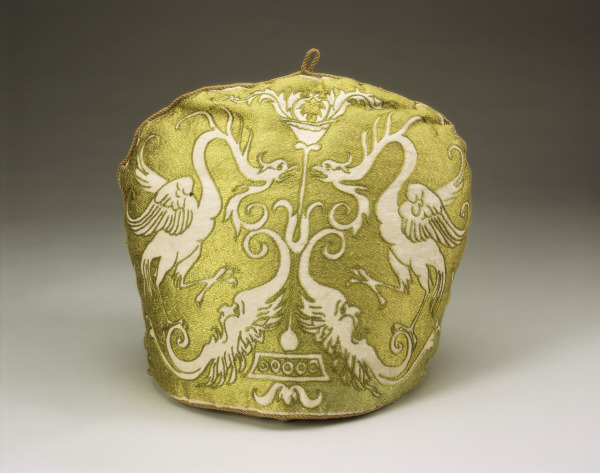
Walter Crane and Royal School of Art Needlework
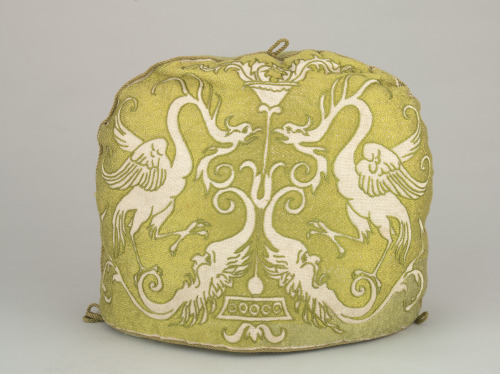
Tea Cosy with Renaissance Revival Design
1884-1894
Scroll
- Designer: Walter Crane
- School: Royal School of Art Needlework
Tea Cosy with Renaissance Revival Design
1884-1894
Physical Qualities
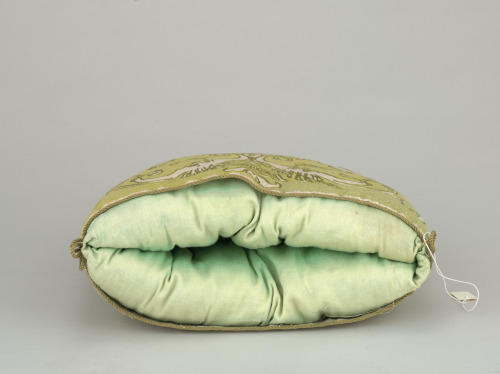
Linen ground with silk embroidery thread, cotton lining, silk and cotton cording, 11 1/4 x 13 3/4 x 5 in. (28.6 x 34.9 x 12.7 cm.)
Credit Line
The Jane and Worth B. Daniels, Jr. Fund
Object Number
2006.51
Walter Crane was an artist with a deep belief
that everyday objects, including a humble tea cosy,
were worthy of good design. He also possessed
an incomparable talent in referencing historical
styles without directly copying specific precedents.
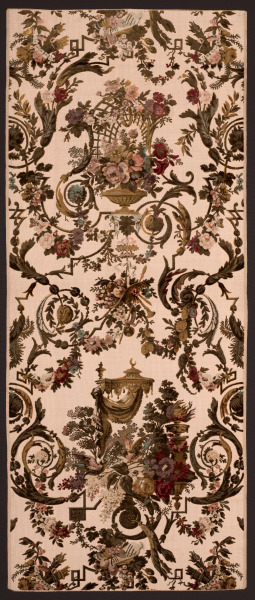
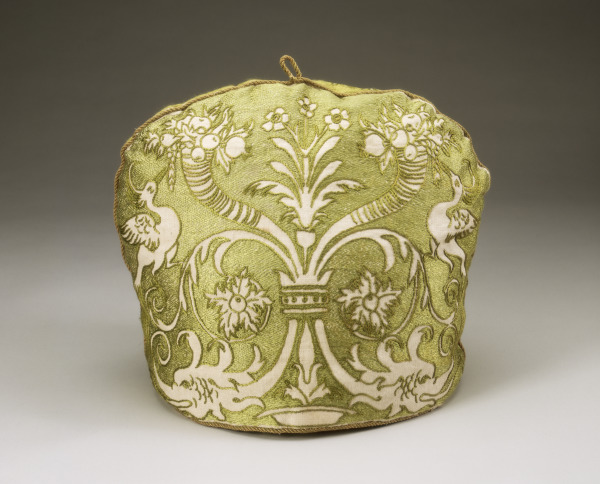
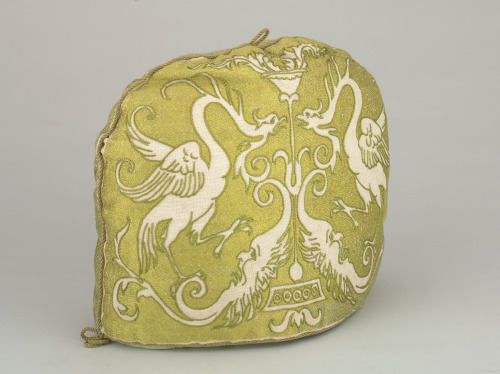
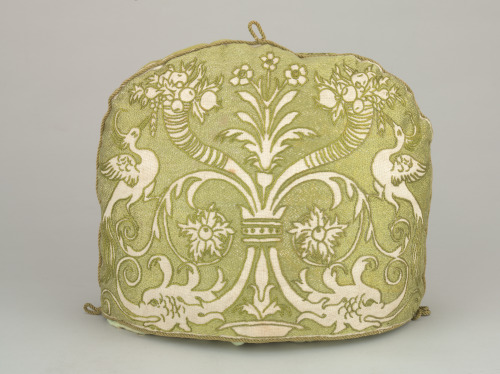
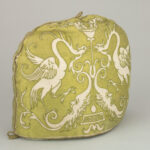
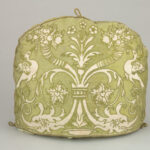
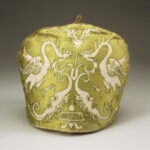
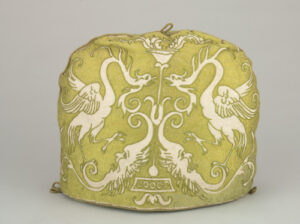
This cosy, attributed to Crane, features the kind
of motifs seen in Renaissance design books:
symmetrical, with confronting birds, masks,
cornucopia, and scrolls arranged along a vertical
axis. Crane was one of several artists of renown
who prepared designs for the Royal School of Art
Needlework, established in 1872 to improve the
standard of commercial embroidery and provide
suitable employment for educated women.
Objects such as this were sold by the school.
The use of a single color of thread and flat
stitches is in keeping with the philosophy of this
school, which held that artistic embroidery
should eliminate as much as possible any idea
of presenting roundness, variety of surface, light
and shadow, or contrasting colors.
Baltimore Museum of Art by purchase, 2006; Meg Andrews, London, England.
Curator's Choice Rotation
New Arrivals: Gifts of Art for a New Century
Francesca Galloway, "Arts & Crafts Textiles in Britain," The Fine Art Society PLC, October 1999, pl. 1, 32. [catalogue]
Edwards, Joan. Crewel Embroidery in England.
Letitia Higgin, Royal School of Needlework"The Handbook of Embroidery", 1880
Edwards, Joan. Crewel Embroidery in England.
Letitia Higgin, Royal School of Needlework"The Handbook of Embroidery", 1880