Théodore Rousseau
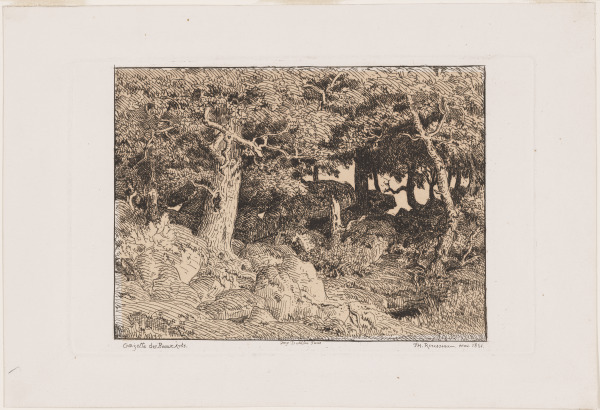
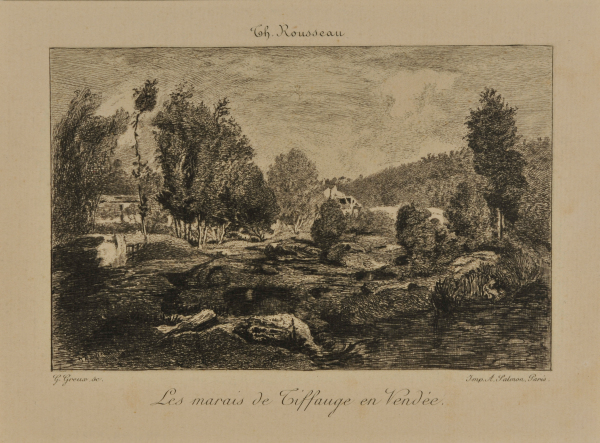
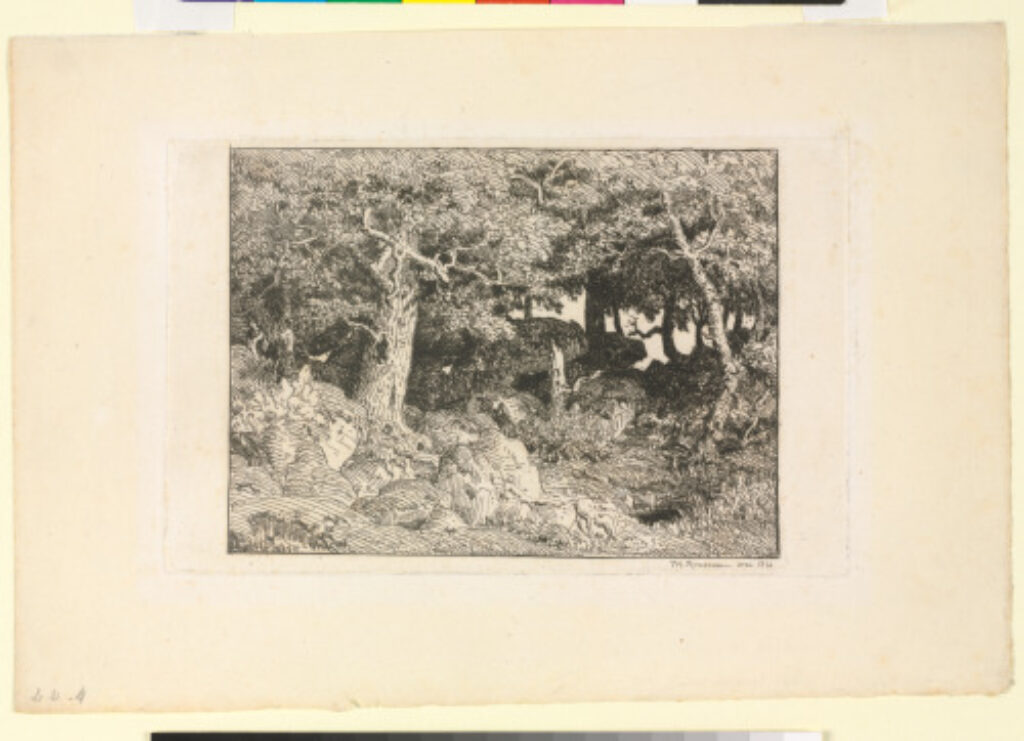
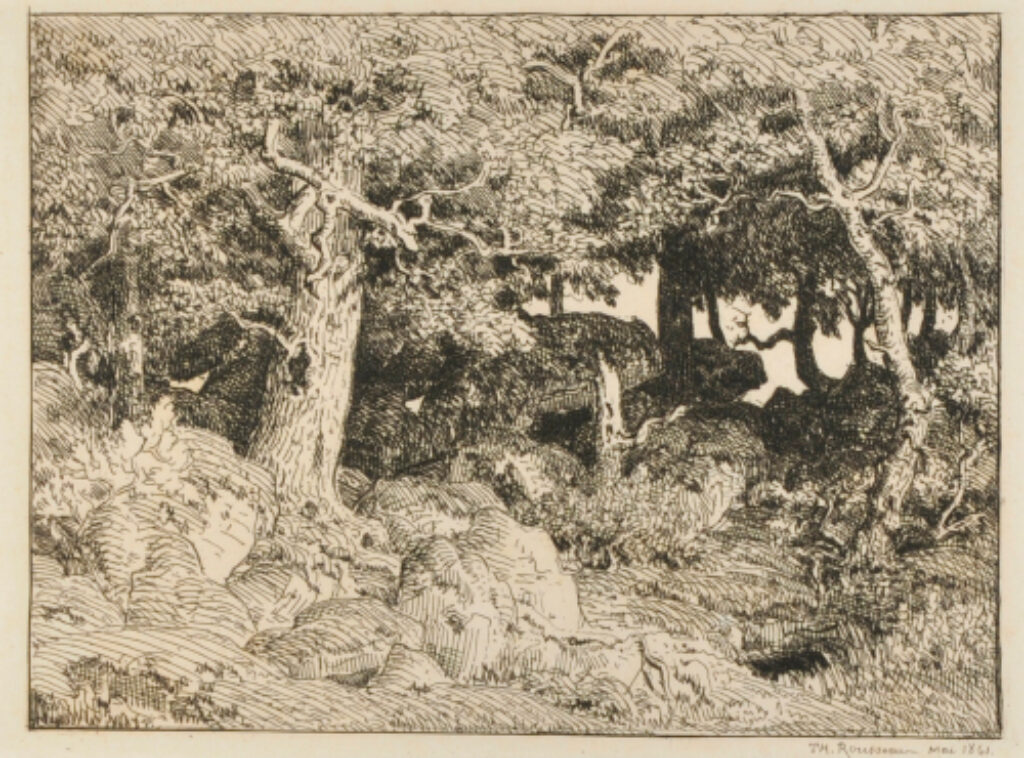
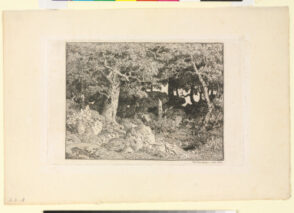
The Oak Forest of the Rock
1860
Scroll
Théodore Rousseau
The Oak Forest of the Rock
1860
Physical Qualities
Etching, Sheet: 124 x 170 mm. (4 7/8 x 6 11/16 in.)
Plate: 130 x 207 mm. (5 1/8 x 8 1/8 in.)
Credit Line
Gift of Evelyn and Fred Cogswell, Ellicott City, Maryland
Object Number
2013.362
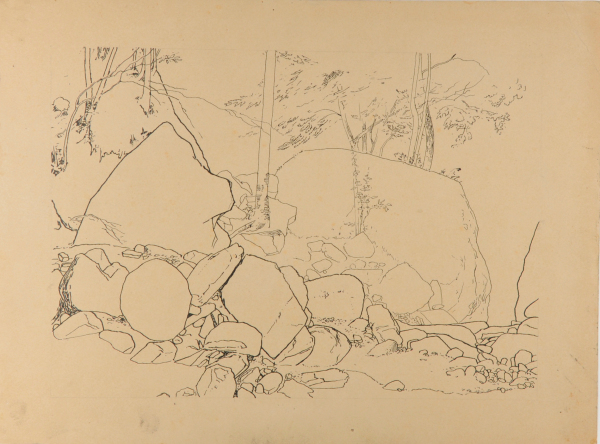
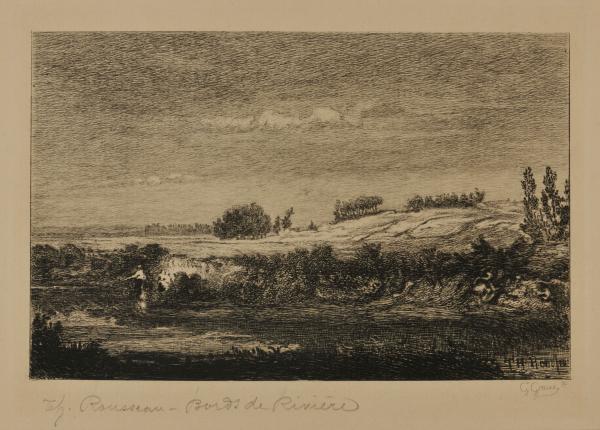
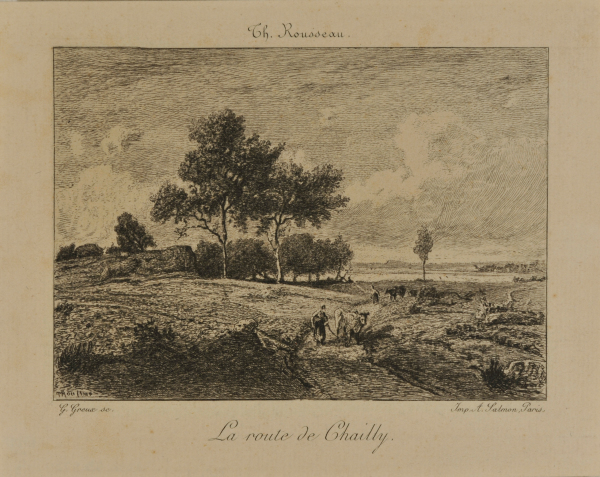
Théodore Rousseau was part of a generation of French artists inspired by nature. He belonged to a group known as the Barbizon or Barbizon School painters, named for the town southeast of Paris where Rousseau lived. These artists—and their friend the photographer Eugène Cuvelier—were drawn to the 40,000 acres of dense woods nearby that surrounded Fontainebleau Palace. Rather than take major landmarks as his subject, Rousseau sought to create unassuming but revelatory views of the forest—images of clearings that one might happen upon during a walk, where moss-covered rocks, weathered tree trunks, and low-lying shrubs invite the eye to linger. In his handful of etchings, including "The Oak Forest of the Rock", Rousseau explored aesthetic concerns such as the silhouetting of forms, the suggestion of textures, and the play of contrasts between bright sunlight and deep shadow in a manner related to, yet distinct from, his paintings.
The Baltimore Museum of Art by gift, 2013; Evelyn Cogswell, Ellicott City, MD
Rena Hoisington, The Baltimore Museum of Art, "New Arrivals: Gifts of Art for a New Century," February 7-May 8, 2016.
Inscribed: In plate, at lower right: "Th. Rousseau Mai 1861"