
Eva Zeisel
Vase
1925
Scroll
Eva Zeisel
Vase
1925
Physical Qualities
Earthenware, Overall: 4 1/2 × 7 3/4 × 6 5/8 in. (11.4 × 19.7 × 16.8 cm.)
Credit Line
Mary Louise Gutman Bequest Fund
Object Number
2022.189
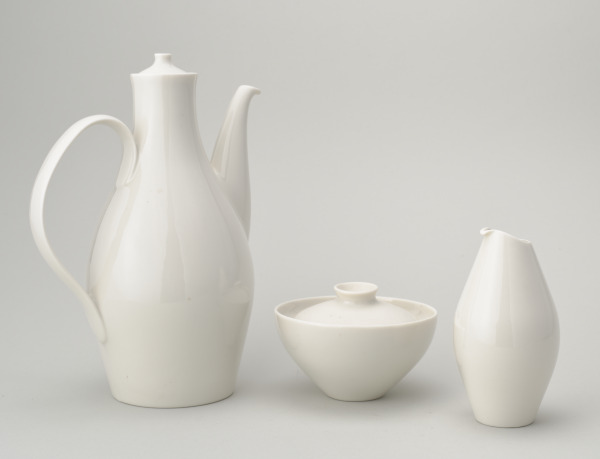
The career of Hungarian-born object and furniture designer Eva Zeisel spanned eight decades and included leading roles in workshops from Russia to the United States. This early black double-handled vase, which Zeisel made at her home studio in Budapest, Hungary, is a study of Hungarian black pottery, a technique that uses pine wood to fire clay under an airtight dirt mound. As a designer at the Schramberg Majolica Factory in Germany, Zeisel transformed the monochromatic color and simplified geometry of Hungarian black pottery into Cubist designs. The vibrant glazes of these Schramberg
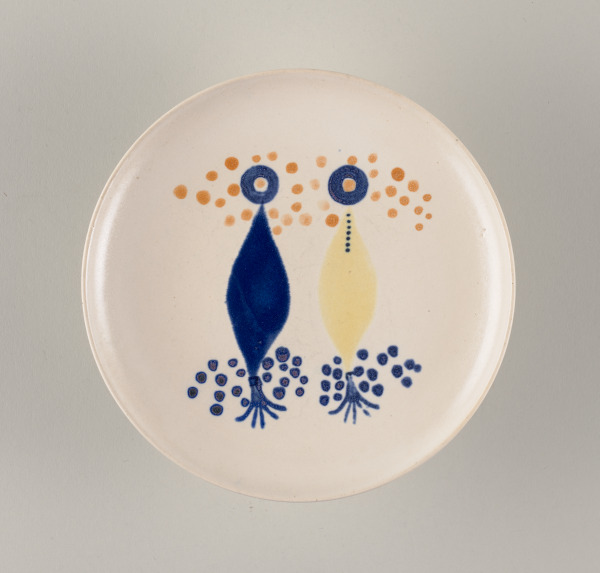
factory works enhance Zeisel’s unconventionally placed vase handlesand resoundingly round platter.
The Baltimore Museum of Art by purchase, 2022; Estate of Eva Zeisel
Cone Wing Rotations 2023
Cone Wing Rotations 2024
Cone Wing Rotations 2025
Markings: Bottom: incised "SPE 1926" [Striker Polanyi Eva}
Explore the Collection Further