Maasai
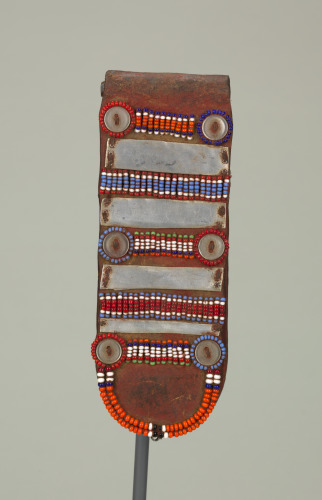
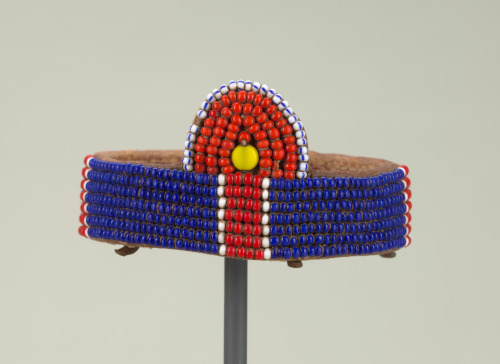
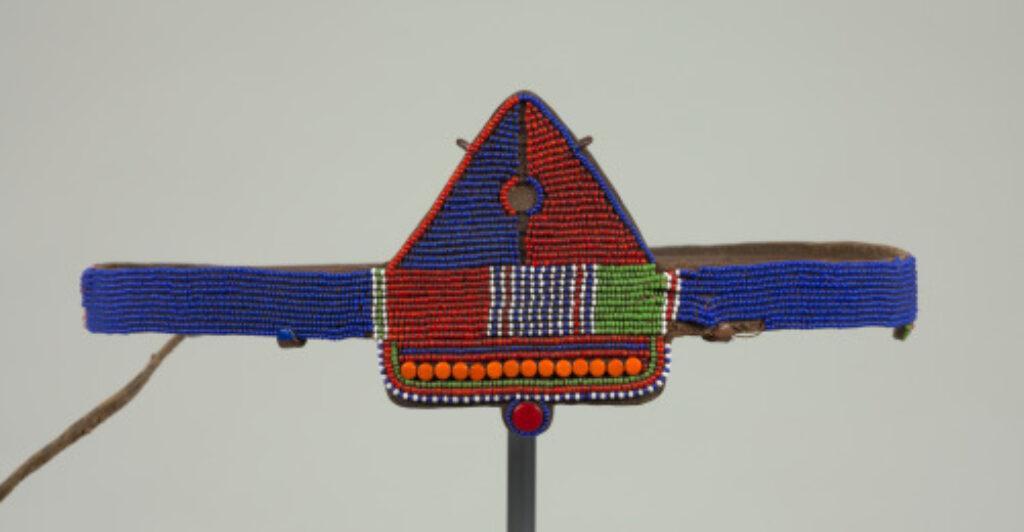
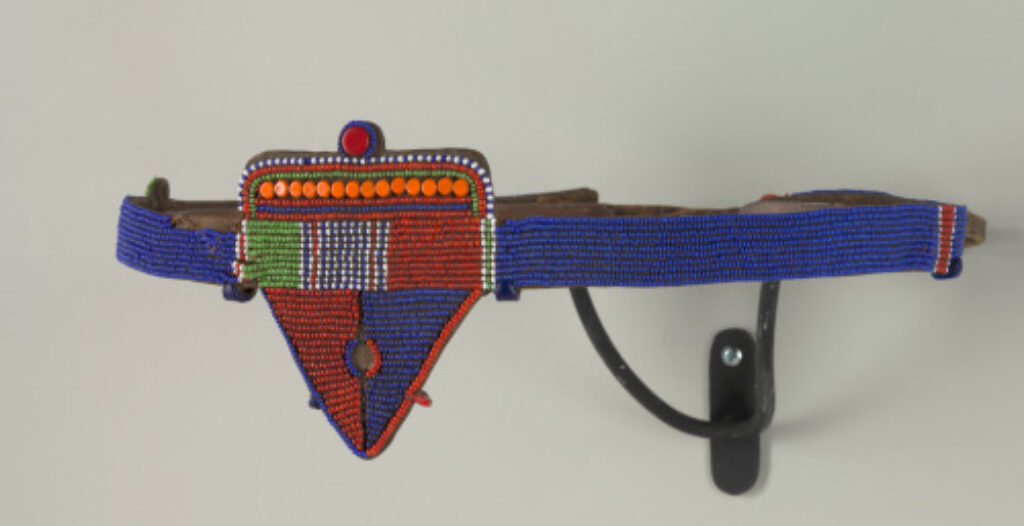
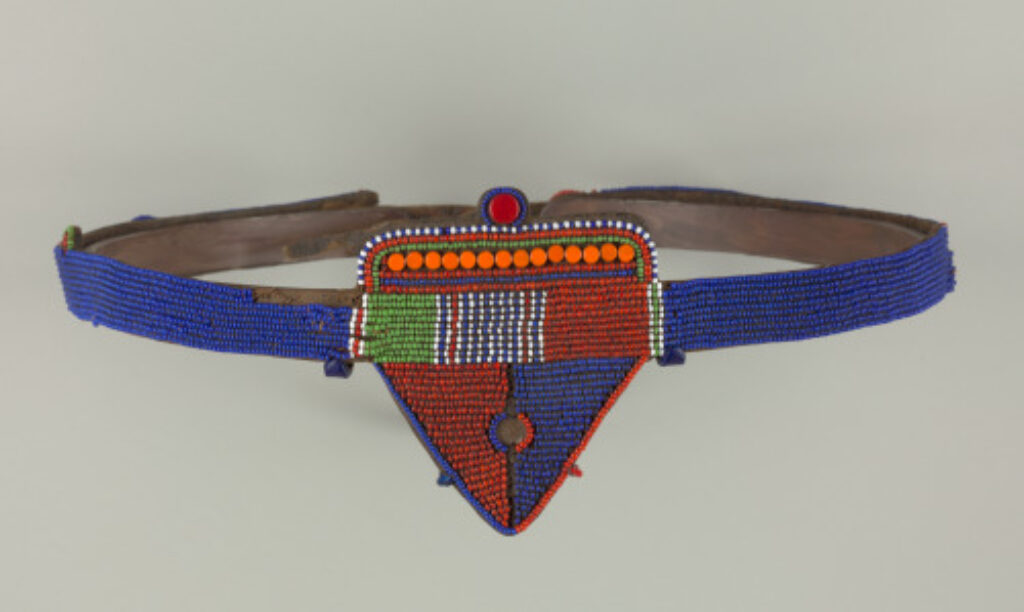
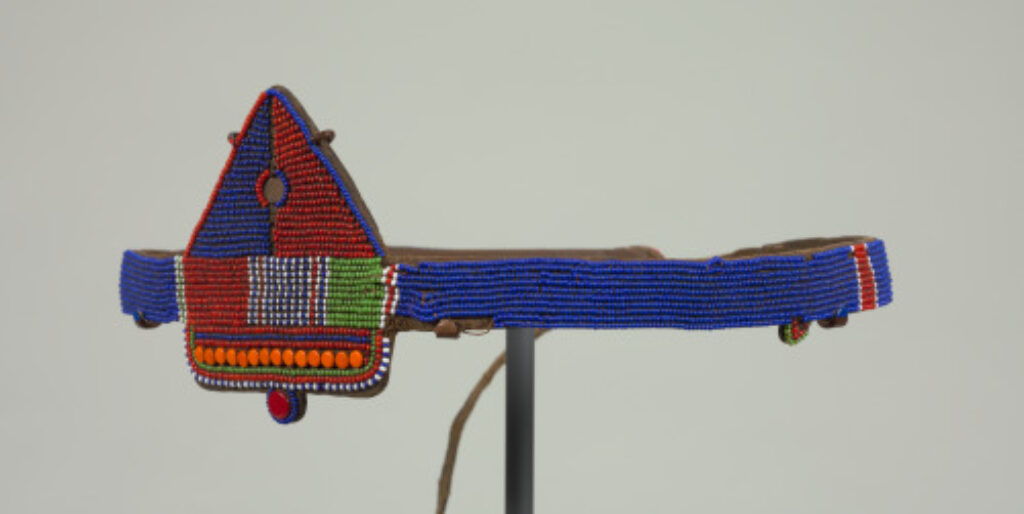
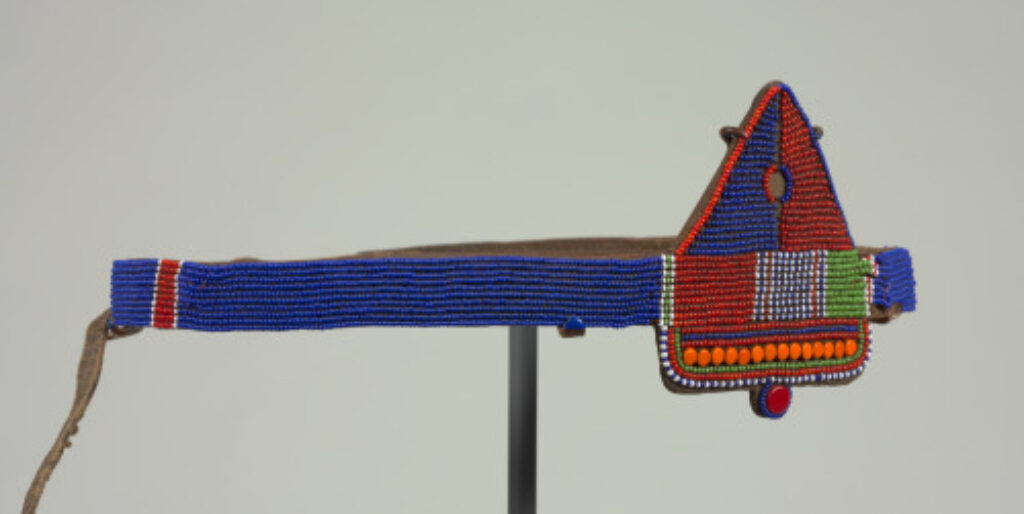
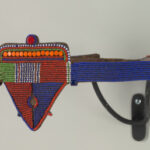
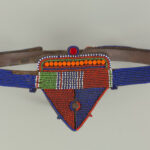
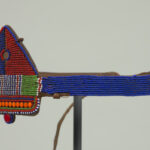
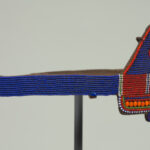
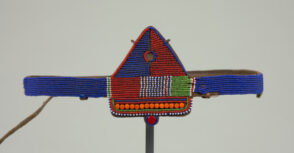
Warrior’s Belt (Enkeene Pus)
Maasai (Southern), 1933-1966
Scroll
Maasai
Warrior’s Belt (Enkeene Pus)
Maasai (Southern), 1933-1966
Physical Qualities
Glass beads, hide, sinew
, (tie extended): 42 11/16 × 4 1/8 × 9/16 in. (108.5 × 10.5 × 1.5 cm.)
Credit Line
Gift of Nancy and Robert H. Nooter, Washington, D.C.
Object Number
1994.293
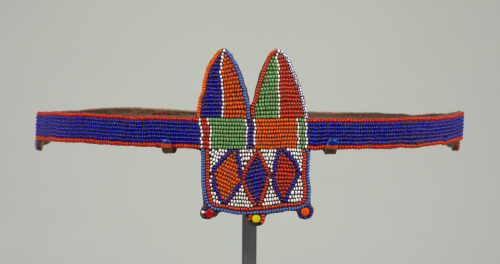
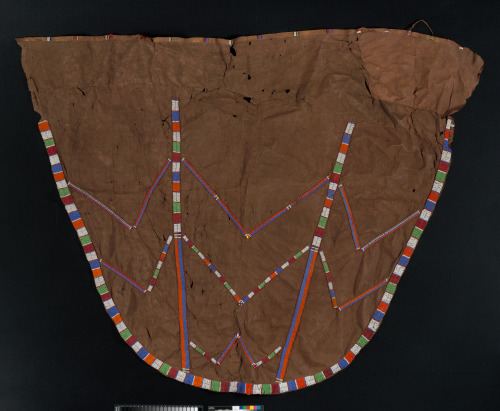
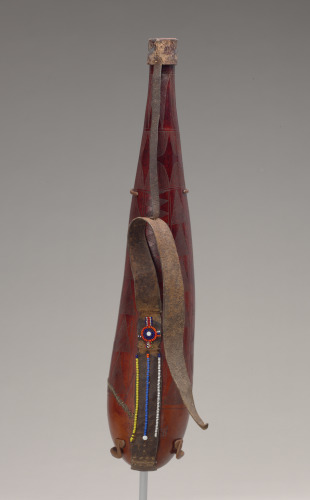
The introduction of colored glass beads in the late 19th century sparked an artistic revolution across inland, east Africa. No longer hindered by the narrow color palette of local materials such as animal hide and smelted iron, artists from the region used imported Venetian and Czechoslovakian beads to create a wide array of jewelry. Over the course of the 20th century, as the use of beads
spread throughout the region and designs became more complex, it became possible to identify the ethnic group identity of individuals based solely on the colors and patterns found on his or her ornamental jewelry. Turkana, for instance, became known for their love of solid blocks of red, white, and blue beads while Maasai were immediately recognizable by the complex, linear designs created in red, orange, green, white, and blue. In this highly mobile landscape, decorative jewelry worn on the arms, necks, legs, and face also helped individuals and groups identify the age, marital status, and social position of those with whom they came into contact. For example, married Samburu women traditionally wore necklaces (mporo) featuring a vertical row of red, glass beads strung with hair from a giraffe’s tail.
Design for Mobile Living: Art from Eastern Africa
Adorned: African Women & the Art of Identity
Frederick John Lamp, "See the Music Hear the Dance: Rethinking African Art at the Baltimore Museum of Art." New York: Prestel, 2003, p.208, ill.