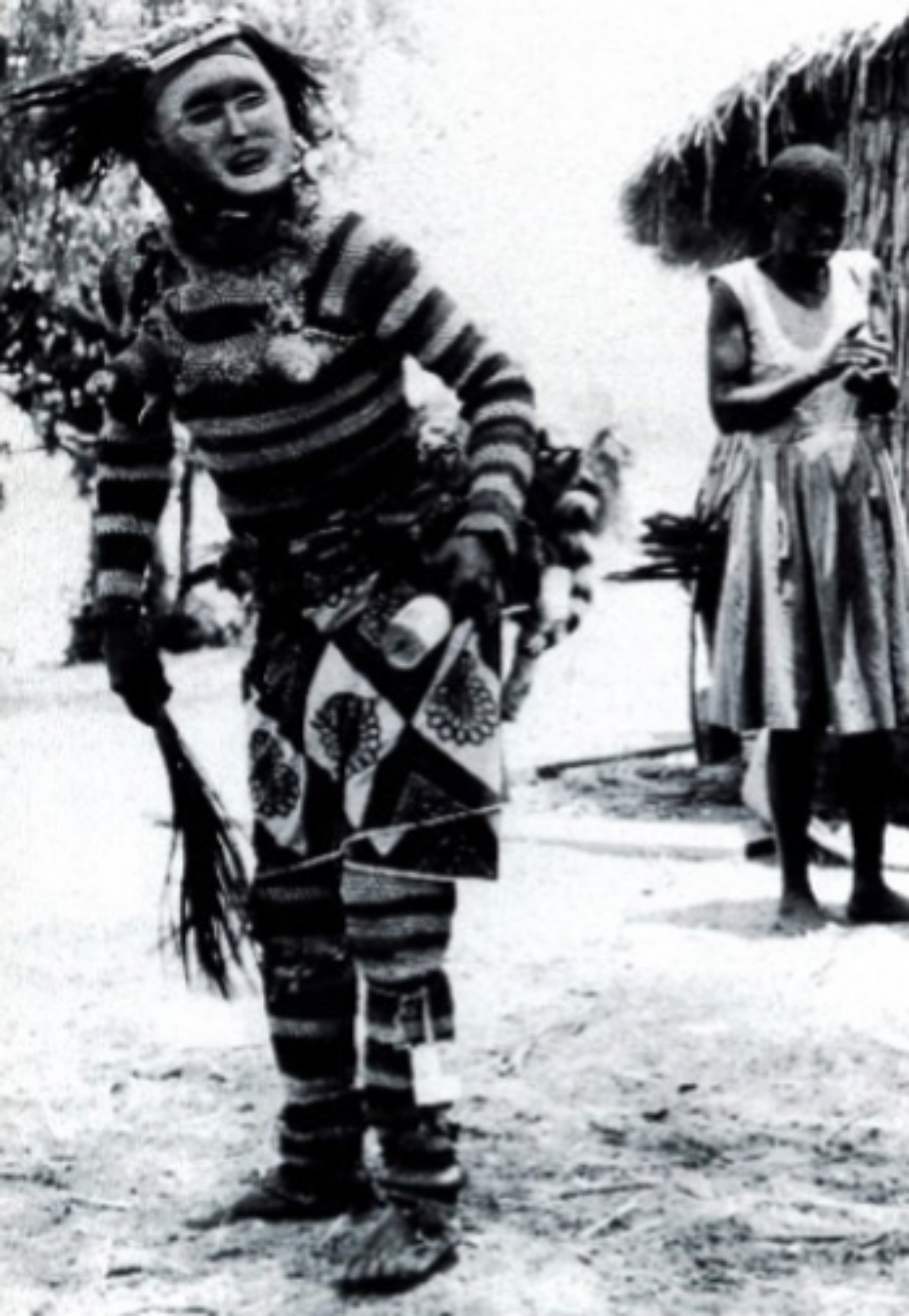
Female Ancestor Mask (Mwana wa Pwevo)
Looking with Former BMA Curator Kathryn Wysocki Gunsch
0:00
/
1:28
Looking Skeptically
0:00
/
0:52
Unidentified Lwena Artist
Date:
Before 1925
Medium:
Wood, plant fiber, and glass beads
Size:
Depth: 8 11/16″
Width: 9 1/16″
Height: 9 1/16″
Initiated men are the ones who perform the Mwana Pwo masquerade. They wear a costume made of braided plant fiber and adorn themselves with wooden breasts and a skirt. This, however, is not an act of personal gender expression. Rather, it is an act of transformation. When Mwana Pwo dances, the ancestral spirit represented by the mask is thought to come alive, bringing the female ancestor it represents to life in the performance space.
Gift of Alan Wurtzburger, By Exchange, Through the Cooperation of Murray and Barbara Frum, Toronto BMA 1982.1