Lemuel Cox
0:00
/
00:54
John Singleton Copley
Date:
1770
Medium:
Oil on canvas
Size:
Width: 39″
Height: 49 1/4″
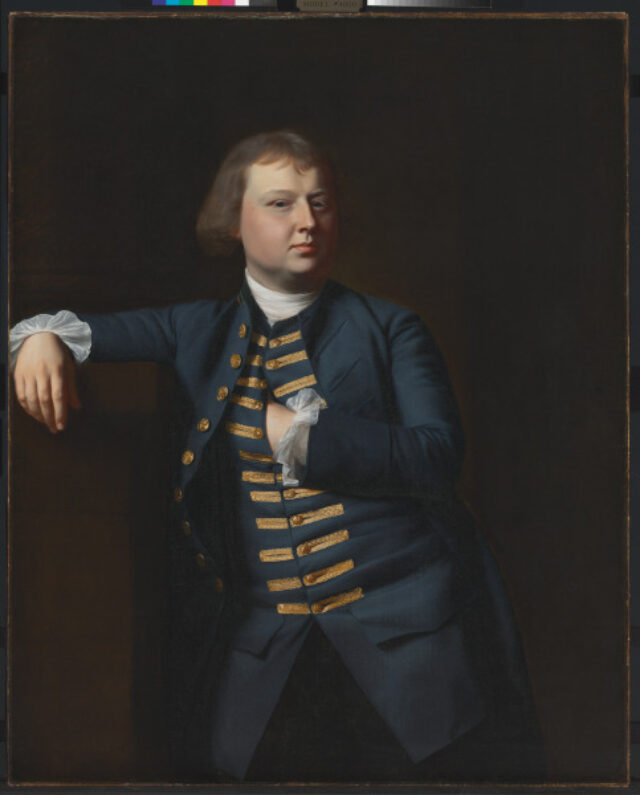
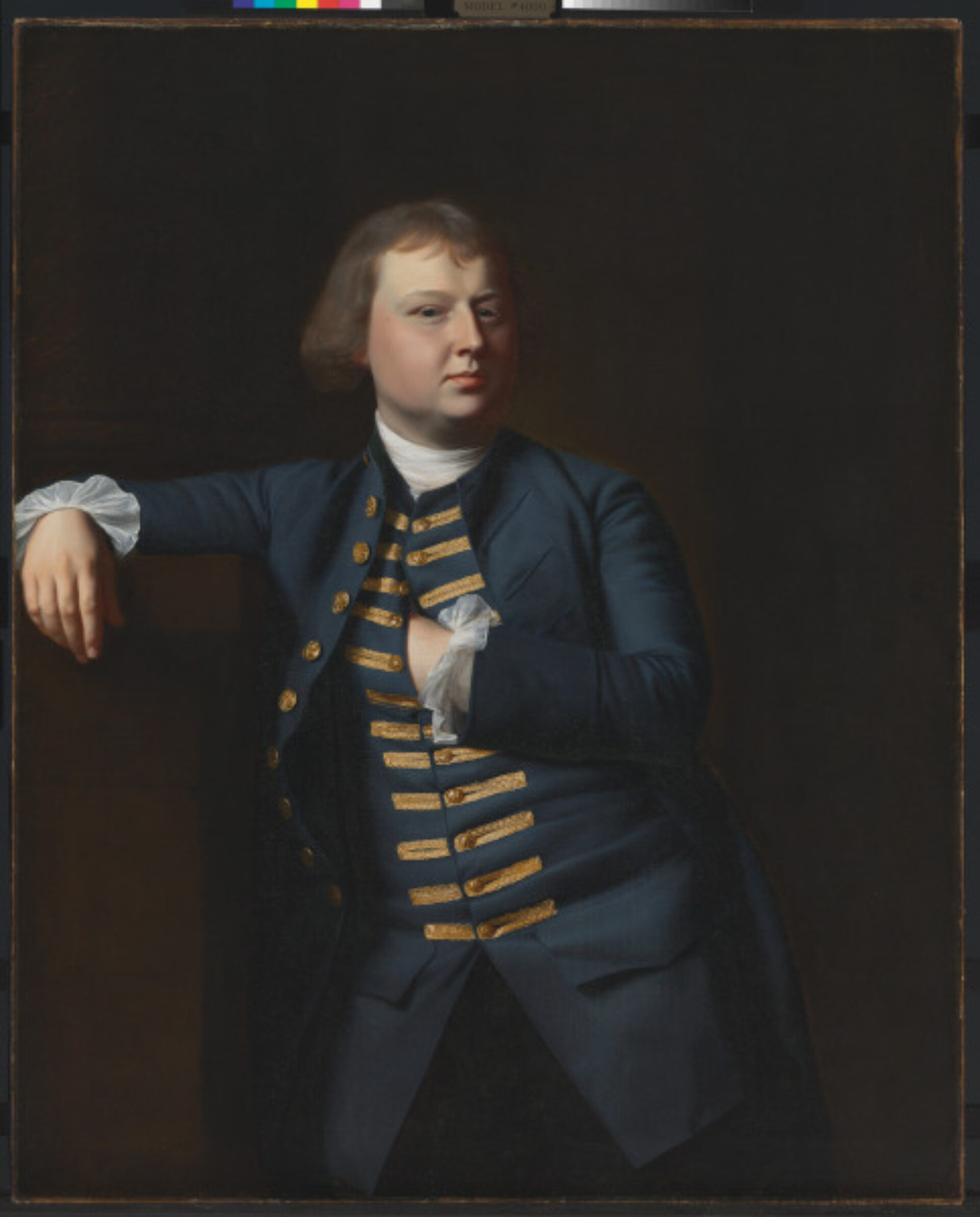
Portraits present sitters as they wish to be perceived. Dressed for success, the up-and-coming Cox (1736–1806), a master mechanic, strikes the nonchalant pose of a gentleman. A dazzling white stock (scarf), wound tightly below his chin, sets off his superbly painted visage. One languid hand drapes easily below a crisp white ruffled cuff; the other is thrust into his waistcoat in a gesture recommended by etiquette books to express “decency and genteel behaviour.”
The year Cox sat for this portrait, he designed a yarn-processing machine, reducing American dependence on English fabrics amid growing resentment of British taxation on imported goods. Although Cox took the side of the patriots in 1770, he seems to have altered his political views by 1775, when he was briefly imprisoned on suspicion of spying for the British. He left the country shortly thereafter. On his return, Cox’s engineering skills as a bridge designer eventually brought him fame, if not fortune. In 1785–1786, Cox supervised the construction of the first bridge to span the River Charles in Boston, Massachusetts. He designed another bridge in Waterford, Ireland, in 1793. Colloquially called Timbertoes, it was as solid as its confidently posed designer, remaining in use into the early 20th century.
Bequest of Elise Agnus Daingerfield BMA 1944.98
Portrait Photographer Marshall Clark’s Perspective
Transcript
[Aaron Henkin] We looked at this painting with Marshall Clark, a portrait photographer here in Baltimore.
He zeroed in on the way this man is standing.
[Marshall Clark] I think in some senses it highlights sort of a confidence about him. He’s actually resting on
something, so it’s sort of a balance between casual and formal. I think it’s interesting that his jacket’s open.
It does give a sense of movement to him. I think it also might talk to the artist’s skill that he’s able to paint a
jacket open and folded and do the creases and beautiful light on him coming from the left. Part of his face is
in shadow. It creates a tension with his shoulder, just from a visual standpoint. By turning his head slightly.
It creates more of a triangle between his head, his body, his arm, and the pillar.
Transcript
[Aaron Henkin] Listen to a reading from a book called Rudiments of Genteel Behavior. It was published in
France in 1737 and circulated widely. Compare how it describes a genteel pose to the painting.
[Speaker 2] The head erect and turned will be right as will the manly boldness in the face tempered with
becoming modesty. The arms must fall easy, not close to the sides, and the bend of the elbow at its due
distance will permit the right hand to place itself in the waistcoat easy and genteel.