





Art-to-Go
Art-to-Go is a monthly digital resource designed to integrate art into a wide range of subjects and provide teachers with fun, free classroom activities. Each Art-to-Go comes with a printable full-color image of a BMA artwork, background about the piece, and an activity designed around a single, important, teachable idea.
Art-to-Go is supported in part by the Institute of Museum and Library Services.

A Piece of History
From this puzzle piece, we can learn that Teotihuacán—one of the most densely populated cities in the Americas, home to an estimated 100,000–200,000 people at its peak—drew people from various cultural groups.

Symbols of Ancestral Origins
This richly decorated mask, titled Royal Man’s Mask or Mukenga, personifies Woot (pronounced wote), remembered in oral histories as the ancestor and first king of the Kuba Kingdom in the Democratic Republic of the Congo.
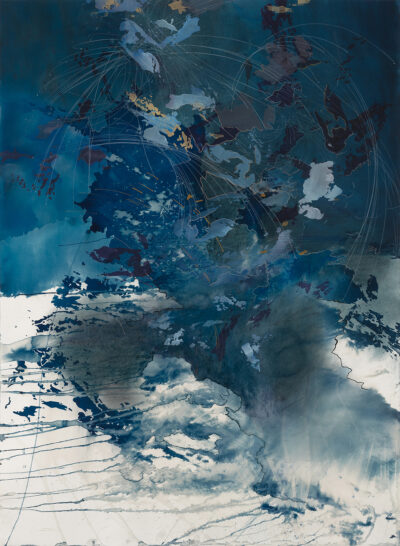
This Intersection of Art and Science
Artists use science in art to explore, explain, and express scientific ideas, often blending scientific knowledge with creative techniques to make thought-provoking works of art. Artist Jowita Wyszomi...
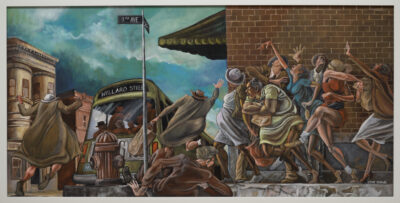
Inspiration On and Off the Field
Ernie Barnes (1938–2009) was an African American actor, football player, and painter. In his painting Baltimore Bus Stop, an energetic crowd of people runs after a bus, which is driving away under a stormy sky.
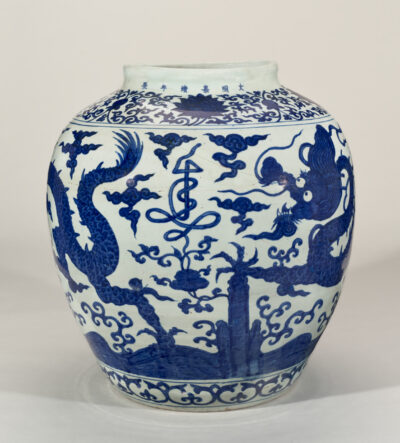
Legendary Hybrids
In Large Jar Decorated with Dragons, a brilliant blue dragon twists across a white surface. This kind of pattern is typical of ceramics made during China’s Ming Dynasty (1368–1644 CE). During this period, artists often used elements from the natural world like flowers, vines, fruits, and landscapes to decorate pottery. Mythical creatures, especially dragons, were also a popular subject.
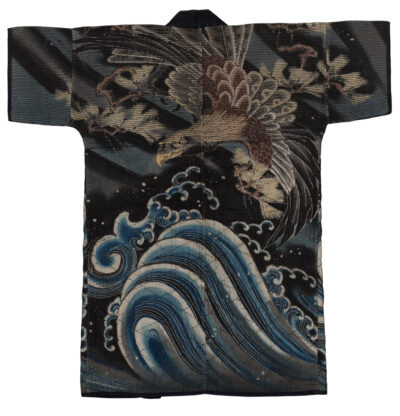
Wearing Water
In late 19th- and early 20th-century Edo (present-day Tokyo), Japan, firefighters would tear down surrounding buildings to prevent a blaze from spreading, and for protection, they wore hikeshi-banten (reversible coats) like this one that were made of layers of cotton fabric stitched together.

A Mask and Its Meaning
The Pende ethnic group of the Democratic Republic of the Congo believed that ancestors (mvumbi) were an active presence in the community, whether for good or ill. The Pende tried to stay on the good side of the ancestors by honoring their spirits in community celebrations and rituals. During these events, Pende ancestors emerged from their home in the forest in the form of masked dancers. One of the dancers might have worn the mask of Gitenga, who was the kind, caring “grandfather” of all ancestors.