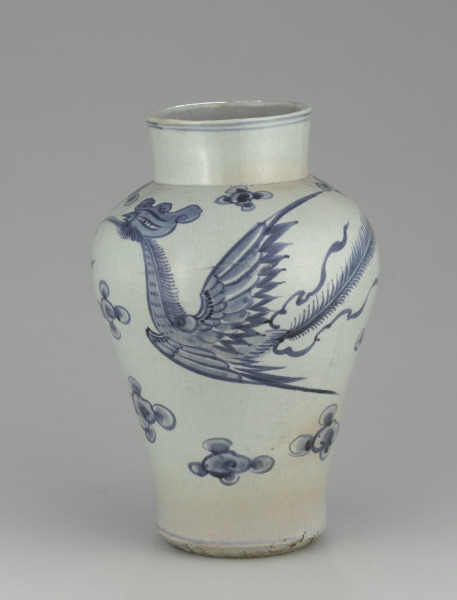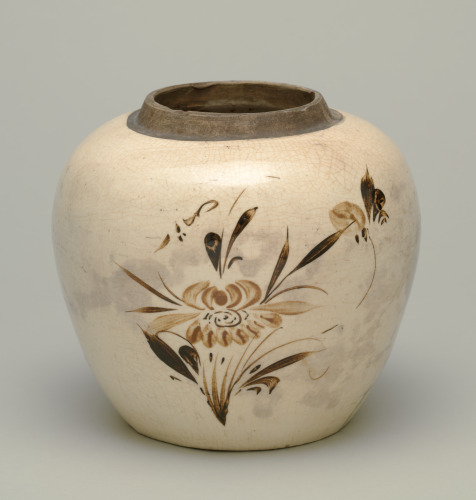

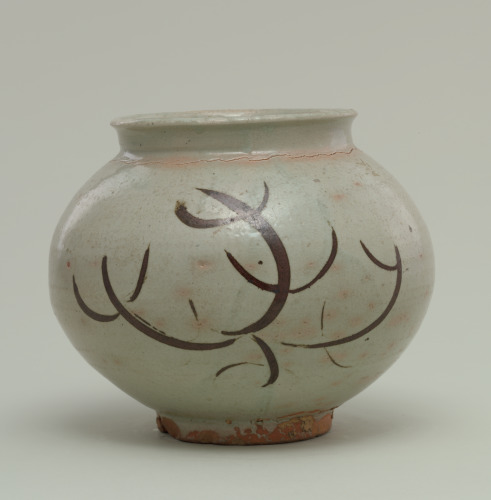
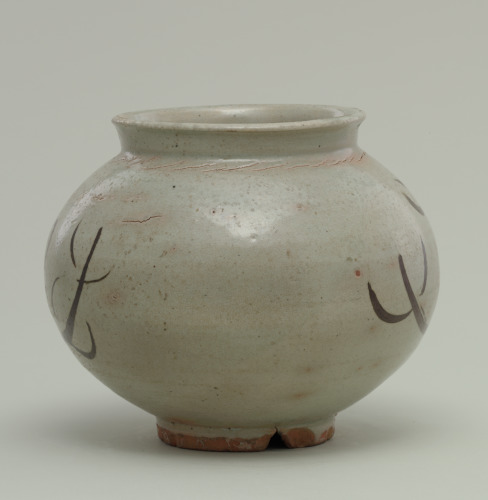
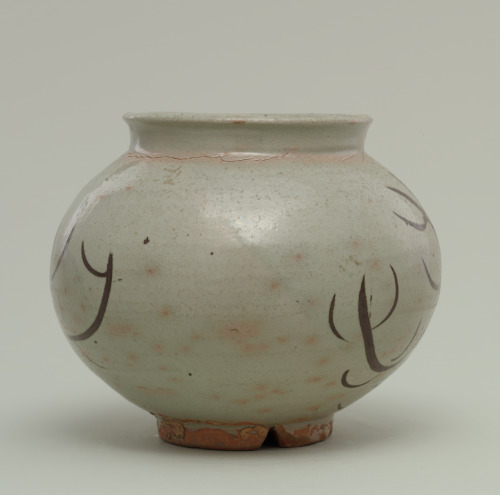
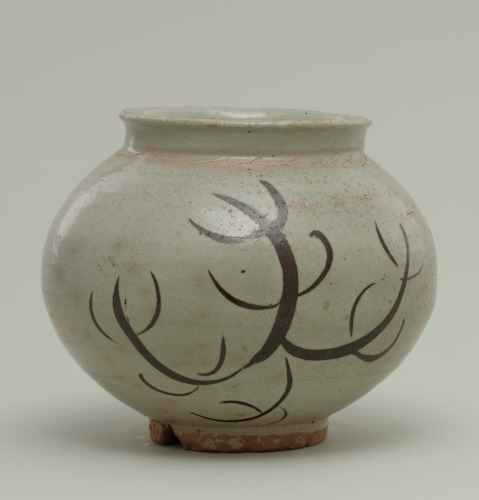
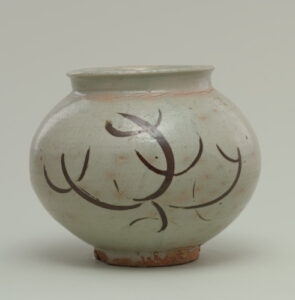
Jar with Grass Design
1866-1899
Scroll
Jar with Grass Design
1866-1899
Physical Qualities
Porcelain with underglaze iron decoration, 7 3/4 × 9 5/8 in. (19.7 × 24.4 cm.)
Credit Line
Julius Levy Memorial Fund
Object Number
2016.107
Porcelain with underglaze iron decoration In the 17th century, Korean potters adopted underglaze brown painted decoration using iron to mimic the look of cobalt, as China’s 1657–1684 ban on foreign trade, in response to social turmoil, limited supplies of the blue pigment. Notches in the foot rim helped maintain the jar’s shape by allowing heat and gases to escape, instead of becoming trapped beneath the vessel and warping its
form. This innovation, not used in China, was introduced to Japan by Korean potters and remains a distinctive feature of some Japanese tea bowls.
The Baltimore Museum of Art by purchase 2016; Kang Collection Korean Art, New York; Mihe Jo, Los Angeles, by gift from her father, 1968; Jonghwan Jeong, Busan, South Korea
Across East Asia: China's Cultural & Artistic Legacy
Asian Gallery Rotations 2021
Asian Gallery Rotations 2022
Asian Gallery Rotations 2023