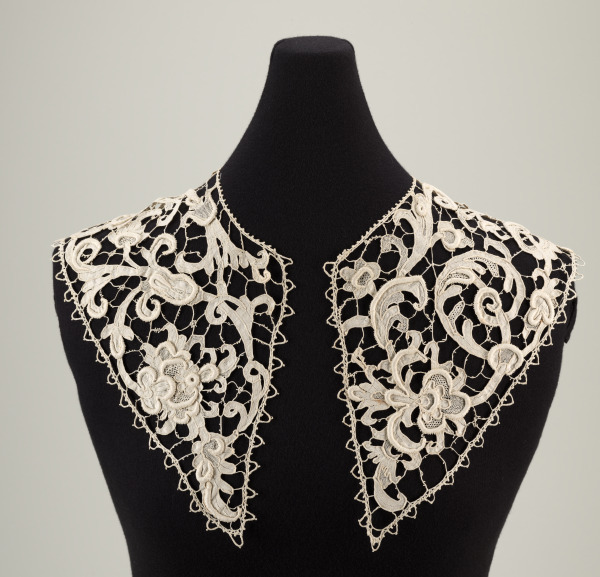
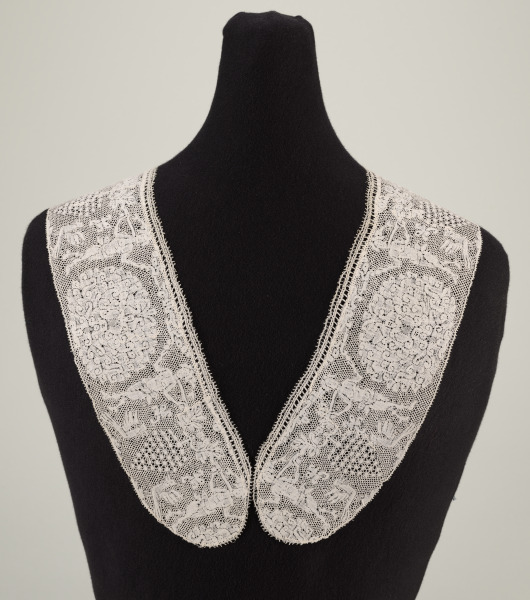
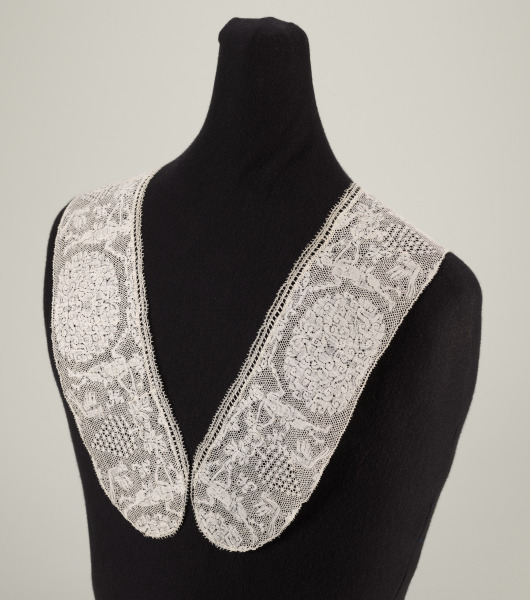
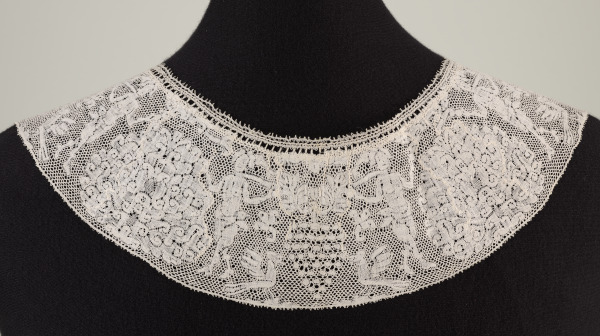
Flemish Bobbin Lace Collar
1666-1699
Scroll
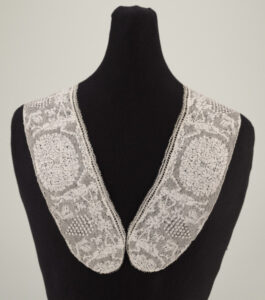
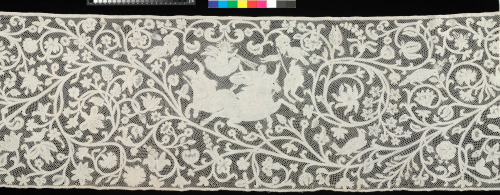
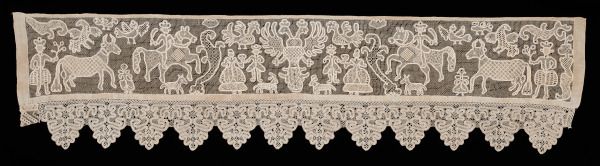
Flemish Bobbin Lace Collar
1666-1699
Physical Qualities
Linen, 102 x 2-1/2 in., 43 x 2-1/2 in., 59 x 2 in., 50 x 2-1/4 in., 30-1/2 in., 28 x 3 in. (collar)
Credit Line
The Cone Collection, formed by Dr. Claribel Cone and Miss Etta Cone of Baltimore, Maryland
Object Number
1950.2022.268
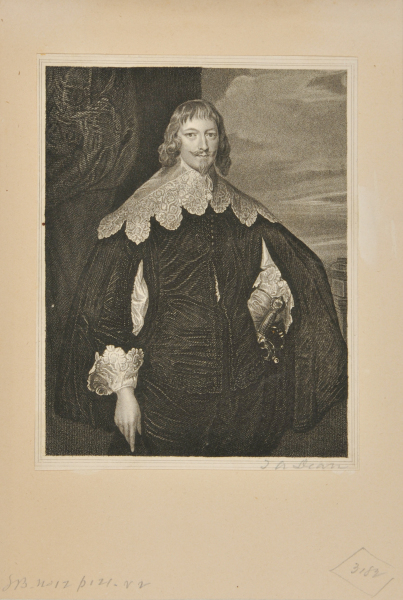
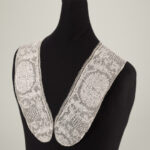
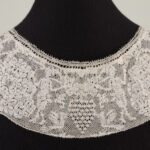
Flemish lace was known for its use of incredibly fine linen thread, particularly noticeable in the delicate floral and figural imagery on the collar displayed here. This intricate web of continuous designs required hundreds of bobbins, or thread spools, and many months to produce. Flanders was an early leader in the European lace industry, and Flemish lace was exported across Europe and to the Americas. As the demand for lace grew, its production became the focus of many Flemish convent complexes and orphanages, such as the Maagdenhuis in the Flemish city of Antwerp. To learn more about bobbin lacemaking, see the demonstration on view in the hands-on learning gallery.
Baltimore Museum of Art by gift, 1950; Etta Cone, Baltimore, MD