Coptic
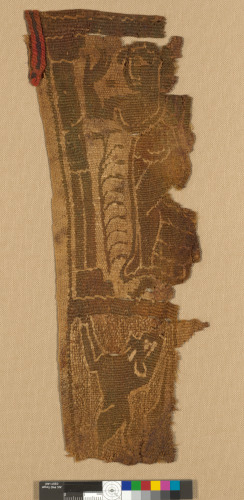
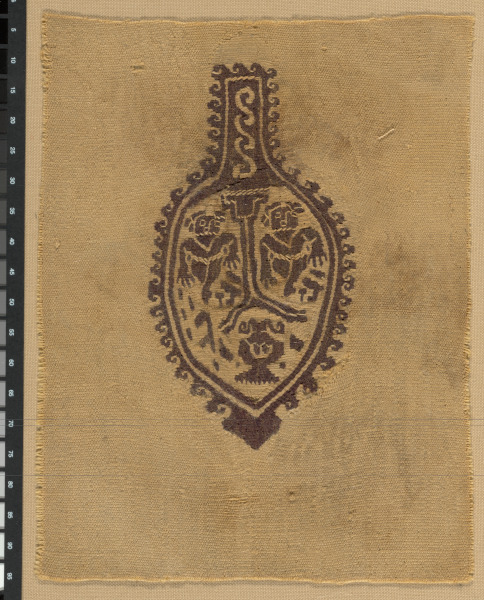
Fragment with Thyrsus-shaped Tunic Ornament
Coptic, 501-700
Scroll
Coptic
Fragment with Thyrsus-shaped Tunic Ornament
Coptic, 501-700
Physical Qualities
Wool, 8 x 6-1/4 in.
Credit Line
The Cone Collection, formed by Dr. Claribel Cone and Miss Etta Cone of Baltimore, Maryland
Object Number
1950.2016.2
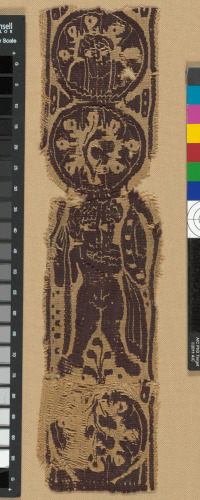
Pairs of ornaments, either square, round, or shaped like this example, would have been placed on tunics at important or vulnerable points of the body, such as knees or shoulders. This thyrsus-shaped insert (named for Dionysus’ pine cone-topped wand) includes two Bacchic dancers moving on either side of a large “floral” motif. Near the pointed end of the thyrsus is an amphora, or two-handled container— possibly a reference to Dionysus’ role as god of wine and celebration. The designs are woven in silhouette probably using dark purple (now dark brown) yarns with natural colored floating wefts adding linear definition. These figures contrast with the natural colored ground. A wave border surrounds the outside perimeter.
The Baltimore Museum of Art by gift, 1950; Etta Cone.
Timeless Weft: Ancient Tapestries and the Art of Louise B. Wheatley
Maguire, Eunice Dautermann, .The Rich Life and The Dance: Weavings From Roman,Byzantine and Islamic Egypt, Urbana-Champaign: Krannert Art Museum, University of Illinois, pp. 104-105, cat. B9, illus p. 105.
Textilkunst des Fruhen Christentums: Koptische Gewebe vom 2.-12. Jahrhundret. Krefeld: Richard Scherpe 1963, cat. 126, plate 8.
Textilkunst des Fruhen Christentums: Koptische Gewebe vom 2.-12. Jahrhundret. Krefeld: Richard Scherpe 1963, cat. 126, plate 8.